Begleiten Sie uns auf eine literarische Weltreise!
Buch zum Bücherregal hinzufügen
Grey
Einen neuen Kommentar schreiben Default profile 50px
Grey
Jetzt das ganze Buch im Abo oder die ersten Seiten gratis lesen!
All characters reduced
Public Choice Theory Made Simple - cover

Public Choice Theory Made Simple

Umang Marar

Verlag: Educohack Press

  • 0
  • 0
  • 0

Beschreibung

"Public Choice Theory Made Simple" explains why it's often expected that governments should address market failures, and the critical flaws in this belief. We discuss how markets are competitive processes, and without perfect competition, we cannot know what might have happened if it did exist. Thus, governments cannot fix market failures; they can only eliminate obstacles to competition. When externalities are blamed for market failures, it is argued that markets should determine the value of those externalities to the affected individuals.
The coercive power of governments and the absence of direct competition in the political system often lead to 'government failure,' which can be more dangerous than market failure. In representative democracies, the self-interest of a few individuals can result in decisions detrimental to the majority.
The term 'market failure' is frequently used by politicians, journalists, and students, but many lack a proper understanding of the government's ability to address these failures. Public Choice economics applies insights about human behavior to the process of government, offering valuable lessons for those interested in public policy.
This book helps readers understand the limitations of government intervention in market failures and explains the implications of Public Choice economics for designing government systems, a topic highly relevant in contemporary political debates.
Verfügbar seit: 03.01.2025.
Drucklänge: 266 Seiten.
Weitere Bücher, die Sie mögen werden

  • All Measures Short of War - The Contest for the Twenty-First Century and the Future of American Power - cover

    All Measures Short of War - The...

    Thomas J. Wright

    • 0
    • 0
    • 0
    The two decades after the Cold War saw unprecedented cooperation between the major powers as the world converged on a model of liberal international order. Now, great power competition is back, and the liberal order is in jeopardy. 
    Russia and China are increasingly revisionist in their regions. The Middle East appears to be unraveling. And many Americans question why the United States ought to lead. What will great power competition look like in the decades ahead? Will the liberal world order survive? What impact will geopolitics have on globalization? And, what strategy should the United States pursue to succeed in an increasingly competitive world. 
     In this book, Thomas Wright explains how major powers will compete fiercely even as they try to avoid war with each other. Wright outlines a new American strategy—responsible competition—to navigate these challenges and strengthen the liberal order.
    Zum Buch
  • Trumpocalypse - Restoring American Democracy - cover

    Trumpocalypse - Restoring...

    David Frum

    • 0
    • 0
    • 0
    ""I don't take responsibility at all."" Those words of Donald Trump at a March 13, 2020, press conference are likely to be history's epitaph on his presidency. 
    A huge swath of Americans have put their faith in Trump, and Trump only, because they see the rest of the country building a future that doesn’t have a place for them.  
    If they would risk their lives for Trump in a pandemic, they will certainly risk the stability of American democracy. They brought the Trumpocalypse upon the country, and a post-Trumpocalypse country will have to find a way either to reconcile them to democracy - or to protect democracy from them. 
    In Trumpocalypse, David Frum looks at what happens when a third of the electorate refuses to abandon Donald Trump, no matter what he does. Those voters aren’t looking for policy wins. They’re seeking cultural revenge. 
    It is not enough to defeat Donald Trump on election day 2020. Even if Trump peacefully departs office, the trauma he inflicted will distort American and world politics for years to come. Americans must start from where they are, build from what they have, to repair the damage Trump inflicted on the country, to amend the wrongs that, under Trump, they inflicted upon each other. 
    Americans can do better. David Frum shows how—and inspires all readers of all points of view to believe again in the possibilities of American life. Trumpocalypse is both a warning of danger and a guide to reform that will be read and discussed for years to come.
    Zum Buch
  • Lake - cover

    Lake

    Matthew Arnold

    • 0
    • 0
    • 0
    Matthew Arnold was an English poet and cultural critic who worked as an inspector of schools. Matthew Arnold has been characterised as a sage writer, a type of writer who chastises and instructs the reader on contemporary social issues.He is sometimes called the third great Victorian poet, along with Alfred, Lord Tennyson and Robert Browning.This week's poem is the first part of Arnold's Lyric Poem 'Switzerland'. - Summary by Wikipedia
    Zum Buch
  • Jesus Takes a Side - Embracing the Political Demands of the Gospel - cover

    Jesus Takes a Side - Embracing...

    Jonny Rashid

    • 0
    • 0
    • 0
    Jesus sides with the oppressed. Will you?In a world divided by left and right, red and blue, many Christians have upheld a “third way” approach in pursuit of moderation, harmony, and unity. But if Christians are more concerned with divisiveness than with faithfulness, we have failed to grasp the gospel’s political demands. We do not see Jesus taking a “third way” between oppressor and oppressed. And as followers of Jesus, neither should we.For the sake of our faith, for the sake of the least of these among us, and for Christ’s sake, Christians need to stand firmly for truth, peace, and justice. In Jesus Takes a Side, author Jonny Rashid lays out the political demands of following Jesus and offers strategies for how to engage politics practically and prophetically—even if it means taking a side. 
    Zum Buch
  • Why the Nineties Matter - cover

    Why the Nineties Matter

    Terry H. Anderson

    • 0
    • 0
    • 0
    In Why the Nineties Matter, Terry Anderson provides a broad-ranging history of America in that decade. Not simply a chronological account, the book focuses on key trends that either began or gained steam then and which have had lasting effects until this day. Threading together politics, economic transformations, and sociocultural trends, he focuses on what mattered most in retrospect. Violent and extremist white nationalism intensified greatly in that decade, evidenced by the Oklahoma City bombing and the rise of the militia movement. The defection of the white working class from the Democratic Party began then as the Democrats expanded free trade and tried to cultivate professional-class Americans. Racial and gender politics transformed, birthing new movements that would grow in influence in the next century. Social media first emerged in the 1990s too, and its impact on all aspects of life cannot be underestimated. In foreign policy, America's long wars in the Middle East and Afghanistan have roots in US policies in the 1990s. And the current standoff between the US and Russia traces back to disagreements over NATO expansion a quarter century ago. 


    A pithy interpretive history of a decade that matters more than most think, this book will be an essential guide to anyone trying to understand that era.
    Zum Buch
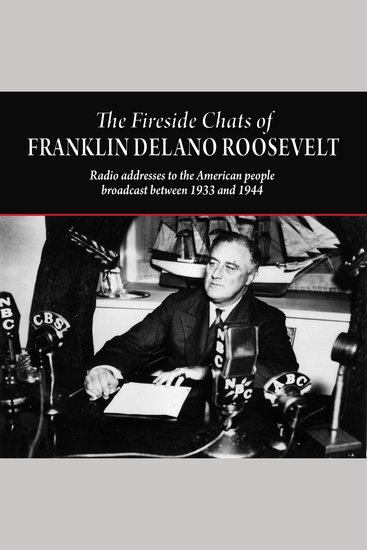
  • The Fireside Chats of Franklin Delano Roosevelt - cover

    The Fireside Chats of Franklin...

    Franklin Delano Roosevelt

    • 0
    • 0
    • 0
    Shortly after taking office in 1933 President Franklin Delano Roosevelt delivered the first of his radio broadcasts to the American public.  In simple, plain language, he took pains to explain the basic mechanics of the banking system, the causes of the present banking crisis, and the steps he was taking to stabilize the system.  It was an extraordinary moment – the first time an American President had bypassed the traditional channels of communication (newspapers largely owned by conservative Republicans) and taken his message directly to the people.  In doing so, he conveyed a sense of intimacy and engagement with the decision-making process that earned the trust and affection of the American people. He was able to squelch rumors and build public support for the most radical social changes and the largest war in the history of the United States. They are an astonishing testimony to what great leadership looks like, sounds like, and what it can accomplish.There are thirty addresses in all, ranging from about ten to thirty minutes, given at the rate of about one every five months, with the timing dictated by public events.  The term “fireside chat” was coined by Harry C. Butcher at CBS in a press release in 1933. Most, but not all, of the original addresses were recorded in part or in full. The sound quality, however, is often quite poor.  Thus, these new recordings of the published texts of the original addresses.  While it is impossible to capture the cheery, affable charm of President Roosevelt, we hope the readings convey the spirit of the times and the temper of the man.
    Zum Buch