Rejoignez-nous pour un voyage dans le monde des livres!
Ajouter ce livre à l'électronique
Grey
Ecrivez un nouveau commentaire Default profile 50px
Grey
Abonnez-vous pour lire le livre complet ou lisez les premières pages gratuitement!
All characters reduced
Managing Challenging Behaviour in Schools - Educational Insights and Interventions - cover

Managing Challenging Behaviour in Schools - Educational Insights and Interventions

Ulrike Becker

Maison d'édition: Verlag Barbara Budrich

  • 0
  • 0
  • 0

Synopsis

Auffälliges Verhalten von Kindern und Jugendlichen im schulischen Alltag zeugt oftmals von den schwierigen Lebenssituationen, in denen sie aufwachsen. Für Lehr- und pädagogische Fachkräfte stellt der Umgang mit den daraus resultierenden Konflikten die größte Herausforderung dar. In diesem Buch werden Ansätze und Lösungen für das Verstehen und Handeln in schwierigen pädagogischen Situationen in der Schule vorgestellt. Außerdem bietet ein inklusiver Förderansatz Impulse für die Schulentwicklung zur Prävention auffälligen Verhaltens.
Disponible depuis: 17/03/2025.
Longueur d'impression: 113 pages.

D'autres livres qui pourraient vous intéresser

  • The Battle of Gettysburg - Turning Point of the Civil War - cover

    The Battle of Gettysburg -...

    Nova Ashford

    • 0
    • 0
    • 0
    The Battle of Gettysburg stands as one of the most significant events in the American Civil War. Fought from July 1 to July 3, 1863, it marked a turning point in the conflict, shifting momentum firmly in favor of the Union. It was the largest battle ever fought in North America, involving over 160,000 soldiers and resulting in nearly 50,000 casualties. The immense scale of the battle and the high human cost underscore its importance, but Gettysburg's significance goes beyond just the number of lives lost. It was a critical moment in the war, a pivotal clash that ultimately determined the future direction of the United States. 
    Before Gettysburg, the Confederate Army, led by General Robert E. Lee, had gained significant victories in the Eastern Theater, including the battles of Fredericksburg and Chancellorsville. Lee’s Army of Northern Virginia was emboldened by these successes and was determined to continue its efforts to win independence for the South. In the spring of 1863, Lee decided to take the fight to the North, hoping that a victory on Union soil would weaken Northern morale, pressure the U.S. government for a peace settlement, and gain international recognition for the Confederacy. His strategy was bold but fraught with risk, as it carried the potential to either decisively break the Union or set the stage for a resounding Confederate defeat. 
    On the other side, the Union Army, led by Major General George G. Meade, was in a period of transition. Meade had only recently been appointed to command, replacing General Joseph Hooker. The Union Army had been struggling to achieve decisive victories after a series of failures, and morale was low. However, the Union leadership understood that they could not afford another loss to the Confederacy. Gettysburg would become their test—a chance to halt Lee’s advance and potentially reverse the tide of the war.
    Voir livre
  • 102 Minutes - The Untold Story of the Fight to Survive Inside the Twin Towers - cover

    102 Minutes - The Untold Story...

    Anonyme

    • 0
    • 0
    • 0
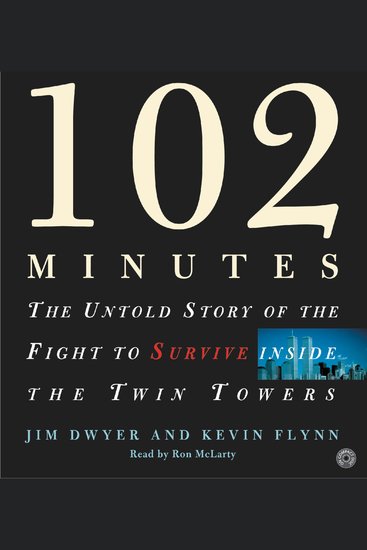
    The dramatic and moving account of the struggle for life inside the World Trade Center on the morning of September 11, when every minute counted. 
    At 8:46 AM on September 11, 2001, 14,000 people were inside the twin towers -- reading e-mails, making trades, eating croissants at Windows on the World. Over the next 102 minutes, each would become part of a drama for the ages, one witnessed only by the people who lived it -- until now. 
    New York Times reporters Jim Dwyer and Kevin Flynn rely on hundreds of interviews; thousands of pages of oral histories; and phone, e-mail, and emergency radio transcripts. They cross a bridge of voices to go inside the infernos, seeing cataclysm and heroism, one person at a time, to tell the affecting, authoritative saga of the men and women -- the 12,000 who escaped and the 2,749 who perished -- who made 102 minutes count as never before. 
    Read by Ron McLarty
    Voir livre
  • Irrationally Yours - On Missing Socks Pickup Lines and Other Existential Puzzles - cover

    Irrationally Yours - On Missing...

    Anonyme

    • 0
    • 0
    • 0
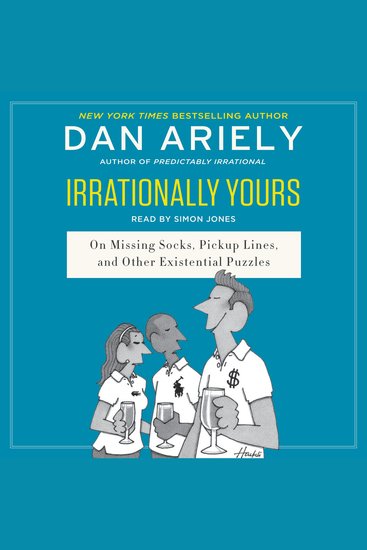
    Three-time New York Times bestselling author Dan Ariely teams up with legendary The New Yorker cartoonist William Haefeli to present an expanded, illustrated collection of his immensely popularWall Street Journal advice column, “Ask Ariely”. 
    Behavioral economist Dan Ariely revolutionized the way we think about ourselves, our minds, and our actions in his books Predictably Irrational, The Upside of Irrationality, and The Honest Truth about Dishonesty. Ariely applies this scientific analysis of the human condition in his “Ask Ariely” Q & A column in the Wall Street Journal, in which he responds to readers who write in with personal conundrums ranging from the serious to the curious:   What can you do to stay calm when you’re playing the volatile stock market?   What’s the best way to get someone to stop smoking?   How can you maximize the return on your investment at an all-you-can-eat buffet?   Is it possible to put a price on the human soul?   Can you ever rationally justify spending thousands of dollars on a Rolex? 
    In Ask Ariely, a broad variety of economic, ethical, and emotional dilemmas are explored and addressed through text and images. Using their trademark insight and wit, Ariely and Haefeli help us reflect on how we can reason our way through external and internal challenges.  Readers will laugh, learn, and most importantly gain a new perspective on how to deal with the inevitable problems that plague our daily life.
    Voir livre
  • The Social Animal - Understanding Human Behavior Through Sociology - cover

    The Social Animal -...

    Fred Grandsen

    • 0
    • 0
    • 0
    Human beings are inherently social creatures, shaped by the need to interact, communicate, and form relationships with others. The social nature of humans is deeply rooted in evolutionary history, where cooperation and group cohesion were essential for survival. Over time, human societies have become increasingly complex, but the fundamental need for social connection remains central to human identity and behavior. This chapter explores the biological, psychological, and sociological foundations of human sociality and how they shape individual and collective behavior. 
    From an evolutionary perspective, human beings have always relied on social bonds for protection, resource sharing, and collective problem-solving. Early human groups depended on coordinated hunting, gathering, and defense mechanisms to survive in harsh environments. Natural selection favored individuals who could effectively communicate, cooperate, and form alliances, leading to the development of social behaviors such as empathy, altruism, and social hierarchies. The human brain evolved to process social information, with structures such as the prefrontal cortex playing a critical role in understanding and responding to social cues. 
    Psychologically, the need for social connection is reflected in the human desire for belonging, acceptance, and emotional support. Attachment theory, developed by John Bowlby, suggests that early attachment to caregivers forms the foundation for future social relationships.
    Voir livre

  • F*ck Silence - Calling Trump Out for the Cultish Moronic Authoritarian Con Man He Is - cover

    F*ck Silence - Calling Trump Out...

    Anonyme

    • 0
    • 0
    • 0
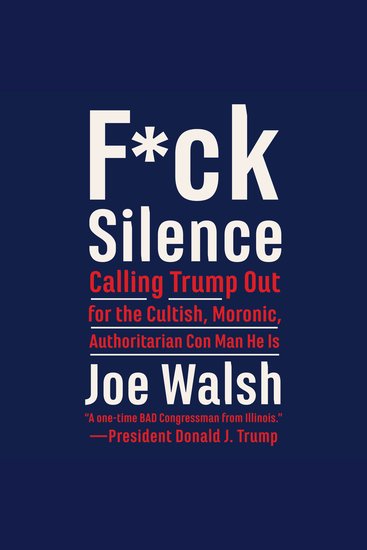
    Donald Trump is the exact threat our Founding Fathers feared. 
    Joe Walsh is as rock-ribbed a conservative as they come. But he believes that no right-wing policy victory is worth the loss of our very democracy. 
    In this clear-eyed and unsparing book, Walsh makes the case that Trump has more in common with the foreign dictators he praises publicly than a predecessor like Ronald Reagan. Trump is an existential threat to conservatism, the presidency, and national unity. He has violated the Constitution in plain sight, assaulted democratic institutions, overwhelmed the country with disinformation, erected around himself a cult of personality, and governed according to his narcissism more than any discernable political philosophy. 
    Though Walsh agrees with Trump that the Washington elite has hung working-class America out to dry, traveling down the road to despotism is no response. And now a person who places himself above the rule of law and accountability sits in the Oval Office—all that’s missing is a big, beautiful throne behind the Resolute Desk.  
    In F*ck Silence, Walsh challenges his countrymen, especially his fellow conservatives, to acknowledge and oppose this unpatriotic and un-American behavior before we give away what made America great in the first place: our democracy.
    Voir livre
  • White Pine - The Natural and Human History of a Foundational American Tree - cover

    White Pine - The Natural and...

    John Pastor

    • 0
    • 0
    • 0
    America was built on white pine. From the 1600s through the Civil War and beyond, it was used to build the nation's ships and houses, barns, and bridges. Yet this popularity came at a cost: by the end of the nineteenth century, clear cutting had decimated much of America's white pine forests. In White Pine, ecologist and writer John Pastor takes listeners on walk through history, connecting the white pine forests that remain today to a legacy of destruction and renewal. 


    Since the clear-cutting era, naturalists, foresters, and scientists have taken up the quest to restore the great white pine forests. White Pine follows this centuries-long endeavor, illuminating how the efforts shaped Americans' understanding of key scientific ideas, from forest succession to the importance of fire. Pastor shows us why restoring the vitality of these forests has not been simple: a host of other creatures depend on white pine and white pine depends on them. In weaving together cultural and natural history, White Pine celebrates the way humans are connected to the forest—and to the larger natural world. 


    Today, white pine forests have begun to recover, but face the growing threat of climate change. White Pine shows us that hope for healthy forests lies in understanding the lessons of history, so that iconic species survives.
    Voir livre