


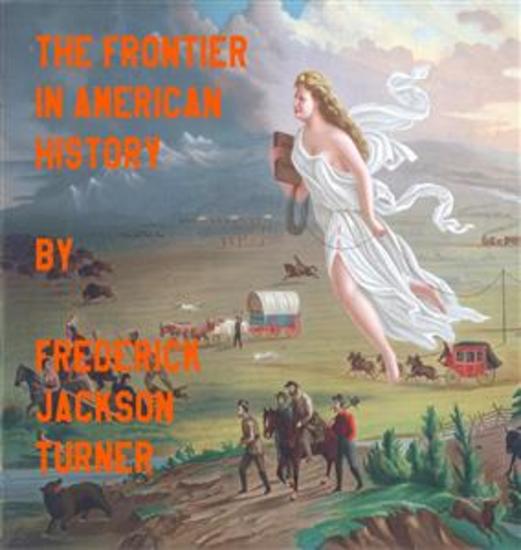
The Frontier In American History By Frederick Jackson Turner
Turner Frederick Jackson
Maison d'édition: Author
Synopsis
The Frontier In American History By Frederick Jackson Turner

YEAR RELEASED: 1893
Disponible depuis: 14/03/2022.

Maison d'édition: Author
The Frontier In American History By Frederick Jackson Turner YEAR RELEASED: 1893

The book Kathasaritsagara has been created by Soma Deva. It consists of 21,500 shlokas.
 This book Kathasaritsagara has been divided into 18 lambakaas, and those 18 lambakaas are still more divided into 125 Tharanga's.
 Some lambakaas are very big, while some are very small.
 If there are 115 Shlokas in the 11th Lambaka, there are around 4925 Shlokas in 12th Lambaka.
 During ancient times from the mouth of Lord Shiva, this story got birth. Those who listen to this story will experience all sorts of worldly pleasures. They will be blessed by Lord Shiva and at last reach jnana Loka by the blessings of lord shiva.
Voir livre

Season's greetings, happy holidays, and a merry Christmas! Want to teach your kids all about Christmas and Christmas traditions? Help get them ready for the holiday season. In this fun book, your kids will learn about the 12 days of Christmas song.


With Kids vs the Twelve Days of Christmas: How Many Presents Do You Really Get?:

- Capture your child's imagination with vibrant illustrations on every page of accompanying reference guide

- Learn about the popular 12 days of Christmas song

- Enjoy bonus track song in the end of the audiobook


This book will help you:

- Get your child acquainted with the Christmas holiday

- Spend time with your child and get into the habit of listening together


This book has been designed and tested to help keep your kids engaged and interested - to maximize their absorption and, frankly, to make storytime even more fun!


Kids of different ages can enjoy this book and will listen to it again and again.


Simply listen and repeat out loud.


Download the PDF and read along
Voir livre
Unlock Your Mind's Potential: Discover Hidden Influences Today
Are you eager to advance in your career and deepen your understanding of the forces that shape your beliefs?
Looking for a complete guide that covers everything you need to know to unlock your mind's potential?
Your search stops here!
This guide is your ultimate resource for enhancing your comprehension, applying your insights, and engaging in practical exercises. With this audiobook, you're set for success.
Updated to reflect the latest insights into hidden influences.
Key Features of This Enhanced Guide:
- In-depth discussions about mind control and its impact on beliefs
- Thorough explanations of the psychological forces at play
- Effective strategies for preparation and understanding
Our guide stands out with its thorough exploration of each topic, essential for your success. Concepts are examined in detail rather than just superficially addressed.
Please keep in mind that this guide is an independent resource, not affiliated with any official organization related to mind control or psychological studies.
Crafted with a well-organized structure and straightforward language, our guide ensures seamless transitions between topics. Say goodbye to complicated jargon and hello to clear, concise, and accurate content.
So, why hesitate? Click the BUY NOW button, secure your copy, and start your journey toward unlocking your mind's potential!
Unlock your understanding and transform your journey today!
Voir livre

MS. AMBER'S UNIQUE APPROACH IS HER ABILITY TO INTERTWINE HER PERSONAL STORIES OF TRIUMPHS
AND SETBACKS, CREATING A NARRATIVE THAT IS BOTH RELATABLE AND INSPIRING.
She encourages readers to dream big and, more importantly, equips them with the tools they need to find their own success in the world of preschool education.
In The ABC's of Preschool you'll find a roadmap to a more fulfilling life and a
thriving career.
Create Financial Security: Discover the path to a financially rewarding career in
the field of early childhood education. You can achieve both financial stability
and the satisfaction of making a profound impact on your community.
Spend Quality Time With Your Children: Unleash the potential for more quality
time with your own children during their crucial formative years.
Realize Your Dream Childcare Center: Learn how to create, open, and operate
your dream preschool. Gain the knowledge and insights needed to not only start
your center but ensure it THRIVES for years to come.
Voir livre

Amerigo Vespucci, discoverer and namesake of America: Life and work in a short biography! Everything you need to know, brief and concise. Infotainment, education and entertainment at its best!Voir livre
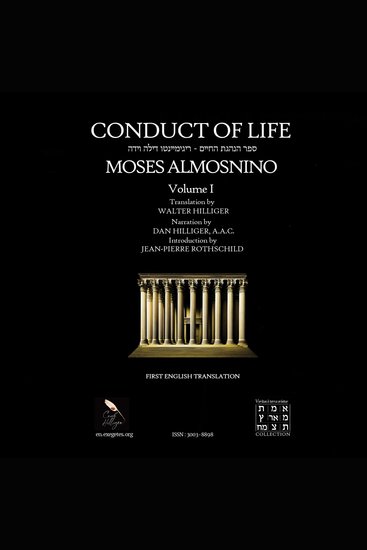
The major work of Rabbi Moses Almosnino (1515-1580), “Conduct of Life,” remains to this day an essential reference in classical Judeo-Spanish literature, now finally available in English in its first translation. First published in Ladino in 1564 as, Sefer Hanhagat ha-hayimIn 1729 as “Reghimiento de la vyida”, this three-volume edition is part of the prestigious collection Veritas è terra orietur. The introduction by Jean-Pierre Rothschild, Director of Research at CNRS and Director of Studies at EPHE, specializing in medieval philosophy, enlightens the reader on the foundations and stakes of the work. The first volume aims to provide practical advice for leading a good life from an early age. It emphasizes the distinction between spiritual, physical, and external goods (Volume 1, chapters 1-3), including suggestions on dietary habits, sleep and waking, going to bed and getting up, walking and sitting, speaking and silence (chapters 4-10), the four types of discourse, and why the righteous die young (chapter 11). Finally, it addresses questions on eschatology, classical philosophy, and theodicy (chapters 12-14). “Conduct of Life” draws heavily from the Nicomachean Ethics but transcends this source by situating itself at the universal intersection of several traditions: Greco-Arabic philosophy, Judeo-Christian scholasticism, classical Sephardic Judaism, and medieval Jewish thought. Thus, this work contributes to peace and intercultural understanding among peoples.Voir livre





