Begleiten Sie uns auf eine literarische Weltreise!
Buch zum Bücherregal hinzufügen
Grey
Einen neuen Kommentar schreiben Default profile 50px
Grey
Jetzt das ganze Buch im Abo oder die ersten Seiten gratis lesen!
All characters reduced
The Waste Land - cover

The Waste Land

T.S. Eliot

Verlag: DigiCat

  • 0
  • 0
  • 0

Beschreibung

T. S. Eliot's "The Waste Land" is a groundbreaking modernist poem that delves into the disillusionment and fragmentation of post-World War I society. With its innovative structure, combining a multitude of voices, allusions, and literary references, the poem evokes the chaos of an era marked by moral disarray. This intricate tapestry uses varied styles, from dramatic monologue to stream-of-consciousness, reflecting the deep psychological and existential crises experienced by individuals grappling with a disintegrating world. Key thematic elements include despair, renewal, and the search for meaning amidst cultural desolation, which resonates powerfully with contemporary readers. Eliot, a key figure in modern literature, drew upon his extensive background in philosophy, theology, and literary traditions. His exposure to different cultures and languages, particularly during his time in Europe, influenced his explorations of identity and spirituality in "The Waste Land." The poem represents a culmination of his intellectual journey and showcases his mastery in weaving complex narratives that challenge traditional poetic forms. Readers seeking a profound exploration of human experience in the context of societal upheaval will find "The Waste Land" an essential read. Eliot's work invites introspection, beckoning us to confront the complexities of life in a fractured world, making it a timeless piece relevant to both historical and contemporary discourse.
Verfügbar seit: 28.05.2022.
Drucklänge: 12 Seiten.

Weitere Bücher, die Sie mögen werden

  • The Span of a Small Forever - Poems - cover

    The Span of a Small Forever - Poems

    April Gibson

    • 0
    • 0
    • 0
    With echoes of Audre Lorde’s The Cancer Journals and Susan Sontag’s Illness as Metaphor, an extraordinary debut collection from a prize-winning poet that chronicles a Black woman’s journey through disability, the byzantine healthcare system, life-giving, taking, and sacrifice. 
    With breathtaking lyricism and a vulnerability that pierces the heart, April Gibson journeys through the emotional abysses, the daily pleasures, the frustrations, and the joys of being a Black woman living with chronic illness.  
    Gibson offers a unique perspective on “the body,” viewing disability and healthcare through both feminist and socio-economic lenses filtered by race and faith. Through gorgeous sensory language that migrates memories, from carefree innocence to the ravages formed in its absence, Gibson bears witness to grief, courage, and resistance to redefine herself on her own terms.   
    Gibson presents her body as a “looking glass” that re-envisions illness, womanhood, motherhood, religious relics and collective loss through her physicality, through her lamenting, through her unearthing, reckoning and rebirth. Not only do we see her, but see the “we” in her. The Span of a Small Forever is both testimony and transformation—heart-shattering in its honesty, it ultimately offers us transcendent beauty, nourishment, and the strength we need to go on in our lives.
    Zum Buch
  • The Poetry of William Morris - Poems from the multi talented 19th Century poet painter and activist William Morris - cover

    The Poetry of William Morris -...

    William Morris

    • 0
    • 0
    • 0
    William Morris was born in Walthamstow, London on 24th March 1834 and is regarded today as a foremost poet, writer, textile designer, artist and libertarian.   
    Morris began to publish poetry and short stories in 1856 through the Oxford and Cambridge Magazine which he founded with his friends and financed while at university. His first volume, in 1858, The Defence of Guenevere and Other Poems, was the first published book of Pre-Raphaelite poetry. Due to its luke warm reception he was discouraged from poetry writing for a number of years. 
    However, his return to the form was met with great success in the poem The Life and Death of Jason in 1867, which was followed by The Earthly Paradise, themed around a group of medieval wanderers searching for a land of everlasting life; after much disillusion, they discover a surviving colony of Greeks with whom they exchange stories. In the collection are retellings of Icelandic sagas. From then until his Socialist period Morris's fascination with the ancient Germanic and Norse peoples dominated his writing and he was the first to translate many of the Icelandic sagas into English; the epic retelling of the story of Sigurd the Volsung being his favourite. 
     In 1884 he founded the Socialist League but with the rise of the Anarachists in the party he left it in 1890 and the following year he founded the Kelmscott Press, publishing limited edition illuminated style books.  His design for The Works of Geoffrey Chaucer is a masterpiece. Morris was quietly approached with an offer of the Poet Laureateship after the death of Tennyson in 1892, but declined. 
    William Morris died at age 62 on 3rd October 1896 in London. 
     This volume comes to you from Portable Poetry, a specialized imprint from Deadtree Publishing.  Our range is large and growing and covers single poets, themes, and many compilations.
    Zum Buch
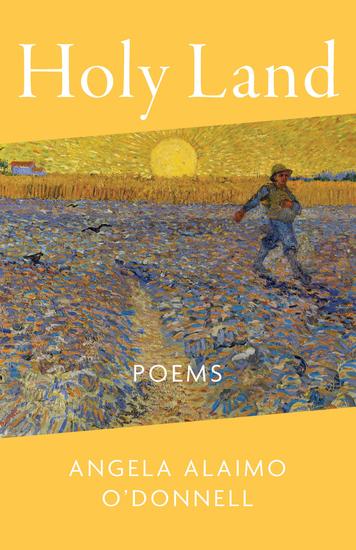
  • Holy Land - Poems - cover

    Holy Land - Poems

    Angela Alaimo O'Donnell

    • 0
    • 0
    • 0
    "Remove your sandals from your feet, for the place on which you are standing is holy ground." —Exodus 3:5
    "The Holy Land is everywhere." —Black Elk
    The two epigraphs that preface Angela Alaimo O'Donnell's Holy Land introduce the reader to the central theme that permeates her poems: that holy places deserve to be regarded with reverence and that all places are holy places. In her afterward, the poet traces these foundational concepts to her Catholic childhood wherein religious instruction consisted largely of memorizing the Baltimore Catechism. "One of questions the Catechism poses is 'Where is God?' The answer is 'God is everywhere.' We believed this to be true. God was in church, but God was also in our house (a crucifix in every room), in the backyard, in our Buick (rosary beads swinging from the rearview mirror), at our birthday parties in the basement, and in our own bodies. And though those places may not sound very holy, they were. Because God was there. Is there."
    In addition to affirming this foundational belief, these poems extend the terrain, moving beyond the geographical and the physical to the temporal, the carnal, the intellectual, and the spiritual realms. They assert that our days are blessed, our bodies are blessed, our minds and souls are all blessed and sacred ground. The poet explores a broad spectrum of physical locations, beginning with poems set in the Holy Land and moving on to places closer to home, ranging from the west of Ireland to rural Minnesota, from New York City to the Texas border. She also probes the temporal spaces we occupy, experiences of death and birth, love and loss, desire and desolation that mark our human passage.
    The English word holy is related to the Germanic word heilig, a word that means blessed and also carries within it the idea of wholeness. Holy Land attempts to honor both the holiness and the wholeness of our world—from Gotham to Golgotha, the Bronx River to the Sea of Galilee—and to honor the holiness and wholeness of our blessed and broken humanity.
    Zum Buch
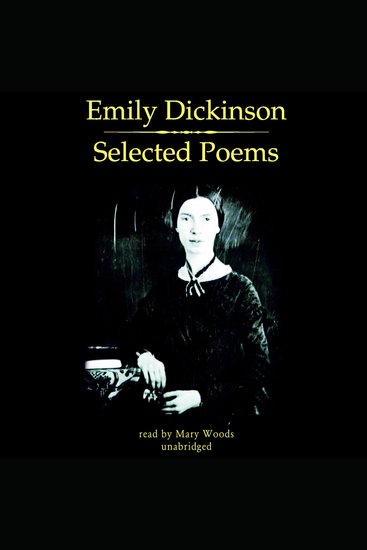
  • Emily Dickinson - Selected Poems - cover

    Emily Dickinson - Selected Poems

    Emily Dickinson

    • 0
    • 0
    • 0
    Emily Dickinson today has gaining her deserved place alongside Walt Whitman as one of the two greatest American poets of the nineteenth century. Beginning always with particulars of personal experience, her poems encompass life and death, love and longing, joyfulness and sorrow. With sparse, precise language, she conveyed a penetrating vision of the natural world and an acute understanding of the most profound human truths. 
    The poems included in this collection are grouped by three time periods, 1890, 1891, and 1896, and by the subjects of life, love, nature, and time and eternity.
    Zum Buch
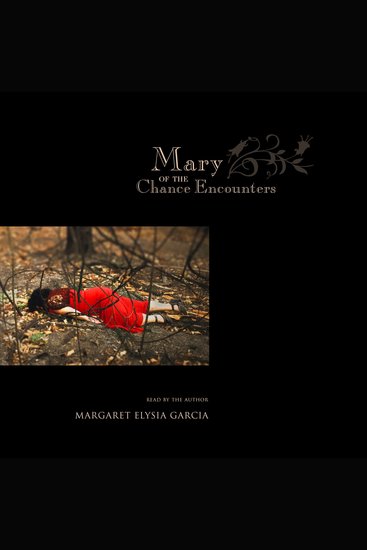
  • Mary of the Chance Encounters - cover

    Mary of the Chance Encounters

    Margaret Elysia Garcia

    • 0
    • 0
    • 0
    Mary of the Chance Encounters is a collection of stories set in southeastern Los Angeles, chronicling the Mexican-American and Anglo population stucco’d there between family, ghosts, strip malls and too wide boulevards. But their hopes and desires run magical, and sometimes weirdly perverse and erotic. The encounters break open the flat-lining air of consumer life.
    Zum Buch
  • The Courtship of Miles Standish - cover

    The Courtship of Miles Standish

    Henry Wadsworth Longfellow

    • 0
    • 0
    • 0
    During the late nineteenth century and until the middle of the twentieth, many elementary classrooms in America featured (along with a Gilbert Stuart portrait of Washington) a black-and-white print of a group of New England pilgrims on their way to church, the men carrying their muskets. Every school child at that time was intimately acquainted with the story of the Mayflower and the Plymouth colony in Massachusetts. Among the historical figures, one of the best known was Captain Miles Standish, the military commander of the little “army,” which consisted of a bare handful of men, who repeatedly defeated many times their number of hostile Indians. The children also knew the friendly Indian Squanto and the young pilgrim gentleman John Alden and the lovely maiden Priscilla Mullins.  
    In the middle grades practically all students used to read Longfellow’s long narrative poem The Courtship of Miles Standish, telling the story of these real people. The plot is initiated by Standish’s request that his friend, the better educated and more eloquent Alden, plead his case for him and persuade Priscilla to marry this rough middle-aged widower. What the captain did not know was that John Alden was also deeply in love with the same young girl. Presentday readers will be impressed that the delightful Miss Mullins seems to be a quite modern young lady, with a mind of her own. Many hundreds of Americans trace their ancestry to John and Priscilla, whose descendants also include Presidents John and John Quincy Adams and Longfellow himself. Those who are not familiar with their romance will find it a most pleasant tale. (Introduction by Leonard Wilson)
    Zum Buch