Join us on a literary world trip!
Add this book to bookshelf
Grey
Write a new comment Default profile 50px
Grey
Subscribe to read the full book or read the first pages for free!
All characters reduced
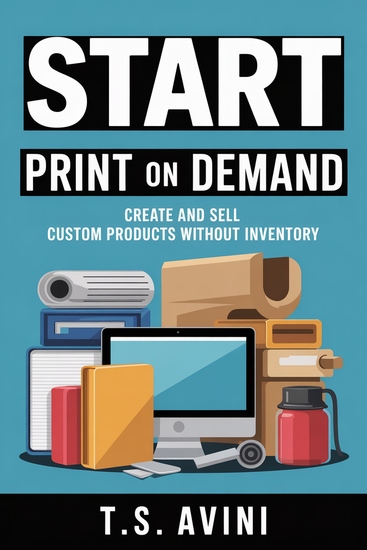
Start Print on Demand - Create and Sell Custom Products Without Inventory - cover

Start Print on Demand - Create and Sell Custom Products Without Inventory

T.S Avini

Publisher: T.S. AVINI

  • 0
  • 0
  • 0

Summary

Unlock the potential of Print on Demand (POD) to transform your business aspirations into reality without the burden of holding inventory. "Start Print on Demand" guides you step-by-step through launching and scaling a custom product venture. Discover the freedom of creating unique designs and selling them effortlessly, mastering market research, and understanding your niche to maximize profitability.- Build a compelling brand identity that resonates with customers and stand out in a crowded marketplace.- Explore comprehensive marketing strategies tailored for POD, including social media leverage and SEO tactics.- Learn essential pricing strategies to remain competitive while optimizing profit margins.Whether you're an aspiring entrepreneur, a seasoned business owner, or someone looking to generate passive income, this book offers invaluable insights. From sourcing the best suppliers and designing captivating products to scaling your business through automation, every page unfolds a treasure trove of knowledge. Equip yourself with the tools to succeed and start your journey in the innovative world of Print on Demand today!
Available since: 08/14/2025.
Print length: 184 pages.

Other books that might interest you

  • Clean Your Debts - cover

    Clean Your Debts

    Earl Dickerson

    • 0
    • 0
    • 0
    Clean Your Debts: The Comprehensive Guide on the Effective Ways and Methods of Eliminating Out your Debts, Learn All Types of Credits and Debts and How to Get Rid of ThemDebt is not inherently a bad thing. Credit and debt allow people and organizations to do things that they would otherwise not be able, or allowed, to do. Commonly, people in industrialized nations use it to purchase houses, cars, and many other things too expensive to buy with cash on hand. Companies also use debt in many ways to leverage the investment made in their assets, "leveraging" the return on their equity.Credit card debt is extremely stressful and it can take over your life but it’s not insurmountable. Before you get consumed by the seemingly endless torrent of bill collector calls and fruitless interest payments, consider some of the many options that you have to take care of credit card debt. Statistics show that 80% of Americans have debts to their name. Debts have different effects on everyone. While it may seem like just a mild inconvenience to some, it could be ruining the lives and taking control of the lives of some people.This comprehensive guide about debts will give you essential information and proven tips on how you can rid yourself of credit card debt, student loans, and mortgage debt. Learn useful strategies and knowledge on how to improve your credit score.Here are some of the topics that will be discussed in this guide: What is Credit Debt? Credit Card Debt, Student Loans, Mortgages, Bankruptcy Facts, Credit Score Facts, and a lot more.There really is no fast and easy way to clear yourself of debt, you have to understand that it’s a slow and steady process. To learn more, download Clean Your Debt Today!
    Show book
  • The Case for Good Jobs - How Great Companies Bring Dignity Pay and Meaning to Everyone's Work - cover

    The Case for Good Jobs - How...

    Zeynep Ton

    • 0
    • 0
    • 0
    From healthcare facilities to call centers, fulfillment centers to factories, and restaurants to retail stores, companies are struggling to find or keep workers, because the jobs they offer are low-paying, stressful, and provide little chance for growth and success. 


    Workers want good jobs, and many leaders want to provide them. But they don't think they can offer higher pay and more motivating work without hurting the bottom line. Most business leaders want to win with customers, but their companies are hobbled by a host of service and operational problems largely driven by high employee turnover—turnover that's partly driven by low pay. 


    It is indeed a vicious cycle, and Zeynep Ton is here to show you the way out: why good jobs combined with strong operations lead to higher productivity and increased competitiveness for the business. As the leading scholar on good jobs and president of the Good Jobs Institute, Ton has helped executives at many companies implement a good jobs system. With expertise drawn from spending time on the front lines with workers and their managers, she knows what's keeping most companies mired in mediocrity and how implementing a good jobs system makes them more competitive, more resilient, and more likely to attract and retain loyal customers and dedicated employees.
    Show book
  • The Four Factors of Trust - How Organizations Can Earn Lifelong Loyalty 1st Edition - cover

    The Four Factors of Trust - How...

    Amelia Dunlop, Ashley Reichheld

    • 0
    • 0
    • 0
    The essential, data-driven blueprint to build trust in your organization. 


    Building trust is your single greatest opportunity to create competitive advantage. With new data at its core, The Four Factors of Trust gives you practical guidance to measure and build trust in the relationships that matter the most—with your customers, workforce, and partners. 


    Trust ultimately comes down to just Four Factors: Humanity, Capability, Transparency, and Reliability. 


    These Four Factors make up Deloitte's HX TrustID, a groundbreaking measurement tool poised to become the gold standard for evaluating organizational performance. Ashley Reichheld and Amelia Dunlop show how your organization can use HX TrustID to measure, predict, and build trust to earn lifelong loyalty—and elevate the human experience with your customers, workforce, and partners. 


    With compelling stories from leading organizations—and practical applications in marketing and experience, cybersecurity, HR, sustainability (ESG), and operations and technology—The Four Factors of Trust will enable you to create the relationships you want to build, the organizations you want to belong to, and the world you want to live in.
    Show book
  • Inclusive 360 - Proven Solutions for an Equitable Organization - cover

    Inclusive 360 - Proven Solutions...

    Bernadette Smith

    • 0
    • 0
    • 0
    Millennials and Generation Z, the largest generations in the workforce, want to work for and do business with organizations that promote equity and inclusion. But how does any organization―or individual―move from good intentions to meaningful action? 
    In Inclusive 360: Proven Solutions for an Equitable Organization, Bernadette Smith delivers a systematic roadmap towards a more diverse, equitable, and inclusive organization. This progressive path is full of inspiring ideas from the world's most innovative companies―easily adapted for one's own organization. 
    Inclusive 360 is not simply about hiring and promotions, and it's not simply about product design, and it's not simply about inclusive marketing―though it addresses all of those things. The result is a comprehensive approach to DEI, relevant to virtually every department within an organization. 
    Everyone has a role to play in creating more equitable workplaces, and Inclusive 360 makes it simpler than ever.
    Show book
  • Wired for Wealth - Unlocking Your Brain for Financial Success - cover

    Wired for Wealth - Unlocking...

    Alok Trivedi

    • 0
    • 0
    • 0
    Wired for Wealth will help you discover how using neuroscience and specific, yet simple strategies to understand and improve your financial habits. The book explores the ways in which our brains can be "wired" to either hinder or help us in achieving wealth, and offers practical tools and processes to help readers overcome limiting beliefs and behaviors. By applying principles from neuroscience and psychology, the book aims to provide a comprehensive guide to unlocking the secrets of the brain and using them to increase wealth.
    Show book
  • Why Modern Music Sounds So Terrible - The Decline of Audio Quality in the Digital Age - cover

    Why Modern Music Sounds So...

    John Harpoon

    • 0
    • 0
    • 0
    The way we experience music has changed dramatically over the past century. From the rich, warm tones of analog recordings to the compressed and often lifeless sound of digital streaming, audio quality has taken a significant hit. While technology has made music more accessible than ever, it has also introduced trade-offs that have diminished the overall listening experience. Many listeners may not even realize how much sound quality has suffered, as modern production techniques prioritize loudness and convenience over depth and detail.  
      
    One of the most significant shifts in music recording came with the transition from analog to digital. Vinyl records and magnetic tape once captured the full range of a performance, preserving the natural dynamics and imperfections that made music feel alive. However, as CDs, MP3s, and streaming services took over, music was compressed to fit digital formats, stripping away much of its warmth and depth. While digital audio offers clarity and convenience, it often sacrifices the organic richness that older formats provided. This shift set the stage for an industry-wide decline in sound quality, where efficiency and portability took precedence over artistic integrity.  
      
    Another major factor in this decline is the so-called "loudness war." Over the past few decades, record labels and producers have increasingly pushed for louder music to grab listeners’ attention, especially in an era of short attention spans and endless competition. This practice involves compressing audio to its maximum volume, reducing the natural highs and lows that give music its emotional impact. The result is a flattened, fatiguing sound that lacks the depth and nuance found in older recordings. While louder tracks may stand out on first listen, they quickly become tiring and fail to leave a lasting impression. 
    Show book