Unisciti a noi in un viaggio nel mondo dei libri!
Aggiungi questo libro allo scaffale
Grey
Scrivi un nuovo commento Default profile 50px
Grey
Iscriviti per leggere l'intero libro o leggi le prime pagine gratuitamente!
All characters reduced
Signs Challenges and How to Embrace the Shift - cover

Signs Challenges and How to Embrace the Shift

T.S Avini

Casa editrice: T.S. AVINI

  • 0
  • 0
  • 0

Sinossi

In a world teeming with change, understanding the dynamics of transformation can empower you to thrive and grow. "Signs, Challenges, and How to Embrace the Shift" offers a comprehensive guide to navigating these tumultuous times. This book delves into:- Recognizing and interpreting early signals of global shifts, equipping you to respond proactively.- The psychology driving societal change, teaching you to harness it for personal and collective benefit.Amidst the rapid evolution of technology, economic structures, and cultural landscapes, learn how to turn challenges into opportunities. Uncover the art of letting go, build resilience, and adopt practical strategies for adaptation. With insights into leadership, innovation, and collective action, this book is a call to not just survive, but to lead the charge into a future defined by confidence and conscious change. Dive in today and start your transformative journey!
Disponibile da: 07/08/2025.
Lunghezza di stampa: 211 pagine.

Altri libri che potrebbero interessarti

  • The Seventh Letter - cover

    The Seventh Letter

    Plato

    • 0
    • 0
    • 0
    "The Seventh Letter" by Plato delves into the philosophical musings of the revered ancient Greek philosopher. Composed as an epistle, the text offers insights into Plato's thoughts on governance, education, and the nature of reality. Through the letter, readers encounter Plato's reflections on the ideal state and the philosopher-king concept. This philosophical work serves as a profound exploration of wisdom, governance, and the pursuit of truth, showcasing Plato's enduring impact on Western philosophy. Read in English, unabridged.
    Mostra libro
  • December in Dacca - The Indian Armed Forces and the 1971 Bangladesh Liberation War - cover

    December in Dacca - The Indian...

    KS Nair, P. Mathai Abraham

    • 0
    • 0
    • 0
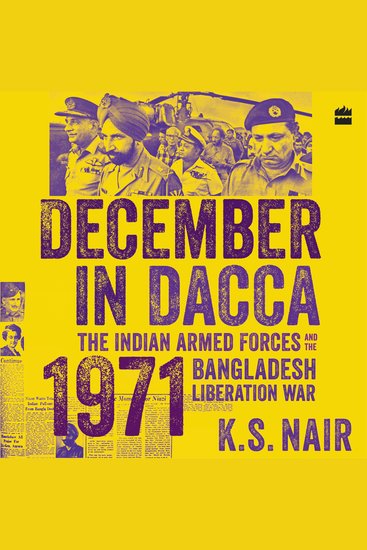
    The 1971 war between India and Pakistan, to help liberate the beleaguered people of Bangladesh, is considered one of the last 'just wars' of the twentieth century. Good triumphed decisively, unequivocally and indisputably. Yet, given the scale of atrocity that was halted in its tracks, it is shocking that the compelling circumstances as well as numerous poignant and heart-warming stories of the war have failed to become iconic representations of military intervention and success in the folklore and popular culture of India, Bangladesh and beyond. 
    December in Dacca seeks to right this wrong. From the dramatic dogfight over Boyra to the cornering of Pakistani naval vessels at Karachi to the Indian helicopter-riding infantry and paratroopers forcing the enemy to retreat, the book retells the many thrilling anecdotes, setting them within their diplomatic, strategic and tactical contexts. 
    It also provides a glimpse into the lives of some of these heroes once the dust had settled. Most importantly, it offers thoughts on why the events of 1971 are not better known, and how a better understanding of those could help India reaffirm her sense of self.
    Mostra libro
  • The Coming Storm - Power Conflict and Warnings from History - cover

    The Coming Storm - Power...

    Odd Arne Westad

    • 0
    • 0
    • 0
    From a renowned Yale historian comes a chilling look at the looming threat of the next Great Power war and the urgent interventions necessary to avoid it in the twenty-first century. The vast majority of people alive today have come of age in a world of remarkable stability, presided over by either one or two Superpowers. This is not to say the world has been peaceful; but it has, to a great extent, been predictable. As an increasing number of Great Powers jostle for regional supremacy, as well as competitive advantage in nuclear technology, artificial intelligence, space exploration, and trade, our world has become more fragile, unpredictable—and combustible. The outbreak of global war among today’s Great Powers seems increasingly likely. Such war, as Odd Arne Westad powerfully argues in this urgent book, would be of a magnitude and devastation never before seen. To understand the threats that face us in this complex new terrain, we must look to the lessons of the past, and especially the late nineteenth and early twentieth century—a time when Great Powers clashed and sought regional dominance, nationalism and populism were on the rise, and many felt that globalization had failed them; a time when tariffs increased, immigration and terrorism were among the biggest issues of the day, and a growing number of people blamed the citizens of other countries for their problems. A time, in other words, that carries eerie parallels with our own.
    Mostra libro
  • Stuff Matters - Exploring the Marvelous Materials That Shape Our Man-Made World - cover

    Stuff Matters - Exploring the...

    Mark Miodownik

    • 0
    • 0
    • 0
    A New York Times BestsellerAn eye-opening adventure deep inside the everyday materials that surround us, packed with surprising stories and fascinating scienceWhy is glass see-through? What makes elastic stretchy? Why does a paper clip bend? Why does any material look and behave the way it does? These are the sorts of questions that Mark Miodownik is constantly asking himself. A globally-renowned materials scientist, Miodownik has spent his life exploring objects as ordinary as an envelope and as unexpected as concrete cloth, uncovering the fascinating secrets that hold together our physical world.In Stuff Matters, Miodownik entertainingly examines the materials he encounters in a typical morning, from the steel in his razor and the graphite in his pencil to the foam in his sneakers and the concrete in a nearby skyscraper. He offers a compendium of the most astounding histories and marvelous scientific breakthroughs in the material world, including:The imprisoned alchemist who saved himself from execution by creating the first European porcelain.The hidden gem of the Milky Way, a planet five times the size of Earth, made entirely of diamond.Graphene, the thinnest, strongest, stiffest material in existence—only a single atom thick—that could be used to make entire buildings sensitive to touch.From the teacup to the jet engine, the silicon chip to the paper clip, the plastic in our appliances to the elastic in our underpants, our lives are overflowing with materials. Full of enthralling tales of the miracles of engineering that permeate our lives, Stuff Matters will make you see stuff in a whole new way.
    Mostra libro
  • History of Marathas EP10 - Death of Sambhaji - cover

    History of Marathas EP10 - Death...

    Vikrant Pande

    • 0
    • 0
    • 0
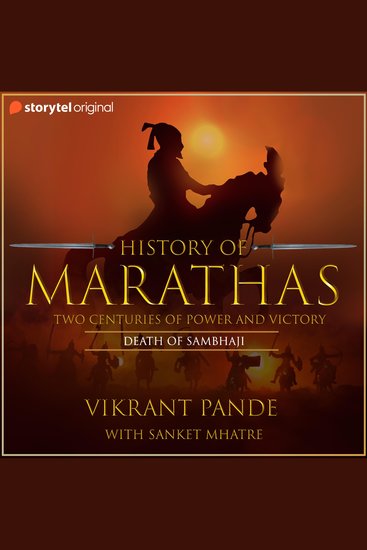
    The Badshah growled once more. He dismissed the men holding the weapons and indicated to a group of men who wore iron claws. At his glance, two of them came near Sambhaji. One of them behind him and one facing him. From his neck to the spine and from his throat to his stomach, the men pulled his skin down as the trumpets and horns started blowing. The men shouted Deen Deen! Skin peeled off Sambhaji's back, neck, chest and stomach. His whole body was a bloodied mess.
    But Sambhaji did not allow his voice to be heard by anyone present. He did not scream or shout. Clenching his teeth he bore the intense and almost unbearable pain. His body, now red with blood, shivered from head to toe. Like the milk which gathers at the base of the Shivalinga, his blood gathered at his feet. Aurangzeb laughed hysterically, seeing Sambhaji's body now peeled like the way a butcher skins a goat.
    Mostra libro
  • Anglo-Ashanti Wars and the Anglo-Zulu War The: The History of the British Empire’s Costliest Campaigns against Indigenous Africans - cover

    Anglo-Ashanti Wars and the...

    Editors Charles River

    • 0
    • 0
    • 0
    By the mid-19th century, other European powers became interested not only in the exploration of Africa but the exploitation of it, especially once the German Empire unified after the Franco-Prussian War. This began a rush, spearheaded mainly by European commercial interests in the form of chartered companies, to penetrate the African interior and woo its leadership with guns, trinkets and alcohol, and having thus obtained their marks or seals upon spurious treaties, begin establishing boundaries of future European colonies. The ease with which this was achieved was due to the fact that, at that point, traditional African leadership was disunited, and the people had just staggered back from centuries of concussion inflicted by the slave trade. Thus, to usurp authority, to intimidate an already broken society, and to play one leader against the other was a diplomatic task so simple, much of Africa would come under European influence in a short time.  
    	For almost a century, the British in West Africa were faced with a powerful and stubborn African opponent: the Ashanti Empire. The Ashanti were formed by alliance and the conquest of the Akan people in the rainforest zone between the West African coast and the Sahel country to the north. 	The Ashanti fought the British in five wars over the nineteenth century, and they were the only West African people inflicting more than one defeat on the British. War in tropical West Africa was different from most of the rest of the world. The prevalence of endemic diseases like malaria typically killed half of the Europeans posted there per year; it was called “The White Man’s Grave” for a reason. A second factor was the presence of the tsetse fly that carried a disease able to kill horses quickly. Military expeditions were left to move entirely on foot, carrying whatever drafted or hired laborers could carry. There were no carts, no wagons, no pack animals, and no cavalry. 
    Mostra libro