Begleiten Sie uns auf eine literarische Weltreise!
Buch zum Bücherregal hinzufügen
Grey
Einen neuen Kommentar schreiben Default profile 50px
Grey
Jetzt das ganze Buch im Abo oder die ersten Seiten gratis lesen!
All characters reduced
Loving Limits - Say No with Respect and Connection - cover

Loving Limits - Say No with Respect and Connection

T.S Avini

Verlag: T.S. AVINI

  • 0
  • 0
  • 0

Beschreibung

"Loving Limits: Say No with Respect and Connection" is your ultimate guide to mastering the delicate art of saying no while strengthening relationships. This book reveals the profound impact of boundaries on personal growth and relationship dynamics.- Explore techniques for compassionate communication that transform "no" from a simple refusal into an invitation for deeper understanding.- Learn practical methods for identifying and setting personal boundaries in various aspects of life—from family and romantic relationships to friendships and professional environments.Discover how to overcome the fear of rejection and guilt, two common obstacles that prevent people from asserting their needs. This book empowers you to cultivate self-awareness and mindfulness, guiding you towards decisions that align with your values. Embrace respectful assertiveness and gain the confidence to express yourself with kindness and clarity. With this insightful book, you can create supportive environments that foster lasting connections and personal well-being.Take the first step in living a more balanced and fulfilling life. Dive into "Loving Limits" and find your voice!
Verfügbar seit: 14.08.2025.
Drucklänge: 188 Seiten.


Weitere Bücher, die Sie mögen werden

  • Technocracy Explained - The Role of Technological Expertise in Government and Policy-Making - cover

    Technocracy Explained - The Role...

    Arlo Holders

    • 0
    • 0
    • 0
    Technocracy is a concept that has evolved over time, yet its core principles remain focused on the idea that governance should be driven by scientific knowledge and technical expertise rather than political ideologies or populist sentiments. The term "technocracy" was first introduced in the early 20th century by engineers and economists who believed that the efficient management of resources and societal development could only be achieved through the application of scientific principles. Technocrats argued that political leaders, often with little to no understanding of complex systems, were ill-equipped to make decisions that could optimize society’s functioning, particularly in times of rapid industrialization and technological advancement. 
    The origins of technocracy can be traced back to the industrial revolution, when technological innovations began reshaping economies and societies. However, the movement gained significant traction in the early 1930s during the Great Depression, a period of economic turmoil that called into question traditional governance models. During this time, scholars like Howard Scott and engineers from the Technocratic Movement in the United States called for the establishment of a technocratic society where engineers, scientists, and other experts would manage the economy based on data-driven decision-making rather than political influence. They believed that such a system would eliminate inefficiencies, social inequalities, and the corruption they associated with political governance.
    Zum Buch
  • Mark Twain: A short biography - 5 Minutes: Short on time - long on info! - cover

    Mark Twain: A short biography -...

    5 Minutes, 5 Minute Biographies,...

    • 0
    • 0
    • 0
    Mark Twain, humorist and bestselling author: Life and works in a short biography! Everything you need to know, brief and concise. Infotainment, education and entertainment at its best!
    Zum Buch
  • Praxis Tacticum - The Art Science and Practice of Military Tactics - cover

    Praxis Tacticum - The Art...

    Colonel Charles S. Oliviero

    • 0
    • 0
    • 0
    Pundits have long predicted the end of conventional warfare but for the foreseeable future, 
    it is here to stay. Counterinsurgency, guerrilla warfare, terrorism, peace enforcement, policing. 


    All these forms, like conventional warfare, are as old as mankind. Modern militaries claim to be 
    professional bodies, responsible for the education, control, and discipline of their members. But at least one aspect of this claim is poorly executed: tactics are not taught to junior leaders, which is why this guide is essential for all junior leaders, officers, and NCOs alike. 


    There is a military adage that there is no teacher like the enemy. True; but the wise commander 
    prepares to meet that enemy and become their teacher instead. This is your essential study guide.
    Zum Buch
  • The ADHD Consultation Hour ADHD in Adults Update 2025 - cover

    The ADHD Consultation Hour ADHD...

    Dr. Gerrit Scherf

    • 0
    • 0
    • 0
    The first edition of the 'small ADHD consultation', published in 2014, was originally created to provide my patients with a quick overview of the broad field of ADHD symptoms in adults as summarised as possible. It was important to me to integrate accompanying disorders and therapeutic options such as medication and coaching strategies. It is not uncommon for the underlying ADHD symptoms to be masked by disorders that develop later (such as obsessive thinking, anxiety, panic attacks and addictions). Only abnormalities in childhood, such as dreaminess or motor restlessness with impulsiveness, allow conclusions to be drawn. Patients and friends were kind enough to embellish this book with their contributions, sketches, pictures and poems. The significantly expanded 3rd edition of the 'Little ADHD Consultation' is due to the increased needs and demands of my patients and the new findings concerning ADHD. New topics such as neurofeedback, medication overview, neurobiological aspects and autistic accompanying phenomena as well as legal aspects and cannabis medication have been included. I wish you many A-HA experiences with this expansion.
    Zum Buch
  • Ethics - cover

    Ethics

    Aristotle

    • 0
    • 0
    • 0
    Ethics is a philosophical work written by Aristotle, in which he explores the nature of human morality and virtue. In this work, Aristotle seeks to identify the highest good for human beings and determine how individuals can live a good life. Aristotle argues that the ultimate goal of human life is to achieve happiness or eudaimonia, which he defines as a state of complete well-being and fulfillment. He believes that happiness is achieved through the cultivation of virtues, which are habits of behavior that allow individuals to act in ways that promote the common good. Read in English, unabridged.
    Zum Buch
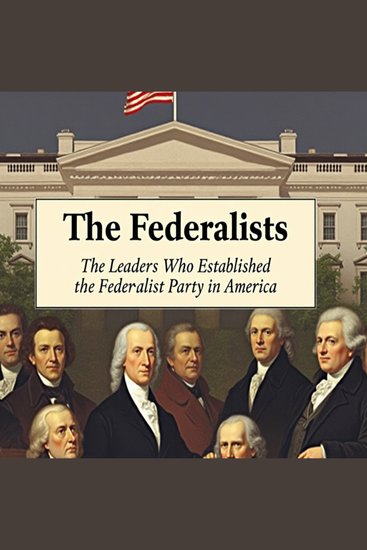
  • Federalists The: The Leaders Who Established the Federalist Party in America - cover

    Federalists The: The Leaders Who...

    Editors Charles River

    • 0
    • 0
    • 0
    Every American is taught a pristine narrative of the life and legacy of George Washington and can easily recite the highlights of the “Father of Our Country”. The remarkable Virginian led an under-resourced rag-tag army to ultimate victory in the American Revolution before becoming the nation’s first president, setting it on its path toward superpower status. He may not have actually chopped down a cherry tree or tossed a silver dollar across the Potomac, but his contemporaries considered his character above reproach. When Washington voluntary resigned as commander of the armies, he stunned the world. Everyone in the colonies and the world realized that Washington, at the head of the last army standing in the colonies, could have made himself king of the new United States on the spot, and it would have been a move supported by his rank and file soldiers.  
    Politically, John Adams shared Washington’s preference for Britain as well as his preference of non-interference. However, while he was certainly the more significant man in his work and his governing, he could never seem to move out of Washington’s shadow. Even worse, his presidency was seen as threatening to the very essence of American liberty with the Alien and Sedition Acts, and his loss to Jefferson in 1800 was a repudiation of the Federalists that left Jeffersonians in power until John Quincy Adams was elected in 1824. His presidency is still viewed relatively unfavorably. 
    	The Founding Fathers have been revered by Americans for over 200 years, celebrated for creating a new nation founded upon the loftiest ideals of democracy and meritocracy. But if the American Dream has come to represent the ability to climb the social ladder with skill and hard work, no Founding Father represented the new America more than Alexander Hamilton. Hamilton is also well remembered for his authorship, along with John Jay and James Madison, of the Federalist Papers. 
    Zum Buch