Begleiten Sie uns auf eine literarische Weltreise!
Buch zum Bücherregal hinzufügen
Grey
Einen neuen Kommentar schreiben Default profile 50px
Grey
Jetzt das ganze Buch im Abo oder die ersten Seiten gratis lesen!
All characters reduced
Local Wealth - How Community Currencies Can Boost Your Economy - cover

Local Wealth - How Community Currencies Can Boost Your Economy

T.S Avini

Verlag: T.S. AVINI

  • 0
  • 0
  • 0

Beschreibung

"Local Wealth: How Community Currencies Can Boost Your Economy" delves into the often-overlooked world of community-based monetary systems. Discover how these innovative currencies can effectively bolster local economies by keeping wealth within local communities.- Uncover historical perspectives on money and explore how alternative currencies can drive local economic growth, reduce dependency on global financial systems, and enhance resilience against financial volatility.- Learn from successful case studies around the globe that showcase thriving community currency models. See how local currencies empower communities by encouraging local spending, supporting small businesses, and fostering social cohesion.- Each chapter provides practical steps and strategies for engaging local businesses and gaining community support, emphasizing the critical role of technology in designing scalable and sustainable local currencies.Game-changing insights are backed by real-world examples and expert practitioner advice. Transform your community with practical steps and become part of a groundbreaking movement. Dare to imagine a prosperous future with revitalized local economies; embrace the power of community currencies today!
Verfügbar seit: 07.08.2025.
Drucklänge: 245 Seiten.

Weitere Bücher, die Sie mögen werden

  • The Venlo Sting - MI6's Deadly Fiasco - cover

    The Venlo Sting - MI6's Deadly...

    Norman Ridley

    • 0
    • 0
    • 0
    "I would recommend the book to intelligence practitioners, scholars, and other persons interested in World War II intelligence history." —Michael Nady, American Intelligence JournalOn 9 November 1939, two unsuspecting British agents of the Special Intelligence Services walked into a trap set by German Spymaster Reinhard Heydrich. Believing that they were meeting a dissident German general for talks about helping German military opposition to bring down Hitler and end the war, they were instead taken captive in the Dutch village of Venlo and whisked away to Germany for interrogation by the Gestapo. The incident was a huge embarrassment for the Dutch government and provided the Germans with significant intelligence about SIS operations throughout Europe.  The incident itself was an intelligence catastrophe but it also acts as a prism through which a number of other important narrative strands pass. Fundamental to the subterfuge perpetrated at Venlo were unsubstantiated but insistent rumours of high-ranking German generals plotting to overthrow the Nazi regime from within. After the humiliation suffered when Hitler tore up the Munich Agreement, British Prime Minister Neville Chamberlain was anxious to see just how much truth there was in these stories; keen to rehabilitate his reputation through one last effort to find a peaceful rapprochement with Germany.  When Franz Fischer, a small-time petty crook and agent provocateur, persuaded British SIS operatives in the Netherlands that he could act as a go-between for the British government with disaffected German generals, the German Security chief Reinhard Heydrich stepped in and quietly took control of the operation. Heydrich’s boss, head of the Gestapo Heinrich Himmler, was anxious to explore the possibility of peace negotiations with Britain and saw an opportunity to exploit the situation for his personal benefit.  On the day before a crucial meeting of conspirators and British agents on the Dutch-German border, a bomb exploded in the Bürgerbräukeller in Munich in the exact spot where Hitler had stood to deliver a speech only minutes earlier. The perpetrator was quickly arrested, and Hitler demanded that Himmler find evidence to show that the two events were intimately connected—the British agents were snatched hours later.  While the world was coming to terms with the fearsome power of German military might the British intelligence capability in northern Europe was consigned to the dustbin in the sleepy Dutch town of Venlo. This first full account of the Venlo incident explores the wider context of this German intelligence coup, and its consequences.
    Zum Buch
  • On the Legal Democratic Mass Movement - cover

    On the Legal Democratic Mass...

    José Maria Sison

    • 0
    • 0
    • 0
    The crisis of the world capitalist system and that of the Philippine ruling system have become worse than in any period after World War II. The US-instigated policies of neoliberal globalization, state terrorism and aggressive war have wrought havoc on the lives of the people and continue to escalate oppression and exploitation. The Filipino people cannot tolerate their suffering and they are fighting back against imperialism and all reaction. 
      
    The loss or erosion of livelihoods is the most concrete and widespread impact of the current crisis of the world capitalist system on people's lives, both in the advanced capitalist countries as well as in the underdeveloped countries. Despite recent pronouncements from state officials and the business press that economic recovery is in sight, the global economy continues to tumble with the gross domestic product of the leading capitalist countries still contracting, consumer spending still in decline and unemployment still rising.
    Zum Buch
  • Can Deliberation Cure the Ills of Democracy? - cover

    Can Deliberation Cure the Ills...

    James S. Fishkin

    • 0
    • 0
    • 0
    In our modern world of propaganda, social media enclaves, misinformation, and manipulation, the connection between "the will of the people" and political action has broken down, political divisions are becoming increasingly intractable, and democracies are growing ever more ungovernable. Democracy is in crisis. 


    In Can Deliberation Cure the Ills of Democracy?, James S. Fishkin argues that deliberative democracy can have surprisingly positive effects on all of these problems and charts a unique path to fixing them with his method of Deliberative Polling. After decades of applying and perfecting the methods of deliberative democracy in countries all over the world, this book synthesizes the results of 150 applications and shows how the method can be applied to resolve many of democracy's seemingly intractable challenges. It can clarify the public will and depolarize our divisions. 


    Fishkin demonstrates that deliberative democracy is a practical solution if applied widely and lays out a vision for how to combine elections with deliberation to build a more deliberative society, one that cures our extreme partisanship and leads to substantive dialogues that foster mutual respect and more engaged voters. Deliberation provides a story of thoughtful empowerment and democratic reform, strengthening but not replacing our current institutions.
    Zum Buch
  • What is Property? - cover

    What is Property?

    Pierre-Joseph Proudhon

    • 0
    • 0
    • 0
    "What is Property?" is a book written by Pierre Joseph Proudhon, a French philosopher and political theorist. The book is a critique of property rights and capitalist economic systems, and it argues for a more egalitarian and democratic society. 
    Proudhon's central thesis is that property rights are inherently unjust and that they allow the rich to exploit the poor. He argues that property should be abolished and replaced with a system of communal ownership, in which individuals share and cooperate in the use and distribution of resources. 
    In the book, Proudhon also explores the origins and development of property rights, tracing their history from the earliest human societies to the modern capitalist era. He criticizes the idea that property rights are based on natural law or divine mandate, arguing instead that they are a product of historical and social conditions. 
    Overall, "What is Property?" is a radical critique of capitalism and property rights that has had a significant impact on political theory and social movements. It is considered a foundational text of anarchist and socialist thought and remains a key reference for anyone interested in the history and development of economic and political systems
    Zum Buch
  • National Questions: Theoretical Reflections on Nations and Nationalism in Eastern Europe - cover

    National Questions: Theoretical...

    Alexander Motyl

    • 0
    • 0
    • 0
    Motyl questions conventional wisdom, exposes its inconsistencies and weaknesses, and encourages readers to rethink their views.
    Zum Buch
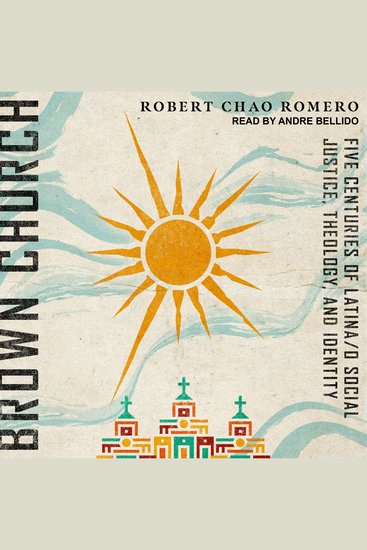
  • Brown Church - Five Centuries of Latina o Social Justice Theology and Identity - cover

    Brown Church - Five Centuries of...

    Robert Chao Romero

    • 0
    • 0
    • 0
    Foreword INDIES Book of the Year Finalist 


    Interest in and awareness of the demand for social justice as an outworking of the Christian faith is growing. But it is not new. 


    For five hundred years, Latina/o culture and identity have been shaped by their challenges to the religious, socio-economic, and political status quo, whether in opposition to Spanish colonialism, Latin American dictatorships, US imperialism in Central America, the oppression of farmworkers, or the current exploitation of undocumented immigrants. Christianity has played a significant role in that movement at every stage. 


    Robert Chao Romero, the son of a Mexican father and a Chinese immigrant mother, explores the history and theology of what he terms the "Brown Church." Romero considers how this movement has responded to these and other injustices throughout its history by appealing to the belief that God's vision for redemption includes not only heavenly promises but also the transformation of every aspect of our lives and the world. Walking through this history of activism and faith, listeners will discover that Latina/o Christians have a heart after God's own.
    Zum Buch