Rejoignez-nous pour un voyage dans le monde des livres!
Ajouter ce livre à l'électronique
Grey
Ecrivez un nouveau commentaire Default profile 50px
Grey
Abonnez-vous pour lire le livre complet ou lisez les premières pages gratuitement!
All characters reduced
The Spirit of Budo - cover

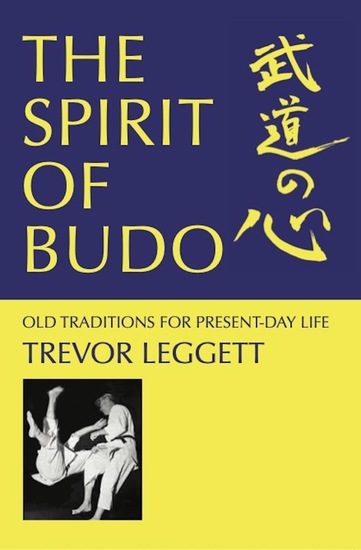
The Spirit of Budo

Trevor Leggett

Maison d'édition: TLAYT

  • 0
  • 0
  • 0

Synopsis

This book comprises eighteen essays which appeared in the monthly
Budo  magazine. They are written with simplicity and humour, but with
an underlying discipline and authority derived from a lifetime of spiritual
and martial arts training in Adhyatma Yoga, Judo and Zen. Trevor Leggett
addresses matters including sportsmanship, achieving freedom of mind,
training the inner self, developing an inner calm, and the four keys to
learning – instruction, observation inference and personal experience. He
looks at the cultivation of these Budo qualities and suggests ways in which
the lessons learned can be applied to daily life as well as to the practice
of the martial arts.
Disponible depuis: 08/06/2023.
Longueur d'impression: 145 pages.
D'autres livres qui pourraient vous intéresser

  • How to Have a Life - An Ancient Guide to Using Our Time Wisely - cover

    How to Have a Life - An Ancient...

    Seneca

    • 0
    • 0
    • 0
    A vibrant new translation of Seneca's "On the Shortness of Life," a pointed reminder to make the most of our time 


    Who doesn't worry sometimes that smart phones, the Internet, and TV are robbing us of time and preventing us from having a life? How can we make the most of our time on earth? In the first century AD, the Stoic philosopher Seneca the Younger offered one of the most famous answers to that question in his essay "On the Shortness of Life"—a work that has more to teach us today than ever before. In How to Have a Life, James Romm presents a vibrant new translation of Seneca's brilliant essay, plus two Senecan letters on the same theme, complete with an inviting introduction. 


    With devastating satiric wit, skillfully captured in this translation, Seneca lampoons the ways we squander our time and fail to realize how precious it is. We don't allow people to steal our money, yet we allow them to plunder our time, or else we give it away ourselves in useless, idle pursuits. Seneca also describes how we can make better use of our brief days and years. In the process, he argues, we can make our lives longer, or even everlasting, because to live a real life is to attain a kind of immortality.
    Voir livre
  • Self-Care for Well-Being - Strategies to Nurture Your Mind Body and Spirit - cover

    Self-Care for Well-Being -...

    Anna Bridges

    • 0
    • 0
    • 0
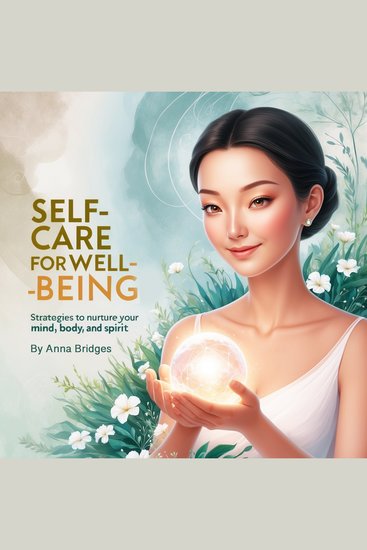
    Self-care is the conscious practice of taking care of oneself—physically, mentally, and emotionally—by engaging in activities that promote well-being. It is about recognizing the need for balance and nurturing our whole self. When we engage in self-care, we are actively choosing to invest in our health and happiness, which in turn enhances our ability to care for others and handle life’s challenges. It’s a practice that requires time, effort, and commitment, but its benefits are immeasurable. 
      
    The connection between mind, body, and spirit is at the heart of self-care. Each of these areas is intricately linked, and neglecting one can affect the others. For example, mental stress can lead to physical fatigue, and physical health challenges can impact our emotional state. When we address our self-care needs holistically, we are nurturing all aspects of our being, fostering a sense of harmony that radiates throughout our lives. By giving attention to each part of ourselves—our thoughts, our body, and our spirit—we cultivate a sense of balance and fulfillment that supports long-term well-being.
    Voir livre
  • The South - Jim Crow and Its Afterlives - cover

    The South - Jim Crow and Its...

    Jr. Adolph L. Reed, Barbara J....

    • 0
    • 0
    • 0
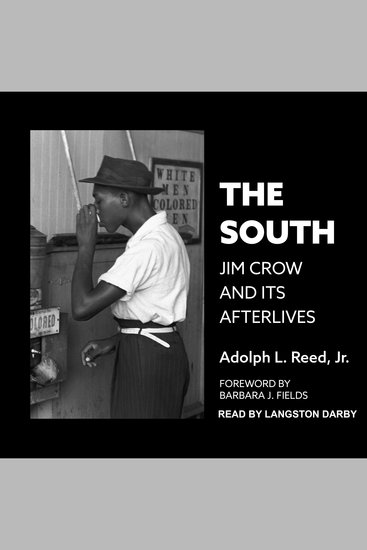
    The last generation of Americans with a living memory of Jim Crow will soon disappear. They leave behind a collective memory of segregation shaped increasingly by its horrors and heroic defeat but not a nuanced understanding of everyday life in Jim Crow America. In The South, Adolph L. Reed Jr.—New Orleanian, political scientist, and according to Cornel West, "the greatest democratic theorist of his generation"—takes up the urgent task of recounting the granular realities of life in the last decades of the Jim Crow South. 


    Reed illuminates the multifaceted structures of the segregationist order. Through his personal history and political acumen, we see America's apartheid system from the ground up, not just its legal framework or systems of power, but the way these systems structured the day-to-day interactions, lives, and ambitions of ordinary working people. 


    The South is more than a memoir or a history. Filled with analysis and fascinating firsthand accounts of the operation of the system that codified and enshrined racial inequality, this book is required reading for anyone seeking a deeper understanding of America's second peculiar institution the future created in its wake.
    Voir livre
  • A Constitution for the Common Good - Strengthening Scottish Democracy After 2014 - cover

    A Constitution for the Common...

    W Elliot Bulmer

    • 0
    • 0
    • 0
    If Scotland has voted YES on 18 September, how can a written Constitution be good for the people of Scotland?
    
    If Scotland has voted NO, how could a new Constitution protect and enhance Scottish democracy within a restructured UK?
    
    Whether YES or NO, a reconstituted Scotland is possible and good for all its citizens.
    
    
    Nearly every democracy in the world is built upon a written constitution, and constitutions have been at the core of citizens' demands for better governance in places as disparate as Kenya, Tunisia and Ukraine. With the Scottish National Party promising a written constitution in the event of a YES vote and other parties suggesting other possible options for constitutional change in the event of a NO vote, constitutional change looks certain to remain central to the political agenda in Scotland for some time to come.


    But what is a constitution for? Is it a defensive charter to protect the basic structures of democratic government, or is it a transformative covenant for a better society? How can the Constitution sustain democracy and promote ethical politics while at the same time recognising and accommodating differences in society? What difference would a good Constitution make to the poor? How can the Constitution help ensure that the common good of the citizenry prevails over private vested interests?


    In addressing these questions, this book sets out a vision for how Scotland could reconstitute itself. It emphasises the connection between the constitution, democracy and the common good, arguing that democratic self-government is the true prize, regardless of the relationship of Scotland to the rest of the UK.


    This book not only makes a vital contribution to Scotland's current and on-going constitutional debate, whatever the outcome in September 2014, but also engages with fundamental questions of constitutionalism and democracy that are of enduring relevance to both citizens and scholars around the world.
    Voir livre
  • Unraveling the Knot - The Palestine-Israeli Conflict Explained And The Possible Solutions - cover

    Unraveling the Knot - The...

    Davis Truman

    • 0
    • 0
    • 0
    The Israel-Palestine conflict has captured global attention and stirred passionate debates for decades. "Unraveling the Knot" offers a comprehensive and accessible exploration of the conflict's historical roots, evolution, and the intricate web of factors contributing to its intractability. Whether you are a newcomer seeking to grasp the basics or a seasoned observer looking for fresh insights, this book provides a balanced and insightful perspective. 
    Key highlights of "Unraveling the Knot" include: 
    ü Historical Context: Gain a deep understanding of the conflict's origins from the early 20th century. Explore the critical events, personalities, and decisions that have shaped the region's destiny. 
    ü Multifaceted Analysis: A deep analysis of the complex socio-political, religious, and geopolitical factors that have fueled the conflict, providing a nuanced view of its many dimensions. 
    ü Possible Solutions: "Unraveling the Knot" examines various proposed solutions and peace initiatives, shedding light on the challenges and opportunities for a lasting resolution. It presents a forward-looking perspective, emphasizing the importance of dialogue and cooperation. 
    "Unraveling the Knot" is an indispensable resource for students, academics, policymakers, and anyone seeking deeper insight into the Palestine-Israeli conflict. It is a timely and enlightening read that bridges the gap between history and hope, providing a roadmap toward a more peaceful and just future for all involved.
    Voir livre
  • Medieval Medicine - Practices and Beliefs - cover

    Medieval Medicine - Practices...

    Harris Ropes

    • 0
    • 0
    • 0
    Medieval medicine was deeply rooted in the knowledge and traditions inherited from antiquity. The healing practices of this era were shaped by ancient medical texts, religious doctrine, and the widespread belief in the humoral theory. These influences created a medical system that blended scientific understanding with spiritual and superstitious elements, guiding both diagnosis and treatment. 
    Ancient medical texts played a crucial role in shaping medieval medical thought. The works of Greek and Roman physicians, particularly Hippocrates and Galen, were preserved and studied throughout the Middle Ages. Their teachings on anatomy, physiology, and disease informed medical practice for centuries. Galen’s theories, in particular, dominated medieval medicine, as they were seen as authoritative explanations of bodily functions and imbalances. Additionally, medical knowledge from the Islamic world, especially from scholars such as Avicenna and Al-Razi, was translated into Latin and integrated into European medical education. These texts provided new insights and expanded the understanding of disease and treatment methods. 
    Religion was a dominant force in medieval medical practices. The Christian Church played a central role in both medical care and the dissemination of medical knowledge. Many hospitals were founded and operated by religious institutions, and healing was often associated with divine intervention. Monks and priests studied medical texts, offering treatments based on both practical remedies and spiritual practices. Prayers, relics, and pilgrimages to sacred sites were commonly sought as cures for illnesses. Saints were believed to have healing powers, and their relics were used in healing rituals. Despite the reliance on faith-based healing, religious institutions also preserved and transmitted valuable medical knowledge, ensuring that ancient texts survived and continued to influence medieval medical practices.
    Voir livre