Begleiten Sie uns auf eine literarische Weltreise!
Buch zum Bücherregal hinzufügen
Grey
Einen neuen Kommentar schreiben Default profile 50px
Grey
Jetzt das ganze Buch im Abo oder die ersten Seiten gratis lesen!
All characters reduced
Agrarian Crossings - Reformers and the Remaking of the US and Mexican Countryside - cover

Agrarian Crossings - Reformers and the Remaking of the US and Mexican Countryside

Tore C. Olsson

Verlag: Princeton University Press

  • 0
  • 0
  • 0

Beschreibung

In the 1930s and 1940s, rural reformers in the United States and Mexico waged unprecedented campaigns to remake their countrysides in the name of agrarian justice and agricultural productivity. Agrarian Crossings tells the story of how these campaigns were conducted in dialogue with one another as reformers in each nation came to exchange models, plans, and strategies with their equivalents across the border.Dismantling the artificial boundaries that can divide American and Latin American history, Tore Olsson shows how the agrarian histories of both regions share far more than we realize. He traces the connections between the US South and the plantation zones of Mexico, places that suffered parallel problems of environmental decline, rural poverty, and gross inequities in land tenure. Bringing this tumultuous era vividly to life, he describes how Roosevelt’s New Deal drew on Mexican revolutionary agrarianism to shape its program for the rural South. Olsson also looks at how the US South served as the domestic laboratory for the Rockefeller Foundation’s “green revolution” in Mexico—which would become the most important Third World development campaign of the twentieth century—and how the Mexican government attempted to replicate the hydraulic development of the Tennessee Valley Authority after World War II.Rather than a comparative history, Agrarian Crossings is an innovative history of comparisons and the ways they affected policy, moved people, and reshaped the landscape.
Verfügbar seit: 02.08.2017.
Drucklänge: 288 Seiten.
Weitere Bücher, die Sie mögen werden

  • Second Forgetting - Remembering the Power of the Gospel during Alzheimer’s Disease - cover

    Second Forgetting - Remembering...

    Dr. Benjamin T. Mast, Scotty Smith

    • 0
    • 0
    • 0
    There is hope in Alzheimer's disease, but it isn't where most people look for it... 
    Any form of dementia is terrifying and lonely for both the one suffering it and for those close to them. How do our relationships with those we love change with loss of memory or clarity of thought? What happens to our relationship with God? 
    For those suffering from early-stage Alzheimer's, for their friends and family, community and church, this book will help you understand the disease itself, how to love and care for those affected by it, and how to see the hope that's greater than it: we may forget, but God always remembers. 
    With pastoral tenderness and gospel confidence, Dr. Benjamin Mast shares his expertise on the subject and displays the power of the gospel that remains intact even when memory fades. Second Forgetting provides:Up-to-date answers to common questions about the disease and its effect on personal identity and faith.Personal stories of those affected and the loved ones who care for them and what their experiences were like—where they found hope and how they most needed support.Practical suggestions for how the church can come alongside families and those struggling or hurting. 
    When a person is diagnosed with Alzheimer's, they face great uncertainty, knowing that they can expect to live their remaining years with increasing confusion and progressively greater reliance upon other people to care for them. Dr. Mast will help you see how Alzheimer's disease cannot have the final say on God's unforgotten children. 
    Reflection questions are included in the audiobook companion PDF download.
    Zum Buch
  • The Rime of the Ancient Mariner - Kubla Khan Christabel Frost at Midnight The Nightingale To William Wordsworth and others - cover

    The Rime of the Ancient Mariner...

    Samuel Taylor Coleridge

    • 0
    • 0
    • 0
    "The Rime of the Ancient Mariner" by Samuel Taylor Coleridge is a classic narrative poem that follows the harrowing journey of a mariner who faces supernatural occurrences and the consequences of his actions.
    Each poem in this collection showcases Coleridge's mastery of language, imagery, and symbolism, inviting readers on a journey through landscapes both real and imagined. 
    From the eerie enchantment of "Kubla Khan" to the gothic suspense of "Christabel" and the tranquil introspection of "Frost at Midnight," this collection offers a diverse range of poetic experiences. Through themes of nature, imagination, and the human condition, Coleridge's poetry continues to resonate with readers across generations.
    "The Rime of the Ancient Mariner" is a captivating compilation that showcases the timeless beauty and enduring appeal of Coleridge's poetry.
    Zum Buch
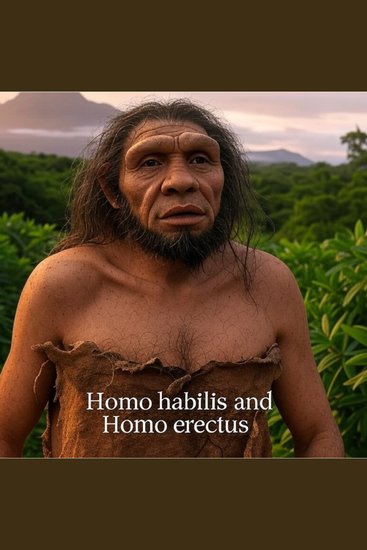
  • Homo habilis and Homo erectus: The History and Legacy of Modern Humans’ Direct Ancestors - cover

    Homo habilis and Homo erectus:...

    Editors Charles River

    • 0
    • 0
    • 0
    The evolutionary path from the original primates to modern man is a long one and has taken many twists and turns, but naturally, as the fossil record grows, scientists gain a more complete understanding of our own mental and physical history in terms of genetics and anatomy. However, the correct order and relationships of the various specimen types are difficult to pin down. Many representative samples have been found in such minute amounts as to not preclude anomalies. They have been discovered in various stages of wear. Modern features did not occur simultaneously or uniformly, taking millions of years to become manifest in later types. Up to the present day’s Homo sapiens, examples of the main types have been hybrids of older and more modern features. 
    	One of the earliest species of the genus Homo to be discovered is Homo habilis, which basically means “handy man.” The name comes from the belief at the time of its discovery that this species was the first to start using stone tools. The first fossils to be uncovered in Olduvai Gorge were from the same stratigraphic layer as simple stone tools. Fossils of the crania and postcranial skeleton for this species have been found in both eastern and southern Africa and date to around 2.5–1.6 million years ago.  
    	Given the gradual changes that take place in evolution, Homo habilis shares a number of characteristics that are similar to the genus Australopithecus, such as in the postcranial elements. That said, the size and shape of the Homo habilis skull are markedly different. The size of the brain is much larger relative to the size of the body, being around 680 cc. In order to house a larger brain, the skull features a more vertical frontal bone, creating a more vertical forehead. The brow ridges that sit on the lower portion of the frontal bone are also reduced in size.
    Zum Buch
  • The Broken Rung - When the Career Ladder Breaks for Women--and How They Can Succeed in Spite of It - cover

    The Broken Rung - When the...

    Lareina Yee, Kweilin Ellingrud,...

    • 0
    • 0
    • 0
    Women around the world do extremely well when it comes to their education. They graduate at higher rates than men and have higher average GPAs. But then a strange thing happens: upon entering the workforce, they immediately lose their advantage. When the first promotions come around, the slide continues. For every 100 men promoted to manager, only 81 women overall and 77 women of color get promoted. 


    This is what McKinsey senior partners Kweilin Ellingrud, Lareina Yee, and María del Mar Martínez call "the broken rung," and its effects compound throughout women's careers. In this groundbreaking book, the authors reveal the problem's underlying cause: while about half of a person's lifetime earnings come from education and half from work experience, men get more value from their experience than women do. It is also here, in one's work experience, that the solution lies: women need to build their "experience capital" to level the playing field and maximize their earning potential. 


    The book combines over a decade of research, personal conversations with more than fifty remarkable leaders, and the authors' own rich experiences as leaders at McKinsey. They weave data on the potential pitfalls with inspiring and instructive stories of women who have climbed over the broken rung using strategies that increased their experience capital. 


    Stay tuned at the end of the audiobook for an exclusive author conversation.
    Zum Buch
  • Darko - cover

    Darko

    Kenny G Down

    • 0
    • 0
    • 0
    The girl’s birth was a gift from God……and her life might change the world.Will King Dylan be able to help her survive New Orleans? In a poor neighborhood rife with drugs, gangs, and crime, two children set out to make a difference. King loves the little girl from the moment he sees her. He knows she’s special and knows what he must do - become a father, brother, provider, protector, student, companion, and friend. As Johanee grows into a teenager and people are drawn to her. She starts the Sacred Heart movement. Not everyone wants change and they’re willing to do anything to stop her.Author Kenny G. Down, became a spiritual leader after fighting his own demons in recovery. His enlightened purpose – ‘to help us find solutions tothe problems in our lives through the application of spiritual principles and how these have practical application in today’s social justice movements.’This is the parable you need. You’ll love this New Thought Prophecy story, because if there ever was a time when our world needed healing, this is the moment.Get it now.
    Zum Buch
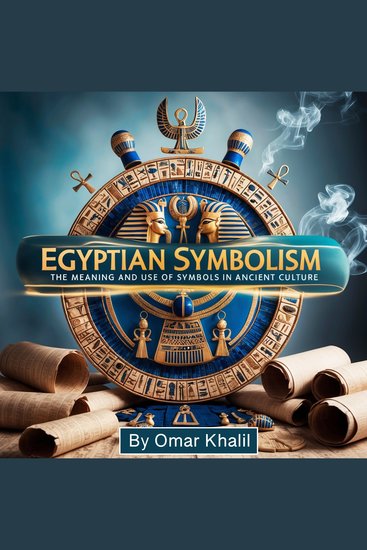
  • Egyptian Symbolism - The Meaning and Use of Symbols in Ancient Culture - cover

    Egyptian Symbolism - The Meaning...

    Omar Khalil

    • 0
    • 0
    • 0
    Egyptian symbolism is one of the most captivating aspects of ancient Egyptian culture, reflecting their deeply spiritual worldview and providing insight into their daily lives, religious practices, and understanding of the universe. From the majestic pyramids to the intricate hieroglyphs on temple walls, symbolism played a crucial role in conveying meanings that went beyond the literal. It was a tool to communicate with the gods, mark divine power, and ensure continuity in both life and the afterlife. 
    At the heart of Egyptian symbolism was the belief that the world was filled with hidden meanings and spiritual forces, each symbol carrying its own power. This belief was manifested in art, architecture, rituals, and even the everyday objects used by the ancient Egyptians. Symbols were not just representations; they were believed to hold an active force that could influence the material world and the spiritual realm. For example, the Ankh, a symbol resembling a cross with a loop at the top, represented life and was often used in funerary texts to ensure immortality for the deceased. 
    In Egyptian society, symbols were central to religious practices. The gods and goddesses, each represented by specific symbols and animal forms, embodied different aspects of life, death, and the cosmos. The sun god Ra, for instance, was depicted as a falcon, symbolizing both the sun’s power and the bird's dominance in the sky. The scarab beetle, a symbol of rebirth and protection, was commonly used in amulets and artifacts, signifying the cyclical nature of life and the hope for resurrection.
    Zum Buch