Begleiten Sie uns auf eine literarische Weltreise!
Buch zum Bücherregal hinzufügen
Grey
Einen neuen Kommentar schreiben Default profile 50px
Grey
Jetzt das ganze Buch im Abo oder die ersten Seiten gratis lesen!
All characters reduced
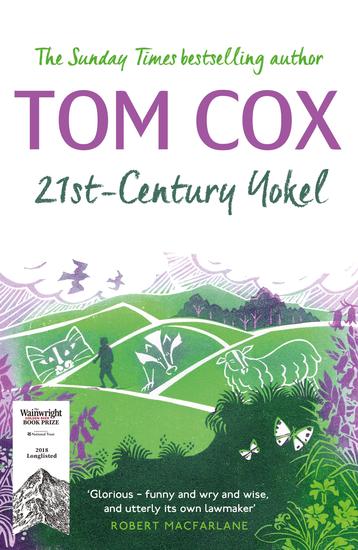
21st-Century Yokel - cover

21st-Century Yokel

Tom Cox

Verlag: Swift Press

  • 0
  • 0
  • 0

Beschreibung

Thick with owls and badgers, oak trees and wood piles, scarecrows and ghosts, and Tom Cox's loud and excitable dad, this book is full of the folklore of several counties the ancient kind and the everyday variety as well as wild places, mystical spots and curious objects. Emerging from this focus on the detail are themes that are broader and bigger and more important than ever.
Tom's writing treads a new path, one that has a lot in common with a rambling country walk; it's bewitched by fresh air and big skies, intrepid in minor ways, haunted by weather and old stories and the spooky edges of the outdoors, restless and prone to a few detours, but it always reaches its destination in the end.
Verfügbar seit: 19.06.2025.
Drucklänge: 416 Seiten.

Weitere Bücher, die Sie mögen werden

  • On Longevity and Shortness of Life - Aristotle’s Study of the Secrets of a Long Life - cover

    On Longevity and Shortness of...

    Aristotle, Tim Zengerink

    • 0
    • 0
    • 0
    What if you could uncover age-old insights into why some beings thrive longer and how we might extend our own vitality? 
    In this remarkable treatise, Aristotle explores the variables that affect lifespan, delving into the anatomical, environmental, and philosophical factors behind longevity. Adapted for contemporary readers, this work offers a fascinating bridge between ancient natural science and modern health considerations—helping you navigate the quest for a healthier, more enduring life. 
    What You’ll Discover in This Modern Translation: 
    - Ancient perspectives on longevity and lifespan differences 
    - The role of environment, diet, and constitution in longevity 
    - Philosophical reflections on life’s quality vs. quantity 
    - Timeless insights that complement modern health science 
    Imagine having a guide that not only explains the fundamentals of living well but also encourages deeper thought on what makes life worth living. Aristotle’s profound inquiry provides an inspiring framework for any reader seeking holistic well-being. 
    Begin your journey toward a longer, more meaningful life. Get your copy now and embrace Aristotle’s timeless wisdom on vitality and fulfillment.
    Zum Buch
  • The Civic Bargain - How Democracy Survives - cover

    The Civic Bargain - How...

    Josiah Ober, Brook Manville

    • 0
    • 0
    • 0
    A powerful case for democracy and how it can adapt and survive—if we want it to 


    Is democracy in trouble, perhaps even dying? Pundits say so, and polls show that most Americans believe that their country's system of governance is being "tested" or is "under attack." But is the future of democracy necessarily so dire? In The Civic Bargain, Brook Manville and Josiah Ober push back against the prevailing pessimism about the fate of democracy around the world. Instead of an epitaph for democracy, they offer a guide for democratic renewal, calling on citizens to recommit to a "civic bargain" with one another to guarantee civic rights of freedom, equality, and dignity. That bargain also requires them to fulfill the duties of democratic citizenship: governing themselves with no "boss" except one another, embracing compromise, treating each other as civic friends, and investing in civic education for each rising generation. 


    Manville and Ober trace the long progression toward self-government through four key moments in democracy's history: Classical Athens, Republican Rome, Great Britain's constitutional monarchy, and America's founding. Comparing what worked and what failed in each case, they draw out lessons for how modern democracies can survive and thrive.
    Zum Buch
  • Summary: The Power of Habit by Charles Duhigg - Why We Do What We Do in Life and Business - cover

    Summary: The Power of Habit by...

    FlashBooks, Dean Bokhari

    • 0
    • 0
    • 0
    Summary of The Power of Habit by Charles Duhigg  
    by FlashBooks Book Summaries, Narrated by Dean Bokhari 
    About 
    In The Power of Habit, Charles Duhigg, award-winning business reporter for The New York Times, takes us to the thrilling edge of scientific discoveries that explain why habits exist and how they can be changed. By distilling vast amounts of information into engrossing narratives, Duhigg brings to light a whole new understanding of human nature and its potential for transformation. 
     
    Along the way, we learn why some people and companies struggle to change, despite years of trying, while others seem to remake themselves overnight. We discover the neuroscience behind how habits work and precisely which parts of the brain they develop and reside within. We discover how the right habits were crucial to the successful promotion of Pepsodent; to Tony Dungy who led his team to a Super Bowl win by changing one step in his players’ habit loop; and we learn how a large corporation managed to turned itself around by changing just one routine within the organization. 
     
    At its core, The Power of Habit contains an exhilarating argument: The key to exercising regularly, losing weight, raising exceptional children, becoming more productive, building revolutionary companies and social movements, and achieving success is about understanding how habits work. By harnessing this new science, we can transform our businesses, our communities and our lives. 
     
    Here’s what you’ll learn about in this summary: 
    Why the brain tries to make routines into habits.How cravings create and power new habits.How to apply the golden rule of habit change.What “keystone habits” are and the importance of them in creating a new routine.
    Zum Buch
  • The Meaning of Life - Answers to Life's Biggest Questions from the World's Most Extraordinary People - cover

    The Meaning of Life - Answers to...

    James Bailey

    • 0
    • 0
    • 0
    Over 100 extraordinary people. One profound question. Countless life-affirming answers.When James Bailey was feeling lost in life, he was inspired by philosopher Will Durant's project, conducted in the 1930's, to write to one hundred luminaries in arts, politics, religion, sport, and sciences, challenging them to respond to a direct yet fundamental question—What is the meaning of life? The response was more remarkable than he could have ever imagined.A decade on, James had garnered an incredible collection of replies, collated here for the first time. By turns thought-provoking, amusing, and enlightening, these letters from scientists, writers, campaigners, athletes, political leaders, entertainers, survivors, and philosophers are a wonderful source of inspiration. Some are about happiness and heartbreak, some are about purpose, some are funny, and some will change the way you think.The Meaning of Life is a gift from people of all walks of life with incredible experience, connecting through one meaningful question that broadens our understanding of what it really means to be human and happy. It is more than just a collection of letters—it's a roadmap to finding your own path.
    Zum Buch
  • Great Escapes during the World Wars: The History of the Most Legendary Prisoner Breakouts in World War I and World War II - cover

    Great Escapes during the World...

    Editors Charles River

    • 0
    • 0
    • 0
    War has always led to prisoners. In ancient times, many were turned into slaves by the victorious armies, while in medieval Europe, they were often returned to their families in return for a ransom, leading to fortune or poverty depending upon which side one was on. By the Napoleonic era, as armies grew in size and professionalism, many were kept in camps for the duration of the fighting, their captors not wanting to restore their enemies' manpower while the fate of nations hung in the balance. 
    Prisoners were taken across the world, and prisoners of war were typically comprised of two classes: officers and other ranks. Officers were often treated well, as there was still a sort of aristocratic courtesy among officers, particularly among the Germans, British, French, and somewhat less so for the Russians, Italians, and Turks. Concepts such as honor still held considerable currency, and bravery was greatly admired. Enemy officers as a class often had more in common with each other than with the millions of draftees in their armies, so enlisted men as POWs generally were not as well treated. 
    	Regardless of rank though, throughout the war, many of these men did not sit idle. Many spent their time preparing elaborate escape plans in the hopes of returning to their home nations and back to the fight.  
    The Second World War was full of escape stories, some bold, some tragic, and most filled with courage and ingenuity. The greatest number of successful escapes was made by Allied troops in Europe, including soldiers left behind after the fall of France and airmen shot down in bombing raids, but escapes happened across the world, from Canadian trains to German castles, and from the mountains of Italy to the wilds of Australia. Axis as well as Allied troops made their bids for freedom, keeping both sides on their toes. Everybody was looking to make the next great escape.
    Zum Buch
  • Sanctuary of Healing - Transforming Churches into Trauma-Informed Spaces - cover

    Sanctuary of Healing -...

    Julia Matallana Freedman

    • 0
    • 0
    • 0
    A timely and compassionate resource that equips religious leaders to engage with the reality of trauma within their congregations.Grounded in both lived experience and theological depth, this guide sheds light on the pervasive impact of sexual, racial, and generational trauma in the US, urging faith communities to become intentional spaces of refuge and restoration. Through a powerful call to "hold space," it offers practical tools for pastors and ministry leaders to walk alongside those carrying deep wounds. It reframes the role of the Church—not merely as a place of spiritual guidance, but as a sanctuary where healing and wholeness can take root. With a focus on embodiment, community, and the sacredness of vulnerability, Sanctuary of Healing provides a vital roadmap for transforming congregations into havens of empathy, resilience, and hope.
    Zum Buch