Begleiten Sie uns auf eine literarische Weltreise!
Buch zum Bücherregal hinzufügen
Grey
Einen neuen Kommentar schreiben Default profile 50px
Grey
Jetzt das ganze Buch im Abo oder die ersten Seiten gratis lesen!
All characters reduced
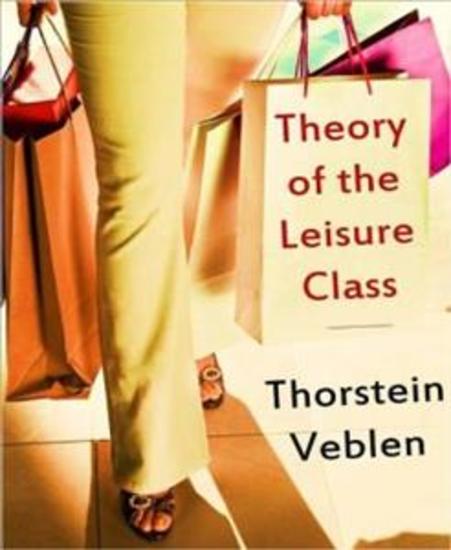
Theory of the Leisure Class - cover

Theory of the Leisure Class

Thorstein Veblen

Verlag: BookRix

  • 0
  • 0
  • 0

Beschreibung

The Theory of the Leisure Class: An Economic Study of Institutions, by Thorstein Veblen, is an economic treatise and detailed social critique of conspicuous consumption, as a function of social-class consumerism. It proposes that the social strata and the division of labor of the feudal period continued into the modern era. The lords of the manor employed themselves in the economically useless practices of conspicuous consumption and conspicuous leisure, while the middle and lower classes were employed in the industrial occupations that support the whole of society. Economically wasteful activities are those activities that do not contribute to the economy or to the material productivity required for the fruitful functioning of society. Veblen's analyses of business cycles and prices, and of the emergent technocratic division of labor by speciality (scientists, engineers, technologists) at the end of the 19th century proved to be accurate predictions of the nature of an industrial society.
Verfügbar seit: 19.12.2023.
Drucklänge: 423 Seiten.

Weitere Bücher, die Sie mögen werden

  • Beyond 1619 - The Atlantic Origins of American Slavery - cover

    Beyond 1619 - The Atlantic...

    Jesse Cromwell, Marc H. Lerner,...

    • 0
    • 0
    • 0
    Beyond 1619 brings an Atlantic and hemispheric perspective to the year 1619 as a marker of American slavery's origins and the beginnings of the Black experience in what would become the United States by situating the roots of racial slavery in a broader, comparative context. 


    In recent years, an extensive public dialogue regarding the long shadow of racism in the United States has pushed Americans to confront the insidious history of race-based slavery and its aftermath, with 1619—the year that the first recorded enslaved persons of African descent arrived in British North America—taking center stage as its starting point. Yet this dialogue has narrowed our understanding of slavery, race, and their repercussions to the U.S. context. Beyond 1619 showcases the results when scholars examine and put into conversation multiple empires, regions, peoples, and cultures to get a more complete view of the rise of racial slavery in the Americas. 


    Painting racial slavery's emergence on a hemispheric canvas, and in one compact volume, provides historical context beyond the 1619 moment for discussions of slavery, racism, antiracism, freedom, and lasting inequalities. This volume shines new light on these topics and illustrates the centrality of racial slavery, and contests over its rise, in nearly every corner of the early modern Atlantic World.
    Zum Buch
  • Islamic Relics: The History of Some of the Holiest Items in Islam - cover

    Islamic Relics: The History of...

    Editors Charles River

    • 0
    • 0
    • 0
    Muslim relics have become sought after relatively recently, since in the tradition of Islam it is customary to bury the deceased together with his belongings. However, many religious relics have rather controversial origins. Sometimes the faithful sincerely worship artful forgeries masquerading as holy relics and things that supposedly belonged to saints. The real sanctuaries are carefully guarded and are not always accessible to believers. They are brought out for public viewing on especially festive days. It is often represented as creating a special ritual.  
    	It is curious that the attitude towards such relics gradually changed over the centuries. If, at first, they were considered amulets used by private individuals, then over time their purpose and comprehension took on a different character. Most notably, the possession of the relics of the prophet began to be considered one of the arguments in favor of the appointment of the Caliph. The concentration of several relics in one mosque immediately sharply increased, in the eyes of the believers, the piety of such a mosque; this, in turn, immediately affected the growth of its wealth and political influence. Thus, in the published catalog of relics stored in the former Badshahi mosque of the Mughal state in Lahore (now Pakistan), there are 28 items: seven belonged to the prophet himself, three to the son-in-law of the prophet Ali, two to the daughter of the prophet Fatima, five to the grandson of the prophet Hussein, etc. It is believed that some of these items were taken out by Timur after the capture of Damascus, and some were donated by Sultan Bayazid to Timur's descendant, Babur. After the fall of the Mughal dynasty in India, they were first in private possession in the second half of the 19th century. In different ways, they came to the Lahore Mosque.
    Zum Buch
  • How to Think Differently: 7 Easy Steps to Master Mental Models Critical Thinking Decision Making & Problem Solving - cover

    How to Think Differently: 7 Easy...

    Troye Bates

    • 0
    • 0
    • 0
    Do you wish you could think differently and develop better problem-solving skills for those crucial moments when you need it most? 
      
    The ability to think differently is one of the most valuable assets any individual could possess, yet it remains one of our most underdeveloped abilities. 
      
    If you are ready to be that one person who sees the world from a different perspective, this easy to follow 7-step solution to master mental models to make better decisions is the essential guide you need. 
      
    YOU WILL LEARN: 
    • How to become the master of your choices. 
    • How to develop your critical thinking abilities. 
    • How to think logically and reasonably. 
    • How to learn to see the bigger picture. 
    • How to become a master strategist by thinking like one. 
    • Understanding the abundance and scarcity mindset. 
    • Why reflection before action matters. 
      
    7-Steps is all you need to start bringing about a shift in your mindset for the better. Begin your journey now!
    Zum Buch
  • The Holocaust Industry - Reflections on the Exploitation of Jewish Suffering - cover

    The Holocaust Industry -...

    Norman G. Finkelstein

    • 0
    • 0
    • 0
    This iconoclastic study was one of the most widely debated books of 2000. Finkelstein indicts with vigor and honesty those who exploit the tragedy of the Holocaust for their own personal political and financial gain. 


    This new edition includes updated material discussing the initial reception to the book's publication. In a controversial new study, Norman G. Finkelstein moves from an interrogation of the place the Holocaust has come to occupy in American culture to a disturbing examination of recent Holocaust compensation agreements. 


    Leaders of America's Jewish community were delighted that Israel was now deemed a major strategic asset and, Finkelstein contends, exploited the Holocaust to enhance this newfound status. Their interpretations of the tragedy are often at variance with historical events and are employed to deflect any criticism of Israel and its supporters. 


    Finkelstein contends that the main danger posed to the memory of Nazism's victims comes not from the distortions of Holocaust deniers but from prominent, self-proclaimed guardians of Holocaust memory. 


    The Holocaust Industry is all the more disturbing and powerful because the issues it deals with are so rarely discussed.
    Zum Buch
  • Vedantic Stories & Meditations - Transform your life and find inner fulfilment with the timeless wisdom of Vedanta and Meditation - cover

    Vedantic Stories & Meditations -...

    Sandeep Verma

    • 0
    • 0
    • 0
    We live in a world of commodities. Today's consumerist culture tells us that we are not enough and that true happiness comes from external objects. The problem with this message is that, no matter how much wealth we acquire, there is always something better. Even after you buy that new car or those new shoes, soon after your acquisition, the object losses its appeal. 
    We believe that happiness is somewhere outside and can be obtained through relationships, wealth, name and fame, and position in the world. Consequently, we spend most of our life in acquiring these external goals. We eat some delicious food, listen to music, party, travel the world, drink the most expensive vines and spend time with people. During such occasions, the mind feels fulfilled, but this fulfilment doesn't last. 
    Fulfilment is an easy concept on the surface, yet it’s so elusive. Where is this fulfilment? 
    The truth is, happiness and fulfilment don't come from the external world.  
    Vedanta philosophy, originating from the Vedas, the most ancient scriptures of India, teaches us that our fundamental nature is complete. We seek happiness outside because we don't think of ourselves as whole. We think of ourselves as needing to be SAVED. Vedanta teaches us We are never LOST. At worst, we are living in ignorance of our true nature. 
    Throughout ancient times, great spiritual masters have often conveyed profound spiritual truths through interesting stories. And they know our psychology - that we may not remember abstruse metaphysical truths - but everybody loves a nice story. In this course, we are going to learn the teachings of Vedanta through stories only. In each session, we will have a story followed by a Vedantic meditation. Whether you are new to Vedanta or you are familiar with it, there is something for everybody.
    Zum Buch
  • The Unapologetic Workbook for Black Mental Health - A Step-By-Step Guide to Build Psychological Fortitude and Reclaim Wellness - cover

    The Unapologetic Workbook for...

    PhD Rheeda Walker, PhD Angela...

    • 0
    • 0
    • 0
    There is a Black mental health crisis in our world today, and it is tied to disproportionately high rates of chronic illness, poverty, under-education, unacknowledged and untreated trauma, and structural racism. Depression, anxiety, and suicide were increasing before the global pandemic, but have since escalated even further. Whether you suffer yourself, have a loved one who needs help, or are a mental health professional working with the Black community, this workbook will be your lifeline. 


    This workbook offers a step-by-step, interactive journey toward better mental health. You'll gain powerful skills to help you effectively manage stress, make self-care a priority, and find lasting emotional balance and well-being in a world still steeped in systemic inequality, discrimination, and microaggressions. 


    With this workbook, you'll discover: 


    ● What "psychological fortitude" is, and why's it's so important 


    ● How to set boundaries and say "no" when you are feeling overwhelmed 


    ● How racism can impact your mental health—and what to do about it 


    If you're ready to reclaim wholeness, build resilience, and thrive, this powerful workbook will be your guide.
    Zum Buch