Begleiten Sie uns auf eine literarische Weltreise!
Buch zum Bücherregal hinzufügen
Grey
Einen neuen Kommentar schreiben Default profile 50px
Grey
Jetzt das ganze Buch im Abo oder die ersten Seiten gratis lesen!
All characters reduced
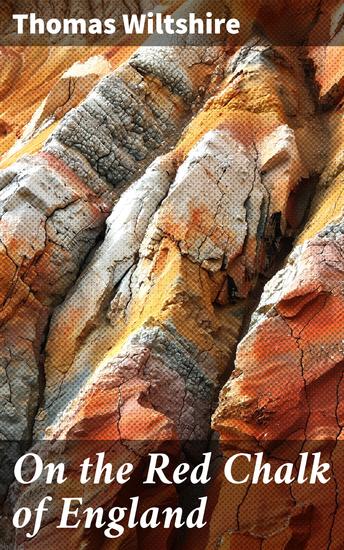
On the Red Chalk of England - Uncovering Geological and Cultural Layers - cover

On the Red Chalk of England - Uncovering Geological and Cultural Layers

Thomas Wiltshire

Verlag: Good Press

  • 0
  • 0
  • 0

Beschreibung

In "On the Red Chalk of England," Thomas Wiltshire intricately weaves a tapestry of the English landscape, exploring the thematic interplay between nature, memory, and identity. The book is characterized by its lyrical prose, which artfully balances vivid imagery with contemplative reflections. Wiltshire employs a unique blend of realism and symbolism, drawing upon England's chalk formations as a metaphor for the human condition. The narrative is steeped in rich historical context, engaging with both the natural and cultural heritage of the English countryside, making it a significant contribution to contemporary literature that reflects the ongoing dialogue between environment and self. Thomas Wiltshire is not only a skilled novelist but also a passionate naturalist. His deep-rooted affinity for the English landscape, coupled with a keen interest in environmental history, informs his narrative'Äôs explorations. Wiltshire'Äôs academic background in geography and literature allows him to approach his subject matter with both scientific precision and artistic sensibility, fostering a profound connection between readers and the themes he elucidates. "On the Red Chalk of England" is highly recommended for readers seeking an immersive literary experience that evokes a deep appreciation for nature and introspection. Wiltshire'Äôs masterful command of language and his thoughtful exploration of identity and place offer profound insights that resonate long after the final page is turned.
Verfügbar seit: 18.09.2023.
Drucklänge: 20 Seiten.

Weitere Bücher, die Sie mögen werden

  • Cristero War - The Rebellion against the Mexican Government's Anti-Catholic Laws - cover

    Cristero War - The Rebellion...

    Kelly Mass

    • 0
    • 0
    • 0
    The Cristero War, also known as the Cristero Rebellion or La Cristiada [la kistjaa], was a widespread and deeply significant conflict that unfolded in central and western Mexico during the late 1920s. It was primarily driven by a violent response to the secularist and anti-clerical provisions of the 1917 Mexican Constitution, which sought to curtail the influence of the Catholic Church over the country's political and social life. The Constitution introduced sweeping reforms, including the restriction of church property rights and the severe limitations placed on the clergy’s ability to engage in public life. 
    This growing tension reached a boiling point when President Plutarco Elías Calles, who came into power in 1924, took decisive action to enforce these secular provisions. In 1926, Calles issued an executive order to aggressively implement Article 130 of the 1917 Constitution, known as the Calles Law. This law effectively outlawed many aspects of Catholicism in Mexico, including the practice of the religion in public spaces, the establishment of religious orders, and the public involvement of the clergy in education and politics. Calles' aim was to reduce the power of the Catholic Church, which had long been one of the most influential institutions in Mexican society, and to curb what he perceived as an obstacle to modernization and national unity.
    Zum Buch
  • The Outline Of Sanity - cover

    The Outline Of Sanity

    G.K. Chesterton

    • 0
    • 0
    • 0
    The experiments of both Capitalism and Communism are almost complete, and they both lead to one big organization controlling everything you do. In 1925, when this book was first published, it was true, and it is even truer today.If you desire an alternative, consider this book, which considers Distributism, a philosophy whereby the actual people own the actual means of production, and produce and sustain themselves with it. A philosophy summed up in Chesterton's famous proposal of "Three acres and a cow" as being catalyst to an ideal peasant state.For such a simple idea, it has proven very contrary to the ideas of those in power, which is to say, to those who want power.  But for the rest of us, for the sane humans who desire peace and liberty, this book is a call to action against monopoly and the inevitability of global standardization, which the magazines call the Supply Chain and the Bible might call Babel and Babylon. Narrated in an accent based upon Chesterton's own, this performance expresses Chesterton's words as he himself might have, delivering them to an audience of his time.
    Zum Buch
  • Day of Reckoning - How the Far Right Declared War on Democracy - cover

    Day of Reckoning - How the Far...

    Mike Wendling

    • 0
    • 0
    • 0
    The United States has become an almost unrecognizable country—with millions in thrall to conspiracy theories, toxic populism, and the far right edging closer to total power—a dire threat to civil society and democratic institutions. While the MAGA movement was in remission due to Donald Trump's defeat in 2020, the fascist fringes have not just survived but have continued to thrive and burrow into the mainstream. The January 6th Capitol Riot prosecutions have done little to curb their enthusiasm for mayhem. 


    Trump's base in the Republican Party is committed to their candidate like never before. The institutionalization of racist voter suppression and the outdated logic behind the Electoral College means he could take back the White House. Apocalyptic messaging ensures the alt-right, anti-government, anti-LGBT, and white nationalist groups see the next election as a life-or-death struggle and are uniting to back the one person they can all agree on—guaranteeing another chaotic election. 


    In this chilling exposé, Wendling encounters Capital rioters, Covid deniers, QAnon supporters, and Proud Boys and uncovers the roots of a movement that threatens to shatter the foundations of democracy.
    Zum Buch
  • French Royalty - cover

    French Royalty

    Kelly Mass

    • 0
    • 0
    • 0
    This book consists of 2 titles, which are about the following topics:1 - Before the Reign of Terror, Marie Antoinette was the last queen of France. She was the penultimate kid and youngest daughter of Empress Maria Theresa and Emperor Francis I, and was born an archduchess of Austria. At the age of 14, she wed Louis-Auguste, the beneficiary evident to the French throne, and ended up being dauphine of France in May 1770. Her partner, Louis XVI, took the throne on May 10, 1774, and she ended up being queen.2 - From 768 to 800, Charlemagne, also referred to as Charles the Great, was King of the Franks, King of the Lombards, and Emperor of the Romans. Charlemagne combined many western and main Europe at the time of the Early Middle Ages. Since the fall of the Western Roman Empire 3 centuries before, he was the first acknowledged emperor to rule from western Europe. The Carolingian Empire is the name given to Charlemagne's broadening Frankish world. Antipope Paschal the Third later canonized him.
    Zum Buch
  • The Velocity of Information - Human Thinking During Chaotic Times - cover

    The Velocity of Information -...

    David P. Perrodin

    • 0
    • 0
    • 0
    As chaos erupts, alerts screech on our cell phones and torrents of conflicting-yet-urgent messages gush from media outlets. What is the magnitude of the crisis? What is its cause? And what should people do to protect themselves? Velocity of Information offers understanding to manage chaos and our complex reactions to crisis situations influenced by bias and propaganda. Recognizing indicators to judge the severity of an incident, understanding human predispositions, and joining a member check network to gauge real-time observations from people in your network provide direction to respond to the reality of a situation with impartiality, thus improving outcomes. *This audiobook has a companion PDF document.
    Zum Buch
  • Modern Germany: The History and Legacy of the German Nation from Unification to Reunification - cover

    Modern Germany: The History and...

    Editors Charles River

    • 0
    • 0
    • 0
    The history of Germany and the German-speaking peoples is as complex and multifaceted as any in Europe. It is also one of the most difficult to pinpoint conceptually and historically, since every nation is a construct to some extent. Language is certainly important, and the German language is a unifying factor for any notion of a unified Germany, yet even today, many German-speakers live outside the borders of modern Germany. Shared customs and traditions gave Germans a common sense of identity to some extent, but these were often local in origin. Germans were also split between several versions of Christianity.  
    	Nevertheless, ideas of a German nation were present by the 19th century, leading up to the official unification in 1871. Neil MacGregor, a historian of modern Germany, has explained that the two defining events leading to the rise of German nationalism and the movement toward unification were the Thirty Years' War and the Napoleonic Wars. During the Thirty Years' War, more than 200 German states were part of the Holy Roman Empire's loose confederation, and that war was predominantly fought in German states by foreign powers, including France, Sweden, Denmark, Austria, and the Netherlands. MacGregor noted that “horrors were experienced across all Germany, and were never forgotten,” to the extent that they were invoked during World War II. The religious basis of the Thirty Years’ War saw the split between Catholicism and Protestantism, which was at the heart of the Reformation. Some foreign leaders even invoked defending "German freedoms" for their invasion. 
    	From the German point of view, the Thirty Years' War was proof of their vulnerability to foreign aggression. Atrocities such as the "sacking" of Magdeburg in 1631, where more than 30,000 people were killed, were embedded in the German consciousness. All told, 8 million people died during the Thirty Years’ War.
    Zum Buch