Rejoignez-nous pour un voyage dans le monde des livres!
Ajouter ce livre à l'électronique
Grey
Ecrivez un nouveau commentaire Default profile 50px
Grey
Abonnez-vous pour lire le livre complet ou lisez les premières pages gratuitement!
All characters reduced
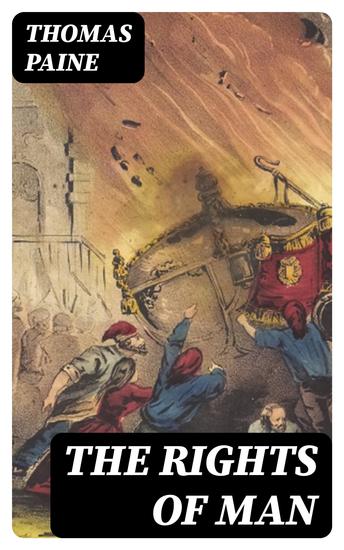
The Rights of Man - cover

The Rights of Man

Thomas Paine

Maison d'édition: DigiCat

  • 0
  • 0
  • 0

Synopsis

In "The Rights of Man," Thomas Paine crafts a compelling treatise that champions democratic ideals and individual liberties in the face of oppressive governance. Written during the tumultuous era of the French Revolution, Paine's prose melds passionate rhetoric with incisive argumentation, offering a staunch defense of human rights and the principles of republicanism. The work navigates through the philosophical underpinnings of political systems, advocating for a society grounded in equality and justice while critiquing monarchies and hereditary privilege. Its historical context resonates with the Enlightenment's call for reason and reform, positioning the text as a seminal work in political literature. Thomas Paine, an English-American political activist, author, and revolutionary, was profoundly influenced by the Enlightenment thinkers and the liberal philosophies of his time. His experiences as a pamphleteer and his involvement in both the American and French revolutions shaped his revolutionary ideas articulated in "The Rights of Man," marking him as a pivotal figure in the fight for democratic rights. Paine's steadfast belief in the capacity of individuals to govern themselves, free from tyranny, was a radical departure from the status quo, reflecting his personal journey and philosophical convictions. This essential work is a must-read for anyone interested in the foundations of modern democracy and human rights. Paine's articulate defense of the rights inherent to all individuals and his fervent advocacy for self-governance resonate even today, prompting readers to reflect on the legacy of freedom and the ongoing struggles for equality. "The Rights of Man" remains a timeless call to action for those who believe in the power of the people.
Disponible depuis: 11/10/2022.
Longueur d'impression: 206 pages.

D'autres livres qui pourraient vous intéresser

  • Episode 3 - India's Political Events - cover

    Episode 3 - India's Political...

    Anjum Sharma

    • 0
    • 0
    • 0
    What is the political structure like in India? Where were the elections held in the year 2020, which party left which one and whose hand was caught? Why was the Supreme Court angry over the politics of defection? The MPs expressed displeasure over the closure of which fund? Find out all the answers in this episode.
    Voir livre
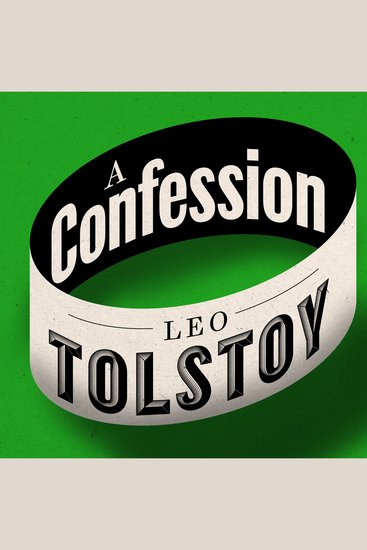
  • A Confession - cover

    A Confession

    Leo Tolstoy

    • 0
    • 0
    • 0
    "Is there any meaning in my life that the inevitable death awaiting me does not destroy?"
    
    This poignant and candid autobiographical work uncovers the inner turmoil of a man struggling with a mid-life existential crisis. At the height of his literary fame and faced with the inevitability of death and the stark realities of existence, Leo Tolstoy found himself searching for answers to the ultimate philosophical questions about the meaning of life. Haunted by questions of mortality, purpose, and faith, A Confession, chronicles his spiritual journey through faith and towards self-discovery.
    Leo Tolstoy (1828–1910) was a Russian novelist, philosopher, and social reformer, widely regarded as one of the greatest writers of all time. He is best known for his epic novels War and Peace and Anna Karenina, both celebrated for their intricate character development and profound exploration of moral dilemmas and human nature. In his later years, Tolstoy experienced a spiritual awakening which led him to reject materialism and embrace a life of simplicity, seeking to align his life with his beliefs about non-violence and compassion. Tolstoy's legacy endures not only through his literary masterpieces but also through his profound impact on literature and philosophy.
    Voir livre
  • Huey P Newton - Smoking Out Fascist America - cover

    Huey P Newton - Smoking Out...

    Geoffrey Giuliano

    • 0
    • 0
    • 0
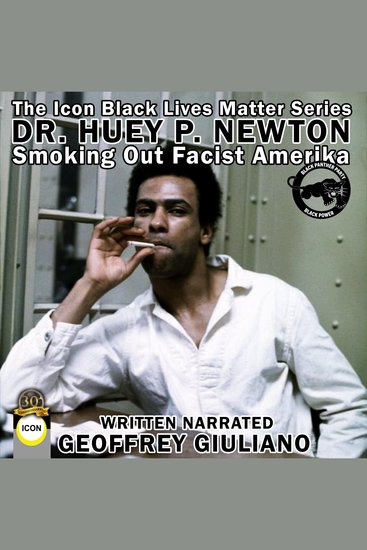
    Huey Newton was born on February 17, 1942. He was an African-American revolutionary, notable as the founder of the Black Panther Party. Newton crafted the Party's ten-point manifesto with Bobby Seale in 1966. 
     
    The Black Panther Party founded over 60 community support programs including food banks, medical clinics, sickle cell anemia tests, prison busing for families of inmates, legal advice seminars, clothing banks, housing cooperatives, and their own ambulance service. The most famous of these programs was the Free Breakfast for Children program which fed thousands of impoverished children daily during the early 1970s. Newton also co-founded the Black Panther newspaper service, which became one of America's most widely distributed African-American newspapers. 
     
    In 1989, he was murdered in Oakland, California, by Tyrone Robinson, a member of the Black Guerrilla Family. Newton was known for being an advocate of self-defense and used his position as a leader within the Black Panther Party to welcome women and LGBT people into the party, holding the belief that homosexuals "might be the most oppressed people". 
     
    Huey Newton was never shy in talking to the media because after all the powerful movement he started with bobby Seale was all about communication and understanding leading to meaningful change. 
     
    What follows is a collection of interviews with the controversial charismatic leader commencing from his prison cell in 1968 right up until 1989 just weeks before his tragic death. Here is a chance to get to know and understand not only Huey the forward-thinking and intractable black rights advocate but also the sensitive and sensible intellectual ultimately compassionate and caring man.
    Voir livre
  • Which Side of History? - How Technology Is Reshaping Our Democracy and Our Lives - cover

    Which Side of History? - How...

    James P. Steyer

    • 0
    • 0
    • 0
    "A valuable primer on this moment where humans are deciding how much power over their lives they give to monopolies and algorithms." -DAVE EGGERS, bestselling author of The CircleWhich Side of History? offers a collection of bold essays on how technology is affecting democracy, society, and our future.Featuring prominent national voices such as Sacha Baron Cohen, Marc Benioff, Ellen Pao, Ken Auletta, Chelsea Clinton, Tim Wu, Khaled Hosseini, Nicholas Kristof and Sheryl WuDunn, Jaron Lanier, Willow Bay, Sal Khan, Sherry Turkle, Shoshana Zuboff, Vivek Murthy, Geoffrey Canada, and many more.The essays focus on the extraordinary impact of technology on our privacy, kids and families, race and gender roles, democracy, climate change, and mental health.This groundbreaking audiobook challenges opinion leaders and the broader public to take action to improve technology's effects on our lives.With the rise of cyberbullying and hate speech online, issues around climate change and technology, and the "move fast and break things" mentality of tech culture, Which Side of History? will urge readers to draw the line. This book will help shape the conversations we have around technology in our society and our future for years to come.A smart gift for anyone who approaches tech and the future with a healthy skepticismEdited by James P. Steyer, the CEO and founder of Common Sense Media.Add it to the shelf with books like Ten Arguments for Deleting Your Social Media Accounts Right Now by Jaron Lanier, The Shallows: What the Internet Is Doing to Our Brains by Nicholas Carr, and The Age of Surveillance Capitalism: The Fight for a Human Future at the New Frontier of Power by Shoshana Zuboff.
    Voir livre
  • China's World View - Demystifying China to Prevent Global Conflict - cover

    China's World View -...

    David Daokui Li

    • 0
    • 0
    • 0
    Writing in response to the growing anti-Chinese sentiment and alarmed by the threat of war, Dr. David Daokui Li pulls from his wealth of firsthand experience to demystify contemporary Chinese society and advocate for understanding between China and the West. In this urgently needed and fascinating book, he explains the inner workings of a rising superpower to help the world understand how it works—and how to work with it. 


    In Li's hands, an economic and political system that often baffles Westerners becomes coherent, sophisticated, and logical. He begins by explaining how two thousand years of history—from Confucian philosophy and ancient imperial dynasties to Communist Party chairmen from Mao to Deng Xiaoping—profoundly influence China's leadership today. Li brings the listener into high-level meetings he attended with figures including Xi Jinping, showing China's approach to governance. 


    In demystifying contemporary Chinese society, Li helps listeners reconceptualize contemporary China and the implications of its growth. He asserts that China's rise will be beneficial for the global order, holding out the hope that with shared understanding and mutual learning the Chinese and Western systems will eventually find a way to peacefully coexist.
    Voir livre
  • China's Church Divided - Bishop Louis Jin and the Post-Mao Catholic Revival - cover

    China's Church Divided - Bishop...

    Paul P. Mariani

    • 0
    • 0
    • 0
    During the Cultural Revolution, the Chinese state sought to eradicate religious life throughout the country. But by 1978, two years after the death of Mao Zedong, the Communist Party under Deng Xiaoping cautiously embraced the revival of religion. At the same time, the newly elected Pope John Paul II made a point of renewing outreach to China. Paul P. Mariani tracks the fate of Chinese Catholicism in the wake of these transformative leadership changes, focusing on the influential Catholic community in Shanghai. 


    Earlier policies of the 1950s had fractured the Catholic community into a state-approved "patriotic" church that answered to the government and an underground church loyal to Rome. Even after the Cultural Revolution, Mariani shows, this divide remained firmly intact. The resulting tensions were on vivid display in Shanghai, owing to the leadership of the Jesuit priest Louis Jin Luxian. Bishop Jin used his position to revitalize the local Catholic community, but his cooperation with the party put him ever at odds with underground church leaders. 


    Sensitive to the ideals, compromises, and disappointments of Catholics on both sides of the rift, China's Church Divided reveals how the community navigated the irreconcilable differences between a worldwide Church centered in Rome and a regime wary of foreign spiritual authority.
    Voir livre