Rejoignez-nous pour un voyage dans le monde des livres!
Ajouter ce livre à l'électronique
Grey
Ecrivez un nouveau commentaire Default profile 50px
Grey
Abonnez-vous pour lire le livre complet ou lisez les premières pages gratuitement!
All characters reduced
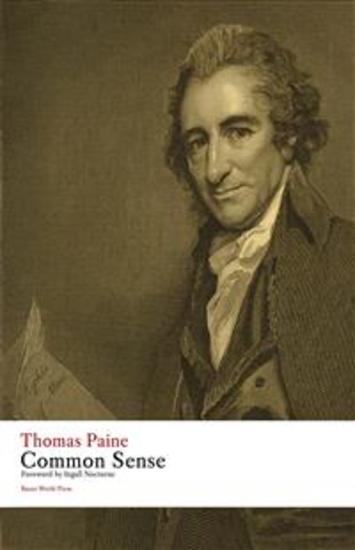
Common Sense - cover

Common Sense

Thomas Paine

Maison d'édition: Bauer World Press

  • 0
  • 0
  • 0

Synopsis

Common Sense by Thomas Paine (Bauer World Press)

In his 1776 pamphlet Common Sense, Thomas Paine presents a compelling and erudite argument for the independence of the American colonies from the British Crown. With sagacious prose, Paine explicates the inherent injustices and impracticalities of the colonial system, and passionately advocates for the establishment of a new, independent nation.

Pane's incisive logic addresses the economic, political, and ideological objections to the revolutionary cause. By appealing to the common sense of his audience, Paine effectively dismantles the intellectual foundations of British rule in the American colonies. Common Sense remains an eminent piece of political philosophy and a clarion call for liberty and self-determination.

It has inspired generations of Americans and continues to provoke thought around the world. The immediate success upon its release, and retaining its status as the most widely circulated title in American history relative to population, further attests to the enduring power and resonance of Paine's ideas.

"No writer has exceeded Paine in ease and familiarity of style, in perspicuity of expression, happiness of elucidation, and in simple and unassuming language."
Thomas Jefferson, 1821


About the Publisher: Bauer World Press makes available a broad curation of classic literature from around the globe. Each affordable volume showcases the most accurate original text, insightful introductions, historical context, and other valuable features to fuel the pursuit of greater understanding.
Disponible depuis: 06/04/2024.
Longueur d'impression: 117 pages.


D'autres livres qui pourraient vous intéresser

  • Freedom Riders The: The History of the Civil Rights Activists Who Rode Buses around the South to Protest Segregation - cover

    Freedom Riders The: The History...

    Editors Charles River

    • 0
    • 0
    • 0
    After a 1960 Supreme Court decision in Boynton v. Virginia, bus segregation was made illegal on new grounds: it violated the interstate commerce clause of the Constitution, by regulating the movement of people across state lines. With this victory in hand, the Freedom Rides of 1961 began. Organized primarily by a new group – the Congress on Racial Equality (CORE) – the Freedom Rides followed the same guidance that inspired the Montgomery Boycott and the Greensboro Sit-Ins – non-violent direct action. The purpose of the Freedom Rides was the test the Supreme Court's decision by riding from Virginia to Louisiana on integrated busses. This was notably the first major Civil Rights event that included a large segment of white participants.  
    	Mobs in places like Birmingham and Montgomery firebombed buses and brutally beat the Freedom Riders, sending dozens to the hospital. Mob violence, orchestrated by the KKK and their segregationist allies, erupted endlessly throughout the summer. White activists, who were viewed by the Ku Klux Klan as betraying their race, took the worst beatings of all.  
    	Both black and white Northerners had participated in the Freedom Rides, and civil rights activists sought other ways to harness their energy and activism in 1963. After the Freedom Rides, civil rights leaders initiated voter registration drives that could help register black voters and build community organizations that could help make their votes count. The momentum generated by the Freedom Rides and the following activism would lead to the famous March on Washington and eventually the passage of a historic civil rights bill in 1964. 
    Voir livre
  • Capitalist Punishment - How Wall Street Is Using Your Money to Create a Country You Didn't Vote For - cover

    Capitalist Punishment - How Wall...

    Vivek Ramaswamy

    • 0
    • 0
    • 0
    A Wall Street cartel has quietly seized control of the American economy, and they are forcing governments and businesses to bow down to their political agenda—using your money to do it. 
    Three Wall Street firms have quietly amassed more money than Jeff Bezos, Elon Musk, Andrew Carnegie, and John Rockefeller combined. But the money isn’t even theirs. These asset managers have accumulated all their power through “passive funds,” as most investors no longer believe anyone can reliably pick stocks. Yet the Big Three have decided that they can reliably pick the right social policies instead. 
    As entrepreneur Vivek Ramaswamy reveals, the results are all bad—and working their way into every corner of the economy. They force US companies to adopt “racial equity audits” and “emissions caps” while supporting human rights atrocities in China. They coerce Western companies to produce less oil while shifting production to dirtier places like Russia. They allow companies like FTX to take victory laps on good management while collapsing like a house of cards. They charge high fees to mom-and-pop investors for so-called sustainable funds that are effectively identical to lower-fee index funds. 
    Worst of all, they’re celebrated as heroes—at least so far. Capitalist Punishment lifts the veil on the largest fiduciary breaches, antitrust abuses, and First Amendment violations of the twenty-first century, misdeeds that are hiding in plain sight.  
    This isn’t just a threat to capitalism. It’s a threat to democratic self-governance itself. Capitalist Punishment is an easy-to-follow educational tour de force for every participant in financial markets—which, to the surprise of most Americans, includes nearly every single one of them.
    Voir livre
  • American Presidents in Diplomacy and War - Statecraft Foreign Policy and Leadership - cover

    American Presidents in Diplomacy...

    Thomas R. Parker

    • 0
    • 0
    • 0
    American Presidents in Diplomacy and War chronicles the major foreign policy crises faced by twelve American presidents in order to uncover the reoccurring patterns of successful and less successful uses of diplomatic, economic, and military power. In this book, Thomas R. Parker reveals how America's most successful leaders manage events instead of allowing events to control them. 


    Parker explores how the U.S. presidency, from the days of the early Republic to the present, shaped the world. Ranging from George Washington to George H. W. Bush, Parker shows how successful statecraft requires the understanding of complex situations, the prudent evaluation of various courses of action, the ability to adapt and to anticipate, and personal determination. Parker compares each of these leaders to their contemporaries—reasonable political leaders who nonetheless made serious mistakes, such as Thomas Jefferson and Barack Obama—to examine the dangers of being unable to strike the right balance of aggressiveness and caution and to examine the costs of inexperience and ambivalence toward military power. The book concludes by discussing the increasingly complex international situation of today, particularly the manifold challenges posed by China and Russia to U.S. foreign policy, and the continued necessity of effective statecraft.
    Voir livre
  • Unite and Conquer - How to Build Coalitions That Win—and Last - cover

    Unite and Conquer - How to Build...

    Kyrsten Sinema

    • 0
    • 0
    • 0
    Old-school divide-and-conquer tactics—demonizing opponents, frightening voters, refusing to compromise—may make us feel good about the purity of our ideals, but it's no way to get anything done. Worse, this approach betrays some of the most cherished ideals of the progressive movement: inclusion, reason, justice, and hope. Illuminated by examples from her own work and a host of campaigns across the country, Kyrsten Sinema shows how to forge connections—both personal and political—with seemingly unlikely allies and define our values, interests, and objectives in ways that broaden our range of potential partners and expand our tactical options. With irreverent humor, enthralling campaign stories, and solid, practical advice, Sinema enables us to move past “politics as war” and build support for progressive causes on the foundation of our common humanity.
    Voir livre
  • Israel: The Last Vestige of European Colonialism in the Middle East - cover

    Israel: The Last Vestige of...

    A.A. Castor

    • 0
    • 0
    • 0
    "Israel: The Last Vestige of European Colonialism in the Middle East" is an in-depth examination of the historical and ongoing impact of European colonialism on the formation and expansion of Israel. Through a critical lens, this book challenges the mainstream narratives that depict Israel as the rightful homeland of the Jewish people and instead explores its colonial roots and the displacement of the indigenous Palestinian population. 
      
    The book delves into the role of European powers, from the Zionist movement's inception in the late 19th century to the political maneuvers that facilitated the establishment of Israel in 1948. It uncovers how Western support, particularly from Britain and the United States, enabled the colonization of Palestine while ignoring the rights of the native population. It also analyzes the demographic changes brought about by waves of European Jewish immigration and presents genetic evidence highlighting the European ancestry of much of the modern Israeli population. 
      
    By exploring topics such as the marginalization of non-European Jewish communities, the ongoing occupation of Palestinian territories, and the influence of Western powers, this book aims to shed light on the historical injustices and colonial dynamics that continue to shape the Israeli-Palestinian conflict. Readers will be encouraged to question established narratives, understand the broader geopolitical implications, and consider the pathways to justice and accountability for the Palestinian people.
    Voir livre
  • Demosthenes 354-324BCE - History's Greatest Orator - cover

    Demosthenes 354-324BCE -...

    Demosthenes, Dinarchus

    • 0
    • 0
    • 0
    Demosthenes is generally acknowledged as the greatest orator in history. He overcame a stammer and the theft of his inheritance by his legal guardians to become as foundational to oratory as his contemporaries Plato and Aristotle are to philosophy. 
    Much like a major contemporary political figure, he overcame a stammer on his journey to greatness, with “inarticulate and stammering pronunciation.” He was known as “a water drinker”; a stern and serious presence at all times. 
    His great battle was against the waning of Athenian democracy, which slowly disintegrated into oligarchy and treason over his lifetime. As a legislator, ambassador, and leader he fought against the inexorable rise of Philip of Macedon and, later, Philip’s son Alexander. Fighting for the peace, democracy and equality that Athenian ancestors brought to all Greece, his tale ends in ruin as Athens finally falls, after more than thirty years trying to hold the line. 
     In historical terms, many of the patterns, descriptions and arguments presented here will seem eerily familiar, like listening to Songs In The Key Of Life for the first time. Every part of it has been reused a thousand times by people ever since its creation, so you are intimately familiar with the style, even if you have never come across it before. 
    After a prestigious career of public service, the tide turned against him. An accusation of bribery leads to his most famous speech, On The Crown. This defense of his career as the tides turned against him has been described as “the greatest speech of the greatest orator in the world.” 
    After his conviction, he escaped from prison and went on the run. He was exiled,  brought back, then sentenced to death; eventually, fleeing the city again, this time to the island of Kalaureia (modern-day Poros). Discovered by Archias, he asked for time to write a letter to his family, and took poison from a reed.
    Voir livre