¡Acompáñanos a viajar por el mundo de los libros!
Añadir este libro a la estantería
Grey
Escribe un nuevo comentario Default profile 50px
Grey
Suscríbete para leer el libro completo o lee las primeras páginas gratis.
All characters reduced
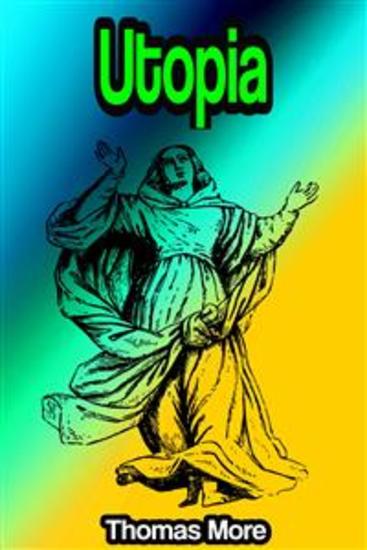
Utopia - cover

Utopia

Thomas More

Editorial: Memorable Classics eBooks

  • 0
  • 0
  • 0

Sinopsis

Utopia by Thomas More "A little, true book, not less beneficial than enjoyable, about how things should be in a state and about the new island Utopia") is a work of fiction and socio-political satire by Thomas More (1478–1535), written in Latin and published in 1516.

The book is a frame narrative primarily depicting a fictional island society and its religious, social, and political customs. Many aspects of More's description of Utopia are reminiscent of life in monasteries.

The first created original name was even longer: Libellus vere aureus, nec minus salutaris quam festivus, de optimo rei publicae statu deque nova insula Utopia. This translates, "A truly golden little book, no less beneficial than entertaining, of a republic's best state and of the new island Utopia".

Utopia is derived from the Greek prefix "ou-" (οὔ), meaning "not", and topos (τόπος), "place", with the suffix -iā (-ίᾱ) that is typical of toponyms; the name literally means "nowhere", emphasizing its fictionality. In early modern English, Utopia was spelled "Utopie", which is today rendered Utopy in some editions.
In fact, More's very first name for the island was Nusquama, the Latin equivalent of "no-place", however he eventually opted for the Greek-influenced name.
Disponible desde: 03/06/2022.

Otros libros que te pueden interesar

  • Scottish Queens 1034-1714 - The Queens and Consorts Who Shaped the Nation - cover

    Scottish Queens 1034-1714 - The...

    Rosalind K. Marshall

    • 0
    • 0
    • 0
    An "enlightening and fascinating" exploration of Scotland's royal women, from Lady Macbeth to Mary Queen of Scots and beyond (Booklist). 


    The lives of the Scottish queens, both those who ruled in their own right and the consorts, have largely been neglected in conventional history books. One of the earliest known Scottish queens was none other than the notorious Lady Macbeth. Was she really the wicked woman depicted in Shakespeare's famous play? Was St. Margaret a demure and obedient wife? Why did Margaret Logie exercise such an influence over her husband, David II, and have we underestimated James VI's consort, Anne of Denmark, frequently written off as a stupid and willful woman? Rosalind K. Marshall delves into these questions and more in this entertaining, impeccably researched book.
    Ver libro
  • Ways of Eating - Exploring Food through History and Culture - cover

    Ways of Eating - Exploring Food...

    Merry White, Benjamin Aldes Wurgaft

    • 0
    • 0
    • 0
    What we learn when an anthropologist and a historian talk about food. 


    From the origins of agriculture to contemporary debates over culinary authenticity, Ways of Eating introduces listeners to world food history and food anthropology. Through engaging stories and historical deep dives, Benjamin A. Wurgaft and Merry I. White offer new ways to understand food in relation to its natural and cultural histories and the social rules that shape our meals. 


    Wurgaft and White use vivid storytelling to bring food practices to life, weaving stories of Panamanian coffee growers, medieval women beer makers, and Japanese knife forgers. From the Venetian spice trade to the Columbian Exchange, from Roman garum to Vietnamese nuoc cham, Ways of Eating provides an absorbing account of world food history and anthropology. Migration, politics, and the dynamics of group identity all shape what we eat, and we can learn to trace these social forces from the plate to the kitchen, the factory, and the field.
    Ver libro
  • Empire of Ife - The Cradle of Yoruba Culture and the Kingdom of Sculptors - cover

    Empire of Ife - The Cradle of...

    Rolf Hedger

    • 0
    • 0
    • 0
    The origins of Ife are deeply rooted in mythology, oral traditions, and historical accounts, making it one of the most revered ancient cities in West Africa. Ife is often referred to as the cradle of the Yoruba civilization, a place where culture, religion, and governance took form. The story of its beginning is intertwined with Yoruba cosmology, particularly the legend of Oduduwa, who is considered the progenitor of the Yoruba people. 
    According to Yoruba mythology, Olodumare, the Supreme Being, entrusted Oduduwa with the sacred task of creating the earth. He descended from the heavens with a chain, a handful of earth, and a rooster. Upon reaching the watery expanse that covered the world, he spread the earth on the surface, and the rooster scattered it, forming the first landmass. This sacred land became known as Ile-Ife, meaning “The Land of Expansion.” Over time, Oduduwa and his followers established a kingdom that became the center of Yoruba civilization, laying the foundation for its political, spiritual, and artistic traditions. 
    Beyond mythology, historical and archaeological evidence suggests that Ife was already a flourishing city-state by the 9th century, possibly earlier. It grew as a hub of trade, attracting merchants and artisans from different parts of West Africa. Its strategic location allowed for the exchange of goods, ideas, and cultural practices, contributing to the city’s rapid development. The city’s early rulers, often referred to as the Oonis, played a crucial role in consolidating power and maintaining the harmony between religious and political institutions. The Ooni of Ife, regarded as both a king and a divine figure, acted as the intermediary between the people and the gods, reinforcing Ife’s status as a sacred city.
    Ver libro
  • Office Politics - How to Work Your Way Up the Corporate Ladder While Being Ethical and Friendly and Without Committing to Any of the Companies' Parties - cover

    Office Politics - How to Work...

    Benjamin Buildst

    • 0
    • 0
    • 0
    A book NOT for the general masses! If you want out, go ahead and read on! 
    Are you tired of always being passed up for a well-deserved promotion at work? 
    Do your boss or colleagues always take credit for jobs you have laboriously sweat to get done? 
    Are you fed up with your boss and employer? 
    If yes, then keep reading. 
    You can only break this deadly and vicious cycle if you emerge from your deep "sleep" and first realize there is a big game going around you: Office Politics! 
    If you don't play the game, this very game will swallow you! 
    Life has so much to offer once you realize that sometimes a single piece of information, that you bump on by accident, can impact everything around you and those dear to you! 
    Once you know how to play the game of office politics, you will attain the heights of power and abundance only seen by the smallest minority all over the planet, yes, the 1%! 
    When you hit "add to cart", this is what you'll get: The definition of office politics in practical termsHow to avoid others from stealing your efforts, taking your creditHow to be on good terms with your boss and colleagues (this one is essential) How to approach the game, from all anglesHow to position yourself in the officeHow to reclaim your confidence and how to apply it to get promoted at work.And much, much more. 
    If you want an insider's guide into the corporate world, then get this audio book.
    Ver libro
  • Stop Procrastinating & Get Rid of Laziness - Manage Time Wisely and Boost Your Productivity - cover

    Stop Procrastinating & Get Rid...

    360K Pro Publishing

    • 0
    • 0
    • 0
    Goal of this Book is to help you recognize these flaws in the first place, pinpoint which areas are being affected by them, and then go over the methods we provide in order to get over the bad habit. You can use practical mind tricks in order to stop procrastinating, and force yourself to work on the things you know you have pending, instead of pushing them over and over to a side until they start to pile up and cause a mess. Practicing positive affirmations on a daily basis will boost your overall confidence and will help you feel motivated to get things done in less time than before, gradually helping you go from being a lazy mess, to an utterly productive person who is proud of themselves and confident in their abilities and decisions every single day. 
    You must be wondering what’s inside this book, before buying it. This audiobook consists of 6 chapters. Let’s have a look at the table of contents. 
    Table of Contents 
    Chapter 1 : Reasons for Laziness and Procrastination 
    Chapter 2 : How to Stop Being Lazy and Procrastinating In the Long Run 
    Chapter 3 : Quick Tips to Stop Procrastinating Right Now 
    Chapter 4 : Psychology of Bad Habits and Addictions 
    Chapter 5 : How to Break Bad Habits and Addictions Faster 
    Chapter 6 : Affirmations Section 
    This book is a worthy investment for your life, if you can change your habits and be more productive, that will worth Billions. 
    Why are you waiting? Go ahead and click the buy button now!
    Ver libro
  • The Iran Nuclear Deal - Negotiations Sanctions and the Quest for Regional Stability - cover

    The Iran Nuclear Deal -...

    Fredrich Hazelton

    • 0
    • 0
    • 0
    Iran's nuclear program has long been a subject of intense global scrutiny and diplomatic tension. Since the 1970s, the country has pursued the development of nuclear technology, initially for peaceful purposes, but concerns about its potential military ambitions escalated over time. As the international community grappled with Iran's nuclear ambitions, the central question was whether Tehran sought to develop nuclear weapons or maintain its program solely for civilian use. This uncertainty fueled widespread fear, particularly among Western powers and regional rivals like Israel, who viewed a nuclear-armed Iran as a direct threat to regional stability and global security. 
    The United States, along with its allies, pursued a variety of diplomatic efforts and imposed harsh economic sanctions in response to Iran’s nuclear activities. These sanctions targeted key sectors of Iran’s economy, including its oil exports and banking system, and were intended to pressure the Iranian government into compliance with international demands for greater transparency and restrictions on its nuclear program. Despite these measures, Iran's leadership remained defiant, and negotiations over the future of the nuclear program became increasingly complex. 
      
    The culmination of years of diplomatic maneuvering was the Joint Comprehensive Plan of Action (JCPOA), a landmark agreement reached in 2015 between Iran and six major world powers—the United States, United Kingdom, France, Russia, China, and Germany. The deal promised to significantly limit Iran's nuclear activities in exchange for sanctions relief. The JCPOA was heralded as a major achievement in international diplomacy, seen as a model for how nations could come together to resolve contentious issues through negotiation rather than military confrontation.
    Ver libro