Rejoignez-nous pour un voyage dans le monde des livres!
Ajouter ce livre à l'électronique
Grey
Ecrivez un nouveau commentaire Default profile 50px
Grey
Abonnez-vous pour lire le livre complet ou lisez les premières pages gratuitement!
All characters reduced
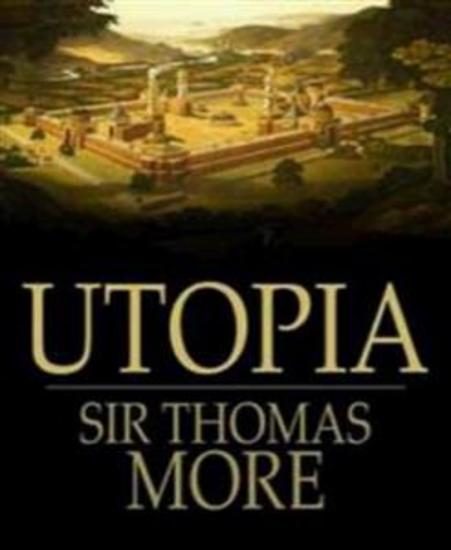
Thomas More’s Utopia - cover

Thomas More’s Utopia

Thomas More

Maison d'édition: BookRix

  • 0
  • 0
  • 0

Synopsis

Utopia is a work of fiction and political philosophy by Thomas More. The book is a frame narrative primarily depicting a fictional island society and its religious, social and political customs. 

There is no private property on Utopia, with goods being stored in warehouses and people requesting what they need. There are also no locks on the doors of the houses, which are rotated between the citizens every ten years. Agriculture is the most important job on the island. Every person is taught it and must live in the countryside, farming for two years at a time, with women doing the same work as men. Parallel to this, every citizen must learn at least one of the other essential trades: weaving (mainly done by the women), carpentry, metalsmithing and masonry. There is deliberate simplicity about these trades; for instance, all people wear the same types of simple clothes and there are no dressmakers making fine apparel. All able-bodied citizens must work; thus unemployment is eradicated, and the length of the working day can be minimised: the people only have to work six hours a day (although many willingly work for longer). More does allow scholars in his society to become the ruling officials or priests, people picked during their primary education for their ability to learn. All other citizens are however encouraged to apply themselves to learning in their leisure time.

Slavery is a feature of Utopian life and it is reported that every household has two slaves. The slaves are either from other countries or are the Utopian criminals. These criminals are weighed down with chains made out of gold. The gold is part of the community wealth of the country, and fettering criminals with it or using it for shameful things like chamber pots gives the citizens a healthy dislike of it. It also makes it difficult to steal as it is in plain view. The wealth, though, is of little importance and is only good for buying commodities from foreign nations or bribing these nations to fight each other. Slaves are periodically released for good behaviour. Jewels are worn by children, who finally give them up as they mature.

Other significant innovations of Utopia include: a welfare state with free hospitals, euthanasia permissible by the state, priests being allowed to marry, divorce permitted, premarital sex punished by a lifetime of enforced celibacy and adultery being punished by enslavement. Meals are taken in community dining halls and the job of feeding the population is given to a different household in turn. Although all are fed the same, Raphael explains that the old and the administrators are given the best of the food. Travel on the island is only permitted with an internal passport and any people found without a passport are, on a first occasion, returned in disgrace, but after a second offence they are placed in slavery. In addition, there are no lawyers and the law is made deliberately simple, as all should understand it.
Disponible depuis: 19/12/2023.
Longueur d'impression: 175 pages.

D'autres livres qui pourraient vous intéresser

  • The Inevitable Revolution - cover

    The Inevitable Revolution

    Leo Tolstoy

    • 0
    • 0
    • 0
    The Inevitable Revolution is an essay about abolishing the law of violence and replacing it with the law of love. It is a text on civil disobedience, pacifism, and anarchism, and it is Tolstoy's last non-fiction work detailing his final opinions on political, economic, and religious issues.
    
    In it, he criticizes prisons, parliaments, wars, conscription, capitalism, theft, revolutionary violence, and taxes, and praises Christianity's message of love as the solution to these problems; although he also recognizes the law of love in other religions. Tolstoy asked people not to directly commit any violence, not to take part in violence, and not to approve of violence.
    Voir livre
  • Learn Dutch With Music - cover

    Learn Dutch With Music

    Innovative Language Learning, ...

    • 0
    • 0
    • 0
    Can learning Dutch be as simple as listening to music?


    And as easy as remembering song lyrics?


    Just think. You remember song lyrics because lyrics are catchy, repeated throughout the song, and go with the music, right? Now, if you stuck in Dutch, you'd easily learn Dutch words and phrases the same way!


    So, yes, learning Dutch is as easy as listening to music' with the Learn Dutch With Music Audiobook.


    Just press play, and you'll hear Dutch words and phrases repeated to the beat of upbeat and cheerful music. And' follow along!


    You'll learn 180+ most common Dutch words and phrases' while relaxing at home, or while driving to work.


    Learn Dutch With Music is the easiest way to start learning Dutch.. without getting overwhelmed by complicated explanations. Perfect for new learners with little to no language learning experience.


    What will you learn?
     
    180+ Words & Phrases Including...
     
    - Basic Greetings
     
    - Numbers
     
    - Common Questions and Answers
     
    - Parts of the Body & Talking About Your Wellbeing
     
    - Common Hobbies
     
    - And much more


    Learn Dutch With Music includes...
     
    - 15 Songs/Lessons Inside (Each is about 7 minutes long)
     
    - Fast-Paced Review Section at the End of Each Lesson
     
    - 1 Hour 50 Minutes in Total
     
    - Accompanying PDF eBook with the Words, Phrases and Translations


    Download the PDF and read along
    Voir livre
  • The Two Marias - cover

    The Two Marias

    Jonathan Kis Lev

    • 0
    • 0
    • 0
    In their early teens, two girls were forced to sit next to each other in school. Although they were complete opposites−one a social butterfly and the other a withdrawn bookworm−they soon realized that they shared similar hopes and dreams. Over time, against all expectations, they became best friends. 
    Until the war broke out. 
    Now, each was thrown into opposite sides of the conflict. And mistakes were made−unforgivable mistakes, that would shape both their futures. 
    How could their friendship endure? 
    BASED ON A REMARKABLE TRUE STORY, with an appendix including authentic WWII photographs and documents. 
    “Wonderful... A wry, sharply observed tale of both heroism and coming-of-age-story during one of the darkest times in humanity.” 
    “Compulsively readable... In this 200-page novella Kis-Lev proves to be yet again a distinctively contemporary literary voice.” 
    “Biting, brilliant exploration of a female friendship. And though The Two Marias focuses on young women, readers need be neither young nor female in order to enjoy it...”
    Voir livre
  • 7 Seconds to Die - A Military Analysis of the Second Nagorno-Karabakh War and the Future of Warfighting - cover

    7 Seconds to Die - A Military...

    John F. Antal

    • 0
    • 0
    • 0
    A military study of the 2020 war between Armenia and Azerbaijan—the first war in history won primarily by unmanned systems. 
     
    Fought over the course of forty-four days, the Second Nagorno-Karabakh war resulted in a decisive military victory for Azerbaijan. Armenia lost even though they controlled the high ground in a mountainous region that favored traditional defense. In 7 Seconds to Die, military consultant and historian John Antal examines the decisive factors of the war and their implications for the future of armed conflict. 
     
    The fact that Azerbaijan won the war is not extraordinary, considering the correlation of forces arrayed against Armenia. What is exceptional is that this was the first modern war primarily decided by unmanned weapons. The Turkish-made BAYRAKTAR TB2 Unmanned Air Combat Vehicle (UCAV) and the Israeli-made HAROP Loitering Munition (LM) dominated the fighting and provided Azerbaijan with a war-winning advantage.
    Voir livre
  • The Mountain That Watches Dyatlov Pass Tragedy - cover

    The Mountain That Watches...

    Steven J. Pickering

    • 0
    • 0
    • 0
    The wind never truly dies in the Urals. 
     
    It prowls the valleys and ridgelines like a restless spirit, rattling bare birches, hissing across the frozen stone. At night it screams—long, feral cries that curl around the peaks like warning songs. The Mansi hunters had long ago given one of those mountains a name: Kholat Syakhl, the Mountain of the Dead. 
     
    In the dim light of February 1959, the mountain waited. Snow drifted across its slopes, erasing tracks, swallowing sound, hiding the small traces of what was to come. Soon, nine figures would climb its shoulder, laughing, weary, defiant against the cold. They would pitch their tent there, a fragile canvas wall against an indifferent wilderness. 
     
    And within hours, the mountain would keep them forever.
    Voir livre
  • The Fall of the Monarchy - The Events Leading to the Execution of King Louis XVI and Queen Marie Antoinette - cover

    The Fall of the Monarchy - The...

    Amara Blackwood

    • 0
    • 0
    • 0
    The Ancien Régime, the political and social system that governed France for centuries, was built on a rigid hierarchy that concentrated power in the hands of the monarchy and nobility. This structure, deeply rooted in tradition, relied on the divine right of kings, reinforcing the belief that the king’s authority was absolute and unquestionable. King Louis XVI, like his predecessors, ruled with the assumption that his word was law, but by the late 18th century, the very foundations of this system were beginning to crumble. Economic hardship, social inequality, and growing discontent among the people exposed the fragility of a monarchy that had long ignored the demands of change. 
    At the heart of the Ancien Régime was the Estates System, which divided French society into three distinct groups. The First Estate consisted of the clergy, who enjoyed vast privileges, including exemption from most taxes. The Second Estate was made up of the nobility, who held significant land and influence while also being largely free from taxation. The Third Estate, which comprised the vast majority of the population, included peasants, urban workers, and the emerging bourgeoisie. This group bore the heaviest tax burden while having little political power, a reality that bred resentment and a growing desire for reform. 
    The economic struggles of France further weakened the monarchy’s stability. Years of extravagant spending by the royal court, particularly under King Louis XV and Louis XVI, had left the country in financial ruin. The lavish expenditures of Queen Marie Antoinette, though exaggerated in popular discourse, became a symbol of royal excess. Additionally, France’s costly involvement in the American Revolution had drained the treasury, deepening the crisis. By the 1780s, the government faced an insurmountable debt, and repeated attempts to impose new taxes on the privileged classes were met with fierce resistance.
    Voir livre