Rejoignez-nous pour un voyage dans le monde des livres!
Ajouter ce livre à l'électronique
Grey
Ecrivez un nouveau commentaire Default profile 50px
Grey
Abonnez-vous pour lire le livre complet ou lisez les premières pages gratuitement!
All characters reduced
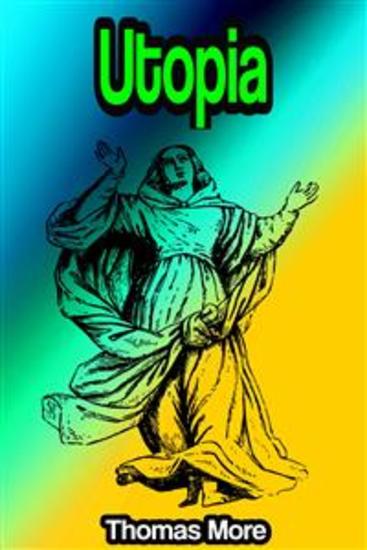
Utopia - cover

Utopia

Thomas Moore

Maison d'édition: Memorable Classics eBooks

  • 0
  • 0
  • 0

Synopsis

Utopia by Thomas More "A little, true book, not less beneficial than enjoyable, about how things should be in a state and about the new island Utopia") is a work of fiction and socio-political satire by Thomas More (1478–1535), written in Latin and published in 1516.

The book is a frame narrative primarily depicting a fictional island society and its religious, social, and political customs. Many aspects of More's description of Utopia are reminiscent of life in monasteries.

The first created original name was even longer: Libellus vere aureus, nec minus salutaris quam festivus, de optimo rei publicae statu deque nova insula Utopia. This translates, "A truly golden little book, no less beneficial than entertaining, of a republic's best state and of the new island Utopia".

Utopia is derived from the Greek prefix "ou-" (οὔ), meaning "not", and topos (τόπος), "place", with the suffix -iā (-ίᾱ) that is typical of toponyms; the name literally means "nowhere", emphasizing its fictionality. In early modern English, Utopia was spelled "Utopie", which is today rendered Utopy in some editions.
In fact, More's very first name for the island was Nusquama, the Latin equivalent of "no-place", however he eventually opted for the Greek-influenced name.
Disponible depuis: 03/06/2022.

D'autres livres qui pourraient vous intéresser

  • Coming Clean - The Rise of Critical Theory and the Future of the Left - cover

    Coming Clean - The Rise of...

    Eric Heinze

    • 0
    • 0
    • 0
    What has gone wrong with the left—and what leftists must do if they want to change politics, ethics, and minds. 


    Leftists have long taught that people in the West must take responsibility for centuries of classism, racism, colonialism, patriarchy, and other gross injustices. Of course, right-wingers constantly ridicule this claim for its "wokeness." 


    In Coming Clean, Eric Heinzerejects the idea that we should be less woke. In fact, we need more wokeness, but of a new kind. Yes, we must teach about these bleak pasts, but we must also educate the public about the left's own support for regimes that damaged and destroyed millions of lives for over a century—Stalin in the Soviet Union, Mao Zedong in China, Pol Pot in Cambodia, or the Kim dynasty in North Korea. 


    Criticisms of Western wrongdoing are certainly important, yet Heinze explains that leftists have rarely engaged in the kinds of open and public self-scrutiny that they demand from others. Citing examples as different as the Ukraine war, LGBTQ+ people in Cuba, the concept of "hatred," and the problem of leftwing antisemitism, Heinze explains why and how the left must change its memory politics if it is to claim any ethical high ground.
    Voir livre
  • Hidden Agendas - Secret Motives behind Outward Behavior or Actions - cover

    Hidden Agendas - Secret Motives...

    Cito Harder

    • 0
    • 0
    • 0
    Hidden agendas exist in nearly every aspect of life, shaping decisions, influencing behavior, and often determining the outcomes of interactions without those involved fully realizing it. A hidden agenda refers to a concealed motive or underlying intention that differs from what is outwardly expressed. Unlike open and transparent objectives, hidden agendas operate beneath the surface, often serving personal, financial, or strategic interests that are not explicitly stated. 
    At their core, hidden agendas stem from the fundamental human need for control, advantage, or self-preservation. People may withhold their true intentions out of fear of rejection, loss of power, or diminished influence. In many cases, hidden agendas are not inherently malicious; they can be driven by self-interest, strategic planning, or the need to protect sensitive information. However, when used manipulatively, they can undermine trust, deceive others, and lead to unethical or harmful consequences. 
    One of the key characteristics of a hidden agenda is deception or misdirection. A person or group may present one set of intentions while secretly pursuing another. This is common in politics, business, and even personal relationships, where individuals may disguise their true motivations to gain support, manipulate outcomes, or secure an advantage. For example, a corporate leader advocating for a policy change may claim it is for the benefit of employees, while in reality, it serves to increase profits or consolidate power.
    Voir livre
  • The New Science of Politics - An Introduction - cover

    The New Science of Politics - An...

    Eric Voegelin

    • 0
    • 0
    • 0
    “Thirty-five years ago few could have predicted that The New Science of Politics would be a best-seller by political theory standards. Compressed within the Draconian economy of the six Walgreen lectures is a complete theory of man, society, and history, presented at the most profound and intellectual level. . . . Voegelin’s [work] stands out in bold relief from much of what has passed under the name of political science in recent decades. . . . The New Science is aptly titled, for Voegelin makes clear at the outset that a ’return to the specific content’ of premodern political theory is out of the question. . . . The subtitle of the book, An Introduction, clearly indicates that The New Science of Politics is an invitation to join the search for the recovery of our full humanity.”—From the new Foreword by Dante Germino“This book must be considered one of the most enlightening essays on the character of European politics that has appeared in half a century. . . . This is a book powerful and vivid enough to make agreement or disagreement with even its main thesis relatively unimportant.”—Times Literary Supplement“Voegelin . . . is one of the most distinguished interpreters to Americans of the non-liberal streams of European thought. . . . He brings a remarkable breadth of knowledge, and a historical imagination that ranges frequently into brilliant insights and generalizations.”—Francis G. Wilson, American Political Science Review“This book is beautifully constructed . . . his erudition constantly brings a startling illumination.”—Martin Wright, International Affairs
    Voir livre
  • Pandemic Reckoning: Unmasking the Failures of Public Health - "Transform your comprehension of public health—immerse yourself in thought-provoking audio from 'Pandemic Reckoning' today!" - cover

    Pandemic Reckoning: Unmasking...

    Orson Brackley

    • 0
    • 0
    • 0
    Pandemic Reckoning: Unmasking the Failures of Public Health 
    ⭐⭐ Simplified Audio Guide with Explanations ⭐⭐ 
    Are you ready to advance your understanding of public health and uncover the crucial lessons learned during the pandemic? 
    Search no more!  
    This audiobook is your ultimate guide to exploring the critical insights on mental health and resilience amid public health crises. With this knowledge, you will be empowered to engage in meaningful discussions and apply what you've learned. 
    Updated for the latest insights and findings. 
    Key features of this comprehensive resource: 
    - In-depth examination of the failures of public health during the pandemic 
    - Thorough explanations of mental health implications during crises 
    - Effective strategies for resilience and coping 
    Our audiobook sets itself apart by providing extensive coverage of topics essential for grasping the complexities of public health failures. Each concept is examined with care, ensuring a deep understanding. 
    This is an independent resource, not affiliated with any official health organization, created solely for your benefit. 
    Crafted with a clear structure and accessible language, "Pandemic Reckoning" guarantees seamless flow between ideas. Say goodbye to complicated jargon; embrace clear, precise, and insightful content. 
    So, why hesitate? Click the BUY NOW button, secure your copy, and embark on a journey to enhanced awareness about public health failures!
    Voir livre
  • God and Government - Breaking the Myth of Separation and the Deepening Evangelical Division in American Politics - cover

    God and Government - Breaking...

    Joshua M Ngoma

    • 0
    • 0
    • 0
    The Evangelical Church in the United States and other parts of the world, in general, is in a crisis of identity and stuck at a pivotal crossroads of history, conflicted about its God-given role and direction.This paralysis has been exposed and magnified by a renewed and raging debate about the role and relevance of Christianity in the governance and destiny of nations.“God and Government” establishes the truth about our role as Christians in the public affairs of nation states. It resolves one of the Church’s last frontiers yet to be conquered by Biblical truth: the old age conflict of the separation of God’s Word from the civil governance of nations.It explains why Evangelical Christians, between the so-called Religious Right and the Religious Left, are deeply divided about the role of the Church in the national politics of the United States.God’s blueprint guides the affairs of nations and He is not silent on matters of good governance, righteousness, and justice. Only God has unlimited power- His government rests on the shoulders of His Son Jesus Christ who has, in turn, delegated authority to the individual, family, Church and the State. “God and Government” is the definite answer to the following questions, and much more.
    Voir livre
  • Inflation - A Guide for Users and Losers - cover

    Inflation - A Guide for Users...

    Nicolò Fraccaroli, Mark Blyth

    • 0
    • 0
    • 0
    Inflation is back, and its impact can be felt everywhere, from the grocery store to the mortgage market to the results of elections around the world. Yet the conventional wisdom about inflation is stuck in the past. Since the 1970s, there has only really been one playbook for fighting inflation: raise interest rates, thereby creating unemployment and a recession, which will lower prices. But this simple story hides a multitude of beliefs about why prices go up and how policymakers can wrestle them back down, beliefs that are often wrong, damaging, and have little empirical basis. 


    Leading political economists Mark Blyth and Nicolò Fraccaroli reveal why inflation really happens, challenge how we think about it, and argue for fresh approaches to combat it. With accessible and engaging commentary, and a good dose of humor, Blyth and Fraccaroli bring the complexities of economic policy and inflation indices down to earth. 


    Climate shocks, demographic change, geopolitical tensions, and politicians promising to upend the global order are all combining to create a more inflationary future, making a new paradigm for understanding inflation urgently necessary. Astute, timely, and engaging, Inflation is a must-listen for anyone seeking to understand the forces shaping our economy and politics.
    Voir livre