Rejoignez-nous pour un voyage dans le monde des livres!
Ajouter ce livre à l'électronique
Grey
Ecrivez un nouveau commentaire Default profile 50px
Grey
Abonnez-vous pour lire le livre complet ou lisez les premières pages gratuitement!
All characters reduced
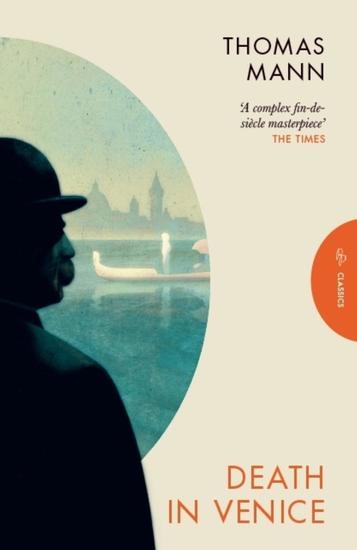
Death in Venice - cover

Veuillez nous excuser, les droits de la maison d'édition de ce livre ne permettent pas de le lire ce livre depuis le pays depuis lequel vous vous connectez.

Death in Venice

Thomas Mann

Traducteur Lesley Chamberlain

Maison d'édition: Pushkin Press

  • 0
  • 0
  • 0

Synopsis

'One of the undisputed classics of contemporary European literature' Independent
'A monumental writer' Sunday Telegraph
A stunning fresh translation of one of the most powerful stories of desire and undoing in modern literature
Erudite, respectable writer Gustav Aschenbach lives a life of structured routine. One day, as he puzzles over his stubborn writer's block, Aschenbach has a dazzling vision that leaves him with a restless urge to abandon his settled life and travel south to Venice.
On checking into his hotel, Aschenbach notices a young Polish boy of perfect, sculptural beauty: Tadzio. As he lingers on at the hotel, Aschenbach falls into an ever-deeper infatuation with the youth, whose curled blond hair and porcelain face fill him with rapture. Ignoring whispered warnings of a cholera outbreak in the city, Aschenbach chooses to stay close to Tadzio, his mind swirling with mad desire.
Classical in structure yet roiled by disturbing passion, Death in Venice is an enormously powerful story of one man's undoing.
Part of the Pushkin Press Classics series: timeless storytelling by icons of literature, hand picked from around the globe.
Translated by Lesley Chamberlain
Thomas Mann (1875-1955) was perhaps Germany's most famous twentieth-century writer. Born to a merchant family in Lübeck, Mann was preparing to enter the family business when his father suddenly died and the business was liquidated. The Manns moved to Munich, where Mann began his literary career with the epic novel Buddenbrooks (1901), which was a huge success. Further novels and stories followed, including Death in Venice (1912) and The Magic Mountain (1924); five years following publication of the latter novel, Mann was awarded the Nobel Prize in Literature. When Hitler came to power, Mann fled to Switzerland, and from there he escaped to California at the outbreak of the Second World War. He is buried in Switzerland, where he spent his final years.
Disponible depuis: 15/01/2026.
Longueur d'impression: 96 pages.


D'autres livres qui pourraient vous intéresser

  • The Tempest - cover

    The Tempest

    William Shakespeare

    • 0
    • 0
    • 0
    The Tempest is a play by English playwright William Shakespeare, probably written in 1610-1611, and thought to be one of the last plays that Shakespeare wrote alone. After the first scene, which takes place on a ship at sea during a tempest, the rest of the story is set on a remote island, where the sorcerer Prospero, a complex and contradictory character, lives with his daughter Miranda, and his two servants: Caliban, a savage monster figure, and Ariel, an airy spirit. The play contains music and songs that evoke the spirit of enchantment on the island. It explores many themes, including magic, betrayal, revenge, and family. In Act IV, a wedding masque serves as a play-within-a-play, and contributes spectacle, allegory, and elevated language.
    Although The Tempest is listed in the First Folio as the first of Shakespeare's comedies, it deals with both tragic and comic themes, and modern criticism has created a category of romance for this and others of Shakespeare's late plays. The Tempest has been put to varied interpretations, from those that see it as a fable of art and creation, with Prospero representing Shakespeare, and Prospero's renunciation of magic signaling Shakespeare's farewell to the stage, to interpretations that consider it an allegory of Europeans colonizing foreign lands.
    Voir livre
  • A Diagnosis of Death - From their pens to your ears genius in every story - cover

    A Diagnosis of Death - From...

    Ambrose Bierce

    • 0
    • 0
    • 0
    Ambrose Gwinnett Bierce was born on 24th June 1842 at Horse Cave Creek in Meigs County, Ohio. His parents were poor but they introduced him to literature at an early age, instilling in him a deep appreciation of books, the written word and the elegance of language.  
    Growing up in Koscuisko County, Indiana poverty and religion were defining features of his childhood, and he would later describe his parents as “unwashed savages” and fanatically religious, showing him little affection but always quick to punish. He came to resent religion, and his introduction to literature appears to be their only positive effect. 
    At age 15 Bierce left home to become a printer’s devil, mixing ink and fetching type at The Northern Indian, a small Ohio paper. Falsely accused of theft he returned to his farm and spent time sending out work in the hopes of being published. 
    His Uncle Lucius advised he be sent to the Kentucky Military Institute. A year later he was commissioned as an Officer.  As the Civil War started Bierce enlisted in the 9th Indiana Infantry Regiment.  
    In April 1862 Bierce fought at the Battle of Shiloh, an experience which, though terrifying, became the source of several short stories. Two years later he sustained a serious head wound and was off duty for several months. He was discharged in early 1865.  
    A later expedition to inspect military outposts across the Great Plains took him all the way to San Francisco. He remained there to become involved with publishing and editing and to marry, Mary Ellen on Christmas Day 1871.  They had a child, Day, the following year.  
    In 1872 the family moved to England for 3 years where he wrote for Fun magazine. His son, Leigh, was born, and first book, ‘The Fiend’s Delight’, was published.  
    They returned to San Francisco and to work for a number of papers where he gained admiration for his crime reporting. In 1887 he began a column at the William Randolph Hearst’s San Francisco Examiner.  
    Bierce’s marriage fell apart when he discovered compromising letters to his wife from a secret admirer. The following year, 1889 his son Day committed suicide, depressed by romantic rejection. 
    In 1891 Bierce wrote and published the collection of 26 short stories which included ‘An Occurrence at Owl Creek Bridge’.  Success and further works including poetry followed.  
    Bierce with Hearst’s resources helped uncover a financial plot by a railroad to turn 130 million dollars of loans into a handout. Confronted by the railroad and asked to name his price Bierce answered “my price is $130 million dollars. If, when you are ready to pay, I happen to be out of town, you may hand it over to my friend, the Treasurer of the United States”.  
    He now began his first foray as a fabulist, publishing ‘Fantastic Fables’ in 1899.  But tragedy again struck two years later when his second son Leigh died of pneumonia relating to his alcoholism.  
    He continued to write short stories and poetry and also published ‘The Devil’s Dictionary’.  
    At the age of 71, in 1913 Bierce departed from Washington, D.C., for a tour of the battlefields where he had fought during the civil war. At the city of Chihuahua he wrote his last known communication, a letter to a friend. It’s closing words were “as to me, I leave here tomorrow for an unknown destination,” Ambrose Bierce then vanished without trace.
    Voir livre
  • Fall Asleep to The Wind in the Willows - A soothing reading for relaxation and sleep - cover

    Fall Asleep to The Wind in the...

    Kenneth Grahame

    • 0
    • 0
    • 0
    Experience Kenneth Grahame's beloved classic, "The Wind in the Willows," as you drift off to sleep. This book has been edited, narrated, and produced especially to help you fall asleep. 
    Narrated by Elizabeth Grace for Slumber Studios. 
    Do you find yourself struggling to fall asleep? Perhaps you have insomnia or a racing mind after a long day. No matter what is keeping you up at night, soothing audio stories are one of the most effective ways to help you fall asleep and stay asleep. And that's exactly what we do at Slumber Studios. 
    So close your eyes, relax, and let the soothing voice of Elizabeth Grace guide you through the whimsical adventures of Mole, Rat, Toad, and Badger. As you listen to the gentle and melodic tone of the narration, let your mind wander and immerse yourself in the charming world of these woodland creatures. Follow the friends as they embark on delightful escapades, forge lasting friendships, and discover the simple joys of life. 
    Our audiobooks are expertly crafted to help you relax and drift off to sleep. Each episode is designed to instill calm, with a slower pace and soothing background music, ensuring that you will be lulled into a peaceful slumber. 
    So if you're looking for a way to unwind after a long day, you've come to the right place. 
    Simply press play, lay down in bed, and let Elizabeth Grace's calming voice transport you into a world of dreams. You'll wake up feeling refreshed and recharged in the morning.
    Voir livre
  • The Awakening - cover

    The Awakening

    Kate Chopin

    • 0
    • 0
    • 0
    Narrated by two-time Academy Award-winning actress Hilary Swank, The Awakening is set in New Orleans and the Southern Louisiana coast at the end of the nineteenth century. The plot centers on Edna Pontellier and her struggle to reconcile her increasingly unorthodox views on femininity and motherhood with the prevailing social attitudes of the turn-of-the-century American South. It is one of the earliest American novels that focuses on women's issues without condescension. It is also widely seen as a landmark work of early feminism, generating mixed reaction from contemporary readers and critics. The novel's blend of realistic narrative, incisive social commentary, and psychological complexity makes The Awakening a precursor of American modernist literature. 
     
    Cover illustrated by: Mar Bertran 
    Mar Bertran sees art as an intrinsic form of self-expression. She considers herself a sensitive person and believes that illustration has been pivotal in allowing her to let out her inner world full of insecurities. Visualizing her thoughts and emotions with the purpose of connecting with others has become Mar's way of living. Post-impressionism and pop art have been a massive influence on her work. Mar seeks an impact through bold colors and uncovers emotions in the character's eyes.
    Voir livre
  • Hamlet - cover

    Hamlet

    Tom Wheelwright, E.A. Copen,...

    • 0
    • 0
    • 0
    Shakespeare’s most famous play is one of the greatest stories in the literature of the world. 
    Distressed by his father’s death and his mother’s over-hasty remarriage, Hamlet, prince of Denmark is faced by a specter from beyond the grave bearing a grim message of murder and revenge. The young prince is driven to the edge of madness by his struggle to understand the situation he finds himself in and to do his duty. Many others, including Hamlet’s beloved, the innocent Ophelia, are swept up in his tragedy. 
    Hamlet is played by Simon Russell Beale. Imogen Stubbs plays Ophelia, Jane Lapotaire is Gertrude, and Bob Peck is Claudius. Polonius is played by Norman Rodway. 
    ACT IScene 1. The ghost of Old Hamlet, King of Denmark, has appeared to officers guarding the castle of Elsinore. When the apparition is witnessed by Horatio, friend of the Dead King’s son, he fears that it portends ill. He decides to tell young Hamlet, hoping that the ghost might reveal to him the cause of its restlessness.Scene 2. The dead king’s brother, Claudius, has assumed the crown and married the widowed Queen Gertrude. He dispatches emissaries to Norway where the king’s nephew Fortinbras is threatening Denmark with war. The King and Queen urge young Hamlet to cast off his dark mood. Once alone, the prince vents his violent grief at his father’s death and outrage at his mother’s “incestuous” remarriage. Wen Horatio tells Hamlet about the ghost, he too suspects foul play.Scene 3. Laertes warns his sister, Ophelia, not to take seriously Hamlet’s attentions because, being a prince, he is not free to make his own choices in matters of love. Scene 4. Hamlet and Horatio meet on the battlements. The ghost appears and beckons to Hamlet to follow him. Scene 5. The ghost describes to Hamlet how it was murdered by Claudius. It urges him to revenge the crime. 
    ACT IIScene 1. Polonius, a garrulous counsellor and father to Ophelia and Laertes, instructs Reynaldo to investigate the kind of life Laertes is leading in Paris. Ophelia describes Hamlet’s bizarre behavior to Polonius who attributes this to her recent rejection of him.Scene 2. The King and Queen ask Rosencrantz and Guildenstern, old friends of Hamlet, to discover the cause of the prince’s erratic behavior. The King of Norway has stopped Fortinbras’ preparations for war against Denmark. Polonius takes Hamlet’s scathing and capricious wit as proof of his insanity. Hamlet greets Rosencrantz and Guildenstern warmly, but becomes suspicious of their motives. He is, however, pleased to hear that a company of players has arrived at Elsinore. Once alone, he berates himself for his failure to undertake his revenge. He plans to have the players enact King Hamlet’s murder and to observe Claudius’ reaction as a way of ascertaining his guilt. 
    Act IIIScene 1. Rosencrantz and Guildenstern have failed to uncover the reason for Hamlet’s behavior. Hamlet shocks Ophelia with his crude and bitter contempt for women and marriage. Their conversation is overheard by Claudius, who recognizes that it is not thwarted love that is responsible for Hamlet’s dangerous instability. He resolves to send him on a diplomatic mission to England to get him away from the court. Polonius suggests that Gertrude should persuade Hamlet to confide in her; he himself will eavesdrop on their conversation.Scene 2. Hamlet tells Horatio to watch Claudius during the play for signs of guilt. As a murder identical to that of King Hamlet is enacted, Claudius rises in fright and calls for lights, thus ending the performance. Hamlet is summoned to his mother’s closet and vows to “speak daggers to her, but use none.”Scene 3. Claudius orders Rosencrantz and Guildenstern to accompany Hamlet to England. Once alone he expresses agony at his dreadful crime. Hamlet comes upon him trying to pray, but desists from killing him on the grounds that, were Claudius to die in prayer, his soul might go to heaven rather than hell.Scene 4. Hamlet harangues
    Voir livre
  • Sincere Huron The (L'Ingénu) - cover

    Sincere Huron The (L'Ingénu)

    Voltaire

    • 0
    • 0
    • 0
    L'Ingénu is a satirical novella by the French writer Voltaire, published in 1767. It tells the story of a Huron Indian transported to the sophistication of eighteenth century Paris, and satirizes religious doctrine, as well as the folly and injustices of French society(Summary from Wikipedia).
    Voir livre