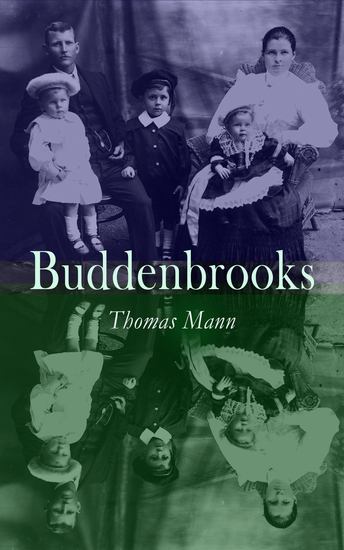
Buddenbrooks - The Decline of a Family
Thomas Mann
Übersetzer e-artnow
Verlag: e-artnow
Beschreibung
Thomas Mann's 'Buddenbrooks' is a grand narrative sweeping through four generations of a bourgeois German family in the 19th century. It meticulously chronicles the decline of the Buddenbrooks, a once-flourishing merchant dynasty, contrasting economic success with personal disintegration. Mann's astute portrayal of characters, combined with a keen understanding of societal transformation, is enriched by his celebrated literary style, a masterful blend of realist detail and philosophical investigation. The novel operates within the broader literary context of realism and naturalism, illuminating the transformations brought on by industrialization, and the fragility of human ambition in times of change. Born into a family akin to the novel's protagonists, Thomas Mann drew on his personal experiences and acute observations of his own family's evolution to craft this saga. His upbringing in Lübeck, a prominent merchant town, deepened his insights into both the grandeur and vulnerability inherent in such family enterprises. Mann's deft engagement with themes of decline and change reflects both personal introspection and a reaction to broader socio-economic shifts, creating a work of profound depth and resonance. To readers embarking on 'Buddenbrooks,' Mann's compelling narrative offers not only an engrossing family story but also a profound exploration of societal dynamics and personal aspirations. It is a testament to his narrative prowess and his unmatched ability to transform the personal into the universal. As a winner of the Nobel Prize in Literature, Mann's 'Buddenbrooks' stands as an essential cornerstone for those interested in exploring the intricate dance between societal transformation and familial fate, promising a rich and engaging literary journey. This translation has been assisted by artificial intelligence.
This translation has been assisted by artificial intelligence.
Verfügbar seit: 01.01.2026.
Drucklänge: 591 Seiten.