Begleiten Sie uns auf eine literarische Weltreise!
Buch zum Bücherregal hinzufügen
Grey
Einen neuen Kommentar schreiben Default profile 50px
Grey
Jetzt das ganze Buch im Abo oder die ersten Seiten gratis lesen!
All characters reduced
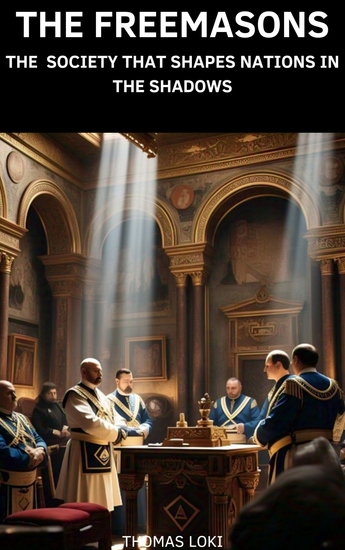
The Freemasons - The Society That Shapes Nations in the Shadows - cover

The Freemasons - The Society That Shapes Nations in the Shadows

Thomas Loki

Verlag: Heritage Books

  • 0
  • 0
  • 0

Beschreibung

For centuries, the Freemasons have been at the center of whispers and legends. Often seen as a quiet network of builders and thinkers, this secretive society is believed by many to wield enormous influence behind the scenes of history. From presidents and revolutionaries to architects and philosophers, the Freemasons have counted some of the most powerful and brilliant minds among their ranks. But what do they truly believe, and how deep does their influence run? The Freemasons: The Society That Shapes Nations in the Shadows pulls back the curtain on one of the world’s most mysterious fraternities, exploring their symbols, rituals, and the startling theories that suggest their quiet hand in shaping the world as we know it.
Verfügbar seit: 07.04.2025.
Drucklänge: 81 Seiten.

Weitere Bücher, die Sie mögen werden

  • Managing a Difficult Spouse in a Godly Way - cover

    Managing a Difficult Spouse in a...

    Dr. Fatima Asapokhai

    • 0
    • 0
    • 0
    Dive into a transformative guide that navigates the complexities of managing challenging relationships through a lens of faith and grace. "Managing a Difficult Spouse in a Godly Way" is an insightful manuscript that delves into the intricacies of dealing with a challenging partner, offering profound wisdom and practical solutions rooted in divine principles. Explore the nuanced behaviors/characteristics that define a difficult spouse. From poor communication and lack of empathy to stubbornness and criticism, uncover the layers that strain relationships and hinder understanding. Discover an array of faith-based strategies to manage challenging relationships with grace and resilience. Embrace humility, gentleness, and patience as cornerstones for fostering constructive communication, while upholding forgiveness and unconditional love as transformative forces. Uncover the divine principles of obedience and responsibility within relationships. Prioritize spiritual growth, mutual respect, and selflessness, laying the groundwork for a harmonious and fulfilling partnership anchored in faith. Tackle sensitive topics like abuse with compassion and practicality. Learn to recognize signs, ensure safety, seek support, and embark on a journey toward healing and recovery, fostering emotional well-being and rebuilding self-worth after leaving an abusive relationship. Witness the transformative journey toward healing, restoration, and wholeness. This manuscript provides a roadmap for emotional recovery, practical steps for rebuilding self-worth, and establishing healthy boundaries for a life rooted in faith and resilience. "Managing a Difficult Spouse in a Godly Way" is a beacon of hope and guidance, offering a profound understanding of navigating challenging relationships while upholding the virtues of faith, compassion, and grace. Embark on a journey of healing and transformation, embracing faith-centered approaches to manage difficult relationships with wisdom and strength.
    Zum Buch
  • The Legend of Atlantis - Myths and Mysteries of the Lost Continent - cover

    The Legend of Atlantis - Myths...

    Julia Blacksmith

    • 0
    • 0
    • 0
    The legend of Atlantis has captivated human imagination for over two millennia. First introduced by the ancient Greek philosopher Plato in his dialogues Timaeus and Critias, Atlantis was described as a powerful and advanced civilization that mysteriously vanished beneath the sea. According to Plato, Atlantis existed around 9,000 years before his time and was a utopian society of great wealth, wisdom, and military might. However, its people grew corrupt, leading to their downfall when the gods punished them with a catastrophic flood. While many scholars argue that Atlantis was purely a philosophical allegory, others have dedicated their lives to searching for evidence of its existence.  
    Numerous theories have emerged over the centuries, each attempting to explain whether Atlantis was a real place or a fictional construct. Some believe Plato’s account was based on real historical events, possibly inspired by the volcanic eruption that destroyed the Minoan civilization on the island of Santorini. Others speculate that Atlantis was an advanced prehistoric civilization that disappeared due to natural disasters. Conversely, skeptics argue that Plato intended Atlantis as a cautionary tale about human hubris, using it as a metaphor for the dangers of moral and political corruption.  
    Beyond academic debates, Atlantis has remained a significant part of global culture. The story has inspired countless books, movies, and television shows, often portraying the lost civilization as a mystical underwater world or a hidden realm of extraordinary technology. Fictional adaptations range from early modern utopian literature to modern conspiracy theories suggesting that Atlanteans possessed knowledge far beyond that of other ancient civilizations. Even today, the idea of a lost, technologically advanced society continues to fuel speculation and excitement, especially among those fascinated by ancient mysteries and alternative history. 
    Zum Buch
  • Embrace Your Power: Dance Through Life and Shine - Embrace Your Power: Unleash Joy and Confidence with Captivating Dance Through Life Audio Lessons! - cover

    Embrace Your Power: Dance...

    Liam Whitaker

    • 0
    • 0
    • 0
    Embrace Your Power: Dance Through Life and Shine  
    ⭐⭐ A Simplified Guide with Clear Explanations ⭐⭐  
    Do you want to advance in your career and enhance your understanding to excel? 
    Are you in search of a complete guide that equips you with everything necessary for success? 
    Look no further! 
    This guide is your ultimate resource for enhancing your skills, exploring practical exercises, and securing success. 
    Updated to Reflect the Latest Knowledge 
    Essential Features of This Comprehensive Guide: 
    - In-depth insights into Personal Empowerment and Growth 
    - Thorough explanations on Unlocking Your Potential and Transforming Your Journey 
    - Effective strategies for preparation and tackling challenges 
    Our guide stands out by offering extensive coverage necessary for your success. Each concept is thoroughly explained and explored. 
    Please note that this is an independent resource designed solely for your benefit. 
    Crafted with a straightforward structure and easy-to-understand language, our guide ensures smooth transitions between topics, replacing complex jargon with clear, precise, and accurate content. 
    Why wait? Click the BUY NOW button, get your guide, and start your journey toward personal success today!
    Zum Buch
  • Kaiser Wilhelm II - Biography of the Last German Emperor and King of Prussia - cover

    Kaiser Wilhelm II - Biography of...

    Kelly Mass

    • 0
    • 0
    • 0
    Wilhelm II, the last German Emperor (Kaiser) and King of Prussia, ruled from June 15, 1888, until his abdication on November 9, 1918, marking the end of the German Empire. His reign was tumultuous, characterized by grand ambitions and disastrous decisions that not only reshaped Germany but also contributed to the broader context of global conflict. Although Wilhelm's creation of a powerful navy and his drive to position Germany as a dominant world power earned him recognition, his erratic public statements and volatile foreign policy alienated many, making him a central figure in the lead-up to World War I. 
    Born in 1859 to Prince Frederick William of Prussia and Victoria, Princess Royal of the United Kingdom, Wilhelm II was part of a deeply interconnected European royal family. His mother, Queen Victoria’s eldest daughter, brought him into a web of political alliances that spanned several major European nations. Wilhelm’s father, Frederick III, briefly held the throne for only 99 days in 1888 before his untimely death, making it a year of remarkable transitions. Just months after his father’s passing, Wilhelm succeeded to the throne during what historians refer to as the "Year of the Three Emperors," as Wilhelm’s grandfather, Wilhelm I, had also died earlier that year.
    Zum Buch
  • Thanatology - The Study of Death - cover

    Thanatology - The Study of Death

    Mike Crawford

    • 0
    • 0
    • 0
    Thanatology, the study of death and the processes surrounding it, has deep historical roots. While the formal discipline emerged in the 20th century, human fascination with death dates back to ancient times. Early civilizations developed complex rituals, beliefs, and philosophies surrounding death, shaping the way societies understood and coped with mortality. Over time, thanatology evolved from religious and philosophical inquiries to a multidisciplinary field incorporating medical, psychological, and sociological perspectives. 
    In ancient societies, death was often viewed through a spiritual or mythological lens. Egyptian, Greek, and Hindu traditions conceptualized the afterlife in elaborate ways, influencing burial practices and rituals. The Egyptians, for instance, believed in the preservation of the body for the soul’s journey in the afterlife, leading to the practice of mummification. Similarly, Greek philosophy—particularly the works of Plato—explored the soul’s immortality and the nature of existence beyond death. These early interpretations laid the groundwork for later philosophical and religious discussions on mortality. 
    The Middle Ages saw the dominance of religious perspectives on death, with Christianity, Islam, and Buddhism offering moral and theological frameworks for understanding mortality. Death was often seen as a transition rather than an end, shaping attitudes toward dying and burial practices. The Black Death in the 14th century significantly influenced perceptions of death, leading to a greater emphasis on the fragility of life and the afterlife. Art, literature, and religious texts from this period reflect a deep engagement with the themes of death and salvation.
    Zum Buch
  • The Magus of Strovolos - The Extraordinary World Of A Spiritual Healer - cover

    The Magus of Strovolos - The...

    Kyriacos Markides

    • 0
    • 0
    • 0
    Ever since his childhood, Kyriacos C. Markides has heard mysterious rumors concerning the Magus of Strovolos, Cyprus's "specialist of the netherworld."
    
    When he returns to Cyprus as an adult, Markides seeks out this master healer and spiritual teacher, to discover the old man for himself. Armed with the skepticism he learned as a sociologist, combined with his passion to explore the inner world and beliefs of this strange Magus, Markides soon learns to appreciate the power and wisdom of this peaceful and humorous soul.
    
    From his exorcism of a Jewish girl haunted by Nazi ghosts to his theory of reincarnation, the Magus reveals to Markides the extraordinary secrets of his philosophy, challenging Western materialism and science, and pointing towards vast domains we normally cannot see.
    
    In writing The Magus of Strovolos, Markides seeks to bring the master healer's teachings to the world. By reading it, we too undertake his spiritual journey.
    Zum Buch