Begleiten Sie uns auf eine literarische Weltreise!
Buch zum Bücherregal hinzufügen
Grey
Einen neuen Kommentar schreiben Default profile 50px
Grey
Jetzt das ganze Buch im Abo oder die ersten Seiten gratis lesen!
All characters reduced
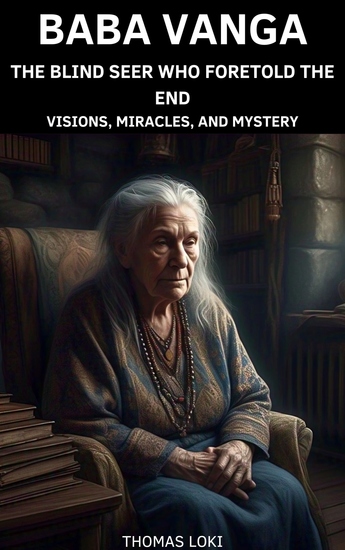
Baba Vanga - The Blind Seer Who Foretold the End - cover

Baba Vanga - The Blind Seer Who Foretold the End

Thomas Loki

Verlag: Heritage Books

  • 0
  • 0
  • 0

Beschreibung

Baba Vanga was no ordinary woman. Blinded as a child by a mysterious storm, she claimed to have gained a vision far greater than sight—the ability to see the future. From world-changing events to personal destinies, her predictions stunned believers and skeptics alike.


Many say she foresaw wars, disasters, and even the rise and fall of world leaders. Some call her a prophet, others a mystery wrapped in legend. But who was the real Baba Vanga? How did a humble woman from a small Bulgarian village become one of the most famous seers in history?


This book unravels the story of her life, her prophecies, and the mystery that continues to surround her name. Was she truly gifted, or were her visions just coincidence? Step into the world of Baba Vanga and decide for yourself.
Verfügbar seit: 01.04.2025.
Drucklänge: 86 Seiten.

Weitere Bücher, die Sie mögen werden

  • Don't Boil The Canary - and other words of wisdom gleaned from my interrupted life - cover

    Don't Boil The Canary - and...

    Ted Simon

    • 0
    • 0
    • 0
    From the time Ted Simon set off around the world on his Triumph, at the age of 42, his life has been, literally, an open book. In everything he has written since that journey began no-one has been more forthcoming about his life, his thoughts and feelings, than Ted. Yet almost nothing is known about his life before that journey. 
    So that his own children – one son, two grandsons – would have a better idea of who he is or was, he began to write an account which, inevitably, grew into a book. These are the earlier “interruptions” of a rich and varied life narrated by the man himself.
    Zum Buch
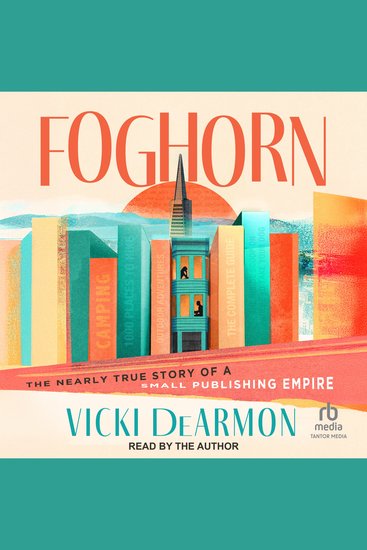
  • Foghorn - The Nearly True Story of a Small Publishing Empire - cover

    Foghorn - The Nearly True Story...

    Vicki DeArmon

    • 0
    • 0
    • 0
    The heyday of small press publishing in San Francisco lives again 


    This is the never-before-told story of a unique time in San Francisco as well as in book industry history, when Bay Area small presses—armed with arrogance and personal computers—took the publishing field. At Foghorn Press, Vicki Morgan was an ambitious woman publisher, young and brash, coming-of-age while quixotically building a book publishing company from scratch with her eccentric brother to help. 


    As part of their optimistic Morgan heritage, the siblings strive to grow Foghorn Press with no capital, 100-hour work weeks, cheap beer, irrepressible belly laughs, and no book publishing experience. They assemble a cast of preposterous authors and resistant staff while surviving a drunken ex-husband, a con artist, calculating distributors, a fleet of good ol' boys, terrible cash flow, and their own differing aspirations. Books are brought to market and miraculously sell from their offices in the Boiler Room. Foghorn is soon a resounding success with sales, media, acclaim. But in the end, there are costs, to relationships, to family, and maybe even to the truth.
    Zum Buch
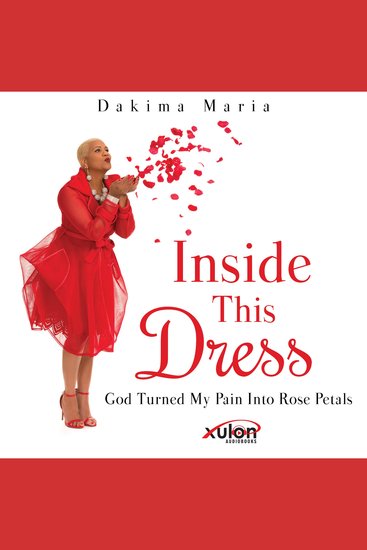
  • Inside This Dress - God Turned My Pain into Rose Petals - cover

    Inside This Dress - God Turned...

    Dakima Hicks

    • 0
    • 0
    • 0
    My beautiful readers, as you glance over the chapters of my life, I hope that you can reflect on your own. We have all experienced heartaches and happiness at some point in our lives. Writing this book freed me from the trauma of my past and created an opportunity for me to live my best life. Maybe you’ve gone through some things that you’ve never shared with others that may have somehow created insecurities within yourself. Hopefully, this book will help you recognize how to move forward with your best life.
    Zum Buch
  • Betty Brown the St Giles Orange Girl - From their pens to your ears genius in every story - cover

    Betty Brown the St Giles Orange...

    Hannah More

    • 0
    • 0
    • 0
    Hannah More was born on February 2nd, 1745 at Fishponds in the parish of Stapleton, near Bristol. She was the fourth of five daughters. 
    The City of Bristol, at that time, was a centre for slave-trading and Hannah would, over time, become one of its staunchest critics.  
    She was keen to learn, possessed a sharp intellect and was assiduous in studying.  Hannah first wrote in 1762 with The Search after Happiness (by the mid-1780s some 10,000 copies had been sold). 
    In 1767 Hannah became engaged to William Turner.  After six years, with no wedding in sight, the engagement was broken off.  Turner then bestowed upon her an annual annuity of £200.  This was enough to meet her needs and set her free to pursue a literary career.   
    Her first play, The Inflexible Captive, was staged at Bath in 1775. The famous David Garrick himself produced her next play, Percy, in 1777 as well as writing both the Prologue and Epilogue for it.  It was a great success when performed at Covent Garden in December of that year.  
    Hannah turned to religious writing with Sacred Dramas in 1782; it rapidly ran through nineteen editions. These and the poems Bas-Bleu and Florio (1786) mark her gradual transition to a more serious and considered view of life. 
    Hannah contributed much to the newly-founded Abolition Society including, in February 1788, her publication of Slavery, a Poem recognised as one of the most important of the abolition period.   
    Her work now became more evangelical.  In the 1790s she wrote several Cheap Repository Tracts which covered moral, religious and political topics and were both for sale or distributed to literate poor people.  The most famous is, perhaps, The Shepherd of Salisbury Plain, describing a family of incredible frugality and contentment. Two million copies of these were circulated, in one year. 
    In 1789, she purchased a small house at Cowslip Green in Somerset. She was instrumental in setting up twelve schools in the area by 1800. 
    She continued to oppose slavery throughout her life, but at the time of the Abolition Bill of 1807, her health did not permit her to take as active a role in the movement as she had done in the late 1780s, although she maintained a correspondence with Wilberforce and others.  
    In July 1833, the Bill to abolish slavery throughout the British Empire passed in the House of Commons, followed by the House of Lords on August 1st. 
    Hannah More died on September 7th, 1833.
    Zum Buch

  • Charles Dickens - cover

    Charles Dickens

    Stefan Zweig

    • 0
    • 0
    • 0
    "Dickens is the highest poetic expression of the English tradition between the heroic century of Napoleon, the glorious past, and imperialism, the dream of his future. (….) Only when one hates the hypocritical narrow-mindedness of Victorian culture from the bottom of one's soul can one appreciates with full admiration the genius of a man who compelled us to find this disgusting world of sated sluggishness interesting and almost endearing, who redeemed life's most banal prose into poetry." A biographical masterpiece: The biography of Charles Dickens in the famous, lively, novelistic style of Stefan Zweig.
    Zum Buch
  • A Little Cloud - From their pens to your ears genius in every story - cover

    A Little Cloud - From their pens...

    James Joyce

    • 0
    • 0
    • 0
    James Augustine Aloysius Joyce was born on the 2nd February 1882 in Dublin into a middle-class family, and the eldest of ten surviving siblings 
    Admired as a brilliant student he briefly attended the Christian Brothers-run O'Connell School before excelling at the Jesuit schools of Clongowes and Belvedere.  From there he went on to attend University College Dublin from 1898, studying English, French and Italian 
    In 1902, Joyce was now in his early twenties, and went to Paris to study Medicine but soon abandoned his teachings.  Back in Dublin to attend to his dying Mother he met Nora Barnacle. They bonded immediately into a life-long match. Together they decided to emigrate to Europe.  The couple lived in Trieste, Rome, Paris, and finally Zürich where Joyce pursued a variety of jobs and ventures to supplement his literary pursuits but none of these paid off.  
    After publishing a poetry volume, ‘Chamber Music’, in 1907, his short story collection ‘The Dubliners’, in 1914, helped establish his talent in the rapidly changing world.  
    Although far from home Joyce’s literary heart and works were set in his recollections of Dublin.  Characters are close resemblances of family and friends and indeed enemies.  His landmark work ‘Ulysses’, published in 1922, is set in the streets and alleyways of the city as it parallels Homer’s Odyssey in a variety of styles including its famed stream of consciousness. 
    His pen continued to produce classics of the order of ‘A Portrait of the Artist as A Young Man’ and ‘Finnegan’s Wake’ together with several volumes of poetry and a play ‘The Exiles, in 1918.   
    On the 11th January 1941, Joyce underwent surgery in Zürich for a perforated duodenal ulcer. The next day he fell into a coma. On the 13th after a brief period of lucidity in which he called for his wife and son he passed.  He was 58.
    Zum Buch