Begleiten Sie uns auf eine literarische Weltreise!
Buch zum Bücherregal hinzufügen
Grey
Einen neuen Kommentar schreiben Default profile 50px
Grey
Jetzt das ganze Buch im Abo oder die ersten Seiten gratis lesen!
All characters reduced
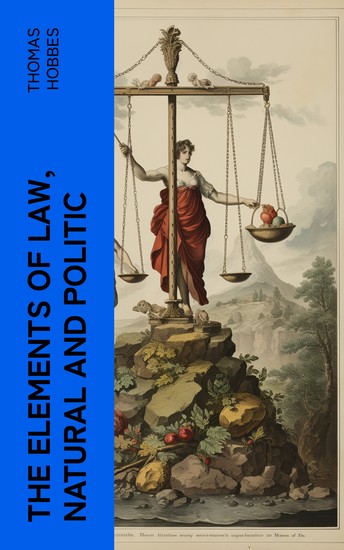
The Elements of Law Natural and Politic - cover

The Elements of Law Natural and Politic

Thomas Hobbes

Verlag: e-artnow

  • 0
  • 0
  • 0

Beschreibung

In The Elements of Law, Natural and Politic, philosopher Thomas Hobbes endeavors to enlighten the bond between physics, psychology and politics. Thomas Hobbes was an English philosopher, considered to be one of the founders of modern political philosophy. Hobbes is best known for his 1651 book Leviathan, in which he expounds an influential formulation of social contract theory. In addition to political philosophy, Hobbes contributed to a diverse array of other fields, including history, jurisprudence, geometry, the physics of gases, theology, and ethics, as well as philosophy in general.
Verfügbar seit: 07.12.2023.
Drucklänge: 153 Seiten.


Weitere Bücher, die Sie mögen werden

  • Persuasion - The Act of Convincing Someone to Change Their Beliefs or Actions - cover

    Persuasion - The Act of...

    Cito Harder

    • 0
    • 0
    • 0
    Persuasion is an integral part of human interaction, deeply embedded in how we communicate and influence others in various aspects of life. It involves the art of convincing someone to change their beliefs, attitudes, or behaviors, often through reasoning, emotional appeal, or both. Whether it’s a political leader attempting to sway voters, a marketer aiming to sell a product, or an individual trying to resolve a conflict, persuasion is a tool that enables individuals to shape others’ thoughts and actions. Understanding persuasion is essential not only to comprehend how others influence us but also to understand how we can use it ethically to influence others in return. 
    At its core, persuasion is about changing the way people think or act without forcing them into compliance. It is often misunderstood as a form of manipulation, but while both involve influencing others, manipulation typically involves deceit or coercion, whereas persuasion focuses on genuine reasoning and voluntary agreement. The ethical boundaries between persuasion and manipulation are significant, and understanding where persuasion becomes harmful is an important distinction in the study of this process. 
    One of the most significant aspects of persuasion is its psychological foundation. Persuasion works through the understanding of human cognition, emotions, and behavior. People are naturally influenced by their emotions, biases, and the social context in which they find themselves. Cognitive biases such as the bandwagon effect, anchoring, and authority bias can make individuals more susceptible to persuasive messages. This means that the context, presentation, and emotional appeal can have a profound impact on how persuasive an argument or idea is.
    Zum Buch
  • Prussia - History of the Prominent German State - cover

    Prussia - History of the...

    Kelly Mass

    • 0
    • 0
    • 0
    Prussia, once a powerful and influential German state, traces its origins back to 1525, when it began as a duchy focused on the region near the southeast coast of the Baltic Sea. Over the centuries, it would grow to play a pivotal role in European history, especially through its military and political influence. Prussia was formally dissolved in 1947 by a decision from the Allies, though its disbandment began much earlier in 1932 when German Chancellor Franz von Papen issued an emergency order transferring the powers of the Prussian government to the central state. The state had been slowly losing its autonomy for years before that, following the turbulent events of the early 20th century. 
    At the height of its power, Prussia was ruled by the House of Hohenzollern, a royal family that presided over its expansive territories and built a military machine renowned for its discipline and effectiveness. Prussia's capital was initially Königsberg, but in 1701, it became Berlin when Prussia elevated itself to the status of a kingdom. Over the years, the Kingdom of Prussia became a major player in European affairs, with its well-organized army enabling it to extend its borders and influence across the continent.
    Zum Buch
  • The Art of Public Speaking - cover

    The Art of Public Speaking

    Owen Clarke

    • 0
    • 0
    • 0
    This work provides a concise synthesis of the key insights and analysis from The Art of Public Speaking. It is an independent summary, not the original book, and has no affiliation with or endorsement from the original publication. Created for readers who want a clear, thought-provoking overview, it distills the central themes and ideas while preserving the depth and relevance of the work. 
    This book provides a comprehensive framework for mastering public speaking by combining theory with practical application. It covers every aspect of the speaking process—from researching and organizing content to developing persuasive arguments, refining delivery techniques, and managing performance anxiety. Emphasizing ethical responsibility and audience-centered communication, it guides readers to transform nervous energy into confident presence. By blending preparation, structure, and authentic expression, it helps speakers build credibility, clarity, and impact across any setting.
    Zum Buch
  • Of Consolation - To Marcia To Helvia To Polybius - cover

    Of Consolation - To Marcia To...

    Seneca the Younger

    • 0
    • 0
    • 0
    These three ‘Consolations’, written by Seneca to his mother and two friends, have been described as ‘the crowning achievement in the canon of ‘consolation letters’. But sentimental they are not, for they emerge from the writer’s deep-seated commitment to Stoicism, where individuals are exhorted to inhabit qualities of virtue, positivity, resilience, and indifference. This recording opens with Seneca’s consolatory letter to Marcia, who, after three years, was still mourning the death of her son. He recognises her exceptional personal qualities and what benefits she has brought to her family, having rescued her father’s legacy as a historian following his death. He cites other noble Roman mothers who lost their sons, and enjoins her to adopt a more Stoic attitude of mind: we are all destined to die, he declares.  
    The second letter is to his mother sent after he had been exiled to Corsica by Emperor Caligula. He counsels Helvia not to mourn his absence – not least because he himself does not feel grief at the prospect of his own exile. He acknowledges the trials of his mother during her life, remarking ‘ill-fortune has given you no respite’. But her grief at the absence of her son may be put to one side in the knowledge that as he has ‘never trusted in Fortune,’ she can be comforted that her son is not discommoded. And history points to far harsher separations.  
    The final letter is to Polybius, Emperor Claudius’s Literary Secretary, who was mourning his brother.  Written while in exile, Seneca’s unwavering commitment to Stoic philosophy is again in evidence. One of Seneca’s principal suggestions is for Polybius to distract himself from grief by an increasing involvement in work.  
    These ‘Consolations’ have been widely admired from Classical times to the present, but are periodically questioned for their emphasis on a somewhat detached approach to grief and bereavement. Not all can manage imperturbability in such circumstances. Nevertheless, there is a steadiness and emotional calm in these missives, which Seneca himself displayed when ordered to commit suicide by Emperor Nero.
    Zum Buch
  • Super Simple CBT - Six Skills to Improve Your Mood in Minutes - cover

    Super Simple CBT - Six Skills to...

    PhD Matthew McKay, PhD Martha...

    • 0
    • 0
    • 0
    Quick skills grounded in cognitive behavioral therapy (CBT) to help you find lasting relief from the painful thoughts that drive anxiety, depression, and more. 


    In today's increasingly uncertain world, it's natural to feel anxious, scared, sad, lonely, angry, worried, or hopeless. Everybody experiences intense emotions sometimes. It's normal. But when the pain becomes too strong and too enduring, it's time for a change. 


    CBT is widely regarded as the gold standard in psychotherapy for treating anxiety and depression. Based on the self-help classic, Thoughts and Feelings, this take-anywhere guide offers distilled CBT skills you can use anytime to challenge the negative thinking that leads to anxiety and depression, balance your emotions, and start engaging in activities that make you feel good about yourself.  Most importantly, you'll learn how your thoughts affect your mood, and how changing your thoughts can actually change your life! 


    This super simple guide presents the most effective therapy for managing anxiety and depression in an easy-to-listen format that therapists can refer to clients, and listeners can refer to again and again.
    Zum Buch
  • Pelé: A short biography - 5 Minutes: Short on time – long on info! - cover

    Pelé: A short biography - 5...

    5 Minutes, 5 Minute Biographies,...

    • 0
    • 0
    • 0
    Pelé, football's first superstar in history: Life and work in a short biography! Everything you need to know, brief and concise. Infotainment, education and entertainment at its best!
    Zum Buch