Junte-se a nós em uma viagem ao mundo dos livros!
Adicionar este livro à prateleira
Grey
Deixe um novo comentário Default profile 50px
Grey
Assine para ler o livro completo ou leia as primeiras páginas de graça!
All characters reduced
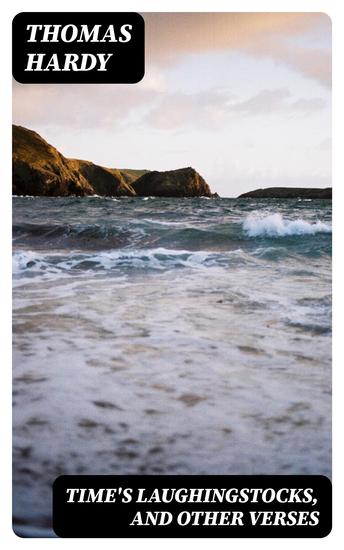
Time's Laughingstocks and Other Verses - cover
LER

Time's Laughingstocks and Other Verses

Thomas Hardy

Editora: DigiCat

  • 0
  • 0
  • 0

Sinopse

In "Time's Laughingstocks, and Other Verses," Thomas Hardy showcases his masterful command of poetry, weaving intricate verses that reflect the poignant complexities of human existence. This collection, published in 1909, exemplifies Hardy's characteristic themes of time, fate, and human folly through a blend of melancholic beauty and ironic wit. His lyrical style plunges readers into the emotional landscapes of love, loss, and the inexorable march of time, all while employing meter and rhyme that evoke the traditional English poetic form. Hardy's keen observational prowess starkly critiques the societal norms of his era, providing a rich literary context steeped in early 20th-century uncertainties and the philosophical undercurrents of modernism. Thomas Hardy, an esteemed English novelist and poet, was profoundly influenced by his rural upbringing and personal experiences. A lifelong fascination with the human condition and nature, combined with his academic efforts in architecture, shaped his narrative and lyrical perspectives. His contemplative insights on the vicissitudes of life are quintessentially reflected in his poetry, establishing him as a significant figure in the canon of English literature. "Time's Laughingstocks" is a must-read for anyone captivated by poetry that reflects life's deeper truths. Hardy's unique ability to blend emotion with intellectual rigor invites readers to meditate on their own lives amid the inexorable passage of time. This collection merits a place in the library of any admirer of profound literary exploration.
Disponível desde: 15/09/2022.
Comprimento de impressão: 55 páginas.

Outros livros que poderiam interessá-lo

  • After the Fall: Dirges Among Ruins - cover

    After the Fall: Dirges Among Ruins

    Eric Tinsay Valles

    • 0
    • 1
    • 0
    This collection explores the creative space of poetry as a means to unravel feelings evoked by the violence of war or by everyday traumatic events. One may come to terms with uncomfortable, including unspeakable, feelings by describing them with imagery from nature and one’s immediate environment. By participating in grieving, the self can better face any lingering effects of trauma. In this creative space, dramatic speakers retell stories and give vent to contradictory feelings through silences and free play. Their accounts attest to the dappled beauty of the human condition even if the full nature, scope and effects of traumatic memories are always beyond their grasp.
    Ver livro
  • Broken Glass - cover

    Broken Glass

    Arthur Miller

    • 0
    • 0
    • 0
    Set in 1938 Brooklyn, this gripping psychological mystery begins when attractive, level-headed Sylvia Gellburg suddenly loses her ability to walk. The only clue lies in Sylvia’s obsession with news accounts from Germany. Though safe in Brooklyn, Sylvia is terrified by Nazi violence - or is it something closer to home? A Laurence Olivier Award Winnder for Best New Play. 
     
    An L.A. Theatre Works full-cast performance featuring Jane Brucker, David Dukes, Lawrence Pressman, Linda Purl, John Vickery and JoBeth Williams.
    Ver livro
  • Reflection: Poetry - cover

    Reflection: Poetry

    John Samurai

    • 0
    • 0
    • 0
    John Samurai – Reflection Poetry 
    A book full of inspiring and delightful ruminations. Exquisite poetry that will make you ponder and will get you closer to Satori. Enlightenment. This book was written in order to entertain and leave a gasped by its profundity every reader of any walk of life. You can be a housewife or a professor at MIT and you still will find something in this book that will make you want to read more of it. There are jokes in this book as well as deepest meditations on topics of life and death. The philosophy of the author allows to bring yourself forward and learn from every word written in this book. After all we are all life long learners even if not everyone of us has a degree to show for it. 
    This book is the book to beginner poet and philosopher. The tightly knit words and one-page plots make you wonder how much more of it can you get just between the covers of one hundred pages. 
    Buy, read, enjoy and get closer to your own spiritual enlightenment.   
    Ver livro
  • Summer Shower - cover

    Summer Shower

    Emily Dickinson

    • 0
    • 0
    • 0
    LibriVox volunteers bring you 13 recordings of Summer Shower by Emily Dickinson. This was the Weekly Poetry project for January 10th, 2010.
    Ver livro
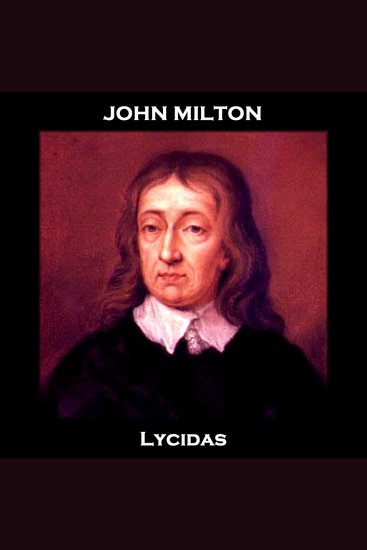
  • Lycidas - Much shorter poem from the famed author of Paradise Lost - cover

    Lycidas - Much shorter poem from...

    John Milton

    • 0
    • 0
    • 0
    John Milton was born in Bread Street, London, on December 9th, 1608.  His early years were privately tutored before gaining a place at St Paul’s School and in 1625 he matriculated at Christ's College, Cambridge, earning a BA in 1629 and an MA in 1632. At Cambridge he had developed a reputation for poetic skill but also experienced alienation from his peers and university life as a whole.  
    The next 6 years were spent in private study. He read both ancient and modern works of theology, philosophy, history, politics, literature and science, in preparation for a poetical career.  Milton mastered Latin, Greek, Hebrew, French, Spanish, and Italian. To these he would add Old English (whilst researching his History of Britain) and also acquired more than a passing acquaintance in Dutch.  
    Although he was studying, some of his poetry from this time is remarkable; L’Allegro and Il Penseroso in 1631 and Lycidias in 1638. 
    In May 1638, Milton embarked upon a 15 month tour of France and Italy. These travels added a new and direct experience of artistic and religious traditions, especially Roman Catholicism.  He cut the journey short to return home during the summer of 1639 because of what he claimed were "sad tidings of civil war in England."  
    Once home, Milton wrote prose tracts against episcopacy, in the service of the Puritan and Parliamentary cause.  
    He married 16-year-old Mary Powell in June 1643 but she left him after only a few months during which he wrote and published several writings on divorce. Mary did return after 3 years and their life thereafter seemed harmonious.  Milton received a hostile response to the divorce tracts and drove him to write Areopagitica, his celebrated attack on pre-printing censorship.  
    With the parliamentary victory in the Civil War, Milton wrote The Tenure of Kings and Magistrates (1649) which defended popular government and implicitly sanctioned the regicide which led to his appointment as Secretary for Foreign Tongues by the Council of State.  
    On 24 February 1652 Milton published his Latin defense of the English People, Defensio Pro Populo Anglicano, also known as the First Defense. Milton's Latin prose and intellectual sweep, quickly gained him a European reputation.  
    Tragically his first wife, Mary, died on May 5th, 1652 following the birth of their fourth child.   The following year Milton had become totally blind, probably due to glaucoma.  He then had to dictate his verse and prose to helpers, one of whom was the poet Andrew Marvell.  
    He married again to Katherine Woodcock but she died in February 1658, less than four months after giving birth to a daughter, who also tragically died.  
    Though Cromwell’s death in 1658 caused the English Republic to collapse Milton stubbornly clung to his beliefs and in 1659 he published A Treatise of Civil Power, attacking the concept of a state-dominated church. Upon the Restoration in May 1660, Milton went into hiding for his life. An arrest warrant was issued and his writings burnt. He re-emerged after a general pardon was issued, but was nevertheless arrested and briefly imprisoned before influential friends, such as Marvell, now an MP, intervened 
    His third marriage was to Elizabeth Mynshull. Despite a 31-year age gap, the marriage seemed happy and Milton spent the remaining decade of his life living quietly in London, apart from a short spell in Chalfont St. Giles, during the Great Plague of London.  
    Milton was to now publish his greatest works, which had been gestating for many years.  Paradise Lost, perhaps the classic English Epic poem was originally published in 10 books in 1667.  This was followed by Paradise Regained and Samson Agonistes in 1671.  Because of his anti-monarchy views their reception was muted but over the centuries since Milton has established himself as second only to Shakespeare.  He died of kidney failure on November 8th, 1674 and was buried in the church of St Giles Cripplegate.
    Ver livro
  • The Great Poems by African American Writers - Selections from Phillis Wheatley Langston Hughes Paul Laurence Dunbar Countee Cullen and many others - cover

    The Great Poems by African...

    Phillis Wheatley, Frances E. W....

    • 0
    • 0
    • 0
    African American literature is the body of literature produced in the United States by writers of African descent. It begins with the works of such late 18th-century writers as Phillis Wheatley. Before the high point of enslaved people narratives, African-American literature was dominated by autobiographical spiritual narratives. The genre known as slave narratives in the 19th century were accounts by people who had generally escaped from slavery, about their journeys to freedom and ways they claimed their lives. The Harlem Renaissance of the 1920s was a great period of flowering in literature and the arts, influenced both by writers who came North in the Great Migration and those who were immigrants from Jamaica and other Caribbean islands.
     
    Phillis Wheatley
    To the Right Honourable William, Earl of Dartmouth
    On Virtue
    An Hymn To the Morning
    An Hymn To the Evening
     
    Frances E. W. Harper
    Bury Me in a Free Land
    Songs for the People
    My Mother's Kiss
    A Grain of Sand
    Our Hero
    The Sparrow's Fall
     
    James Weldon Johnson
    Sence You Went Away
     
    Paul Laurence Dunbar
    The Lesson
    Sympathy
    We Wear the Mask
     
    Claude McKay
    After the Winter
    If We Must Die
    The Tropics in New York
     
    Countee Cullen
    For Paul Laurence Dunbar
    Incident
    Langston Hughes
    The Weary Blues
    Jazzonia
    Negro Dancers
    The Cat And The Saxophone (2 A. M.)
    Young Singer
    Cabaret
    To Midnight Nan At Leroy'S
    To A Little Lover-Lass, Dead
    Harlem Night Club
    Nude Young Dancer
    Young Prostitute
    To A Black Dancer In "The Little Savoy"
    Song For A Banjo Dance
    Blues Fantasy
    Lenox Avenue: Midnight
    Ver livro