Rejoignez-nous pour un voyage dans le monde des livres!
Ajouter ce livre à l'électronique
Grey
Ecrivez un nouveau commentaire Default profile 50px
Grey
Abonnez-vous pour lire le livre complet ou lisez les premières pages gratuitement!
All characters reduced
The Mayor of Casterbridge - Enriched edition Historical Novel - cover

The Mayor of Casterbridge - Enriched edition Historical Novel

Thomas Hardy

Maison d'édition: DigiCat

  • 0
  • 0
  • 0

Synopsis

In "The Mayor of Casterbridge," Thomas Hardy crafts a poignant tale of moral complexities and social dynamics in 19th-century England. The novel follows Michael Henchard, a tragic protagonist whose impulsive decisions and flawed character lead to his ultimate downfall. Hardy employs a realistic prose style imbued with psychological depth and vivid descriptions of the Wessex landscape. This context of rural economic changes and the decline of traditional social structures reflects Hardy's critique of Victorian society, making the narrative resonate with themes of fate, estrangement, and the human condition. Thomas Hardy, born in 1840 in Dorset, had a deep connection to the rural life and landscape that shaped his upbringing, providing a rich backdrop for his literary explorations. His experiences as an architect and later as a novelist contribute to the meticulous detail found in his setting and character development. Hardy's philosophy, often tinged with pessimism and a sense of determinism, is vividly manifested in the fates of his characters, particularly in Henchard's tragic trajectory. Readers are invited to traverse the intricate web of human emotions and societal constraints within "The Mayor of Casterbridge." This novel is a compelling exploration of how ambition, regret, and redemption intertwine, making it an enduring classic that continues to provoke thought and reflection amongst its readers.

In this enriched edition, we have carefully created added value for your reading experience:
- A succinct Introduction situates the work's timeless appeal and themes.
- The Synopsis outlines the central plot, highlighting key developments without spoiling critical twists.
- A detailed Historical Context immerses you in the era's events and influences that shaped the writing.
- An Author Biography reveals milestones in the author's life, illuminating the personal insights behind the text.
- A thorough Analysis dissects symbols, motifs, and character arcs to unearth underlying meanings.
- Reflection questions prompt you to engage personally with the work's messages, connecting them to modern life.
- Hand‐picked Memorable Quotes shine a spotlight on moments of literary brilliance.
- Interactive footnotes clarify unusual references, historical allusions, and archaic phrases for an effortless, more informed read.
Disponible depuis: 14/11/2023.
Longueur d'impression: 328 pages.

D'autres livres qui pourraient vous intéresser

  • A Dog's Tale - cover

    A Dog's Tale

    Mark Twain

    • 0
    • 0
    • 0
    Experience the world through the eyes of a devoted dog in A Dog’s Tale, Mark Twain’s heartwarming yet poignant short story of loyalty, love, and the bonds between humans and their four-legged companions.


    Told from the perspective of a kind and intelligent pup, this touching tale follows her journey from a joyful, tail-wagging innocence to the harsh realities of the human world. Through her unwavering devotion, she teaches us about selflessness, kindness, and the quiet heroism of a loving heart.


    Twain’s signature wit and storytelling shine in this deeply moving fable, blending humor with a powerful moral lesson. Whether you’re a dog lover or a fan of classic literature, this audiobook is sure to leave a lasting impression.


    Let yourself be drawn into the world of A Dog’s Tale, where courage knows no bounds, and love is truly unconditional.
    Voir livre
  • Lord Arthur Savile's Crime - cover

    Lord Arthur Savile's Crime

    Anonyme

    • 0
    • 0
    • 0
    "Lord Arthur Savile's Crime" This story was first published in The Court and Society Review, in late 1887. The main character, Lord Arthur Savile, is introduced by Lady Windermere to Mr Septimus R. Podgers, a chiromantist, who reads his palm and tells him that it is his destiny to be a murderer. Lord Arthur wants to marry, but decides he has no right to do so until he has committed the murder.
    Voir livre
  • Exasperated - A Short Story Collection - The simplest things become the hardest tasks - cover

    Exasperated - A Short Story...

    J M Barrie, Frank Stockton, G K...

    • 0
    • 0
    • 0
    In this volume we discover that the obvious and the easy are not perhaps as obvious and easy as our authors first present them. 
     
    They play with us.  There is certainty.  Then there is uncertainty.  There is a fact and then seemingly not. 
     
    One thing we can rely on though is that each new twist and turn takes us on a journey of frustration and exasperation that is as enjoyable as it is bewildering. 
     
    And, in the company of the sparkling wits of Chesterton, Aumonier, Barrie and a host of others who summon indignation and vexation as they rile and befuddle us then being exasperated was never quite so much fun. 
     
    01 - Exasperated - A Short Story Collection - An Introduction 
    02 - A Somewhat Improbable Story by G K Chesterton 
    03 - The Man Who Did Not Believe in Luck by Jerome K Jerome 
    04 - Putois by Anatole France 
    05 - The Lady, or the Tiger by Frank Stockton 
    06 - The Inconsiderate Waiter by J M Barrie 
    07 - The Absent Minded Man by Jerome K Jerome 
    08 - The Little Room by Madeline Yale Wynne 
    09 - The Mysterious Card by Cleveland Moffet 
    10 - Where Was Wych Street by Stacy Aumonier
    Voir livre
  • To-- (1836) - cover

    To-- (1836)

    Edgar Allan Poe

    • 0
    • 0
    • 0
    To–– (1836): Edgar Allan Poe was an American writer, poet, editor, and literary critic who is best known for his poetry and short stories.
    
    The bowers whereat, in dreams, I see
    The wantonest singing birds
    Are lips—and all thy melody
    Of lip-begotten words—
    Voir livre
  • Sevastopol Sketches - cover

    Sevastopol Sketches

    Leo Tolstoy

    • 0
    • 0
    • 0
    "True courage is not the absence of fear, but the determination to act despite it."
    
    In the winter of 1854 Tolstoy, then an officer in the Russian army, arranged to be transferred to the besieged town of Sevastopol in Crimea. The three Sevastopol Sketches draw upon his real life experiences during the siege to create a profound commentary on the realities of war, illustrating both the physical challenges and the emotional struggles faced by those engaged in conflict, soldiers and civilians alike.
    
    Through a combination of vivid imagery, personal experiences, and philosophical reflection, Tolstoy challenged his audience to confront the harsh realities of conflict and the moral implications that arise from it. These works played a crucial role in shaping Tolstoy's career, solidifying his reputation as a significant writer and a serious commentator on social issues.
    Leo Tolstoy (1828–1910) was a Russian novelist, philosopher, and social reformer, widely regarded as one of the greatest writers of all time. He is best known for his epic novels War and Peace and Anna Karenina, both celebrated for their intricate character development and profound exploration of moral dilemmas and human nature. In his later years, Tolstoy experienced a spiritual awakening which led him to reject materialism and embrace a life of simplicity, seeking to align his life with his beliefs about non-violence and compassion. Tolstoy's legacy endures not only through his literary masterpieces but also through his profound impact on literature and philosophy.
    Voir livre
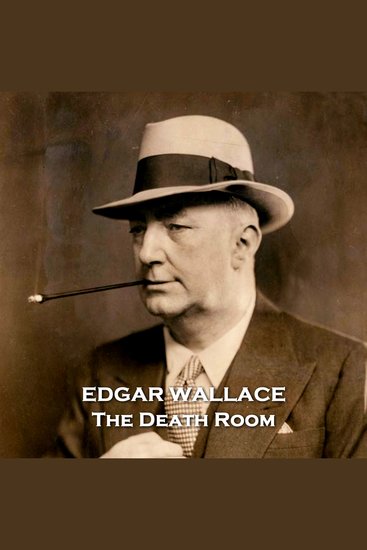
  • The Death Room - Former soldier and journalist that became a revered author and screenwriter - cover

    The Death Room - Former soldier...

    Edgar Wallace

    • 0
    • 0
    • 0
    Richard Horatio Edgar Wallace was born on the 1st April 1875 in Greenwich, London.  Leaving school at 12 because of truancy, by the age of fifteen he had experience; selling newspapers, as a worker in a rubber factory, as a shoe shop assistant, as a milk delivery boy and as a ship’s cook.  
     
    By 1894 he was engaged but broke it off to join the Infantry being posted to South Africa. He also changed his name to Edgar Wallace which he took from Lew Wallace, the author of Ben-Hur.  
     
    In Cape Town in 1898 he met Rudyard Kipling and was inspired to begin writing. His first collection of ballads, The Mission that Failed! was enough of a success that in 1899 he paid his way out of the armed forces in order to turn to writing full time.  
     
    By 1904 he had completed his first thriller, The Four Just Men. Since nobody would publish it he resorted to setting up his own publishing company which he called Tallis Press. 
      
    In 1911 his Congolese stories were published in a collection called Sanders of the River, which became a bestseller. He also started his own racing papers, Bibury’s and R. E. Walton’s Weekly, eventually buying his own racehorses and losing thousands gambling.  A life of exceptionally high income was also mirrored with exceptionally large spending and debts.  
     
    Wallace now began to take his career as a fiction writer more seriously, signing with Hodder and Stoughton in 1921. He was marketed as the ‘King of Thrillers’ and they gave him the trademark image of a trilby, a cigarette holder and a yellow Rolls Royce. He was truly prolific, capable not only of producing a 70,000 word novel in three days but of doing three novels in a row in such a manner. It was estimated that by 1928 one in four books being read was written by Wallace, for alongside his famous thrillers he wrote variously in other genres, including science fiction, non-fiction accounts of WWI which amounted to ten volumes and screen plays. Eventually he would reach the remarkable total of 170 novels, 18 stage plays and 957 short stories. 
     
    Wallace became chairman of the Press Club which to this day holds an annual Edgar Wallace Award, rewarding ‘excellence in writing’.  
     
    Diagnosed with diabetes his health deteriorated and he soon entered a coma and died of his condition and double pneumonia on the 7th of February 1932 in North Maple Drive, Beverly Hills. He was buried near his home in England at Chalklands, Bourne End, in Buckinghamshire.
    Voir livre