Rejoignez-nous pour un voyage dans le monde des livres!
Ajouter ce livre à l'électronique
Grey
Ecrivez un nouveau commentaire Default profile 50px
Grey
Abonnez-vous pour lire le livre complet ou lisez les premières pages gratuitement!
All characters reduced
The History of Ireland - From the Earliest Period to the Emancipation of the Catholics - cover

The History of Ireland - From the Earliest Period to the Emancipation of the Catholics

Thomas D'Arcy McGee

Maison d'édition: e-artnow

  • 0
  • 0
  • 0

Synopsis

"The History of Ireland" has been designed and formatted to the highest digital standards and adjusted for readability on all devices. Table of Contents: Volume 1: The First Inhabitants The First Ages Christianity Preached at Tara Reign of Hugh II Kings of the Seventh Century Kings of the Eighth Century The Danish Invasion Kings of the Ninth Century Kings of the Tenth Century The Contest between the North and South State of Religion and Learning among the Irish previous to the Anglo-Norman Invasion The First Expedition of the Normans into Ireland The First Campaign of Earl Richard Siege of Dublin Henry II in Ireland Events of the Thirteenth Century The Rise of "the Red Earl" Relations of Ireland and Scotland Civil War in England Change of Dynasty in England State of Religion and Learning during the Fourteenth and Fifteenth Centuries Irish Policy of Henry the Eighth during the Lifetime of Cardinal Wolsey First Attempts to Introduce the Protestant Reformation Parliament of 1541 The Crowns United… Volume 2: Parliament of 1569 The Second "Geraldine League" Parliament of 1585 The Ulster Confederacy Essex's Campaign of 1599 The Conquest of Munster State of Religion and Learning during the Reign of Elizabeth James I The Insurrection of 1641 The Catholic Confederation The Confederate War The Cessation and its Consequences Cromwell's Campaign (1649-1650) Ireland under the Protectorate Reign of Charles II The State of Religion and Learning in Ireland during the Seventeenth Century Accession of James II Irish Parliament of 1689 The Revolutionary War Capitulation of Limerick Reign of King William Reign of Queen Anne Reign of George II Accession of George III Flood's Leadership Grattan's Leadership The Era of Independence The United Irishmen The Insurrection of 1798 Last Session of the Irish Parliament The Legislative Union of Great Britain and Ireland O'Connell's Leadership The Catholic Association Emancipation of the Catholics…
Disponible depuis: 05/12/2023.
Longueur d'impression: 910 pages.
D'autres livres qui pourraient vous intéresser

  • Parliamentary America - The Least Radical Means of Radically Repairing Our Broken Democracy - cover

    Parliamentary America - The...

    Maxwell L. Stearns

    • 0
    • 0
    • 0
    Americans face increasingly stark choices each presidential election and a growing sense that our government can't solve the nation's most urgent challenges.  Our eighteenth-century system is ill-suited to our twenty-first-century world. Information-age technology has undermined our capacity to face common problems together and turned our democracy upside down, with gerrymanders letting representatives choose voters rather than voters choosing them. In Parliamentary America, Maxwell L. Stearns argues that the solution to these complex problems is a parliamentary democracy. 


    Stearns considers such leading alternatives as ranked choice voting, the national popular vote, and congressional term limits, showing why these can't solve our constitutional crisis. Instead, three amendments—expanding the House of Representatives, having House party coalitions choose the president, and letting the House end a failing presidency based on no confidence—will produce a robust multiparty democracy. 


    Stearns takes listeners on a world tour—England, France, Germany, Israel, Taiwan, Brazil, and Venezuela—showing what works in government, what doesn't, and how to make the best features our own. Genuine party competition and governing coalitions, commonplace across the globe, may seem like a fantasy in the United States. But we can make them a reality.
    Voir livre
  • Operation Northwoods: The History of the Controversial Government Plan to Stage False Flag Attacks on Americans and Blame Cuba - cover

    Operation Northwoods: The...

    Editors Charles River

    • 0
    • 0
    • 0
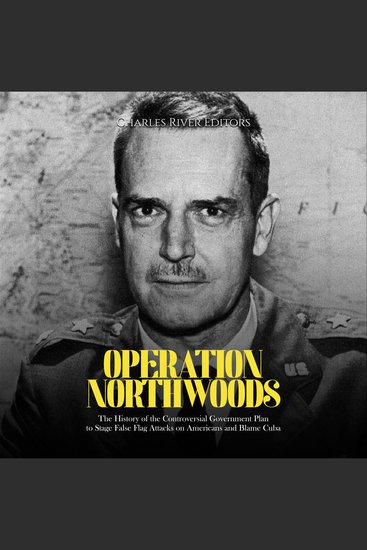
    Throughout the history of warfare, the practice of placing blame on innocent parties in order to justify attacking them has been a constant feature. In the 20th century, this practice began to be commonly referred to as a “false flag” operation. The essence of a false flag scenario is that it is conducted by one party or government and “made to appear as though another party sponsored it.”[1] In informal legal terminology, the practice is commonly referred to as a “stitch up”[2] or “setup.”[3] The modern use of this action based on deceit originated in the 16th century, typically when ships displayed the flags of a neutral or enemy country to hide their identities. 
    	The severity of false flag operations moves in tandem with the perceived danger. In the late 20th century, the Soviet Union constituted an ongoing threat to the United States, ideologically and militarily. When Fidel Castro, a Soviet sympathizer, came to power in Cuba in 1959, the presence of a communist extension of Soviet influence so near American shores caused great discomfort to the U.S. government. 
    	Some of the Cold War’s tensest moments involved Cuba, including the Bay of Pigs invasion and the Cuban Missile Crisis, amply demonstrating that throughout the early 1960s, alarmed individuals within the American government believed that the only way to handle Castro was by immediate elimination and a takeover of Cuba. They were pitted against more nuanced points of view held by others within the Kennedy administration. The Pentagon was of the general mind that in such a perilous environment, military decision-making should come to the front and civilians should withdraw, even the White House. Diplomacy was seen as being of little use by the Joint Chiefs of Staff against an encroaching Soviet superpower led by a political street fighter and his puppet situated just off the coast of Florida. 	This charged atmosphere would lead to one of the most controversial proposals in history.
    Voir livre
  • Another Man's War - The True Story of One Man's Battle to Save Children in the Sudan - cover

    Another Man's War - The True...

    Sam Childers

    • 0
    • 0
    • 0
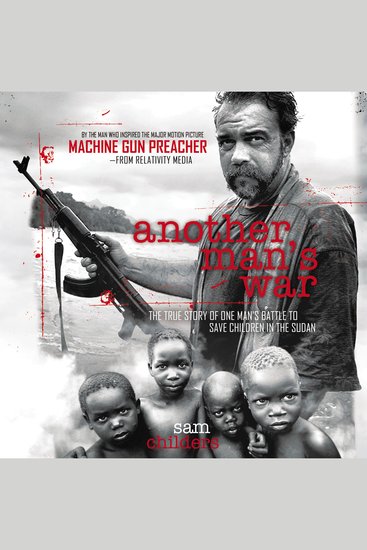
    A gun-toting preacher, a rebel army led by a madman, and entire villages slaughtered just because they were in the way. 
    In Another Man's War, follow Sam Childer's remarkable transformation from violent thug to a man of faith, and his ongoing battle to save children in one of the world's most lawless areas. 
    Photos are included in the audiobook companion PDF download. 
    “Another Man’s War is about true terrorism . . . against more than 200,000 children in northern Uganda and Southern Sudan. Sam Childers—a fighter and a preacher (some call him a mercenary)—tirelessly leads a small militia into the jungle, daring to fight against a vicious army outnumbering him one thousand to one. One man can make a huge difference. Sam Childers certainly does.” ?Peter Fonda, actor/filmmaker, best known as star of Easy Rider 
    “The Reverend Sam Childers has been a very close friend to the government of South Sudan for many years and is a trusted friend.” ?President Salva Kiir Mayardit of South Sudan 
    “The Reverend Sam Childers is a long time devoted friend to our government and his courageous work is supported by us.” ?President Yoweri Museveni of Uganda 
    “Sam Childers is one of those rare men [who is] willing to do literally whatever it takes to promote the message of Jesus Christ and save children from the tyranny of evil men.” ?John Rich, lead singer and songwriter, Big & Rich
    Voir livre
  • Speaking by the Numbers - Enneagram Wisdom for Teachers Pastors and Communicators - cover

    Speaking by the Numbers -...

    Sean Palmer

    • 0
    • 0
    • 0
    It's not just what you say, but how you say it. Good communicators know this, but it's often easier said than done. Teachers, leaders, and speakers are often left bewildered, wondering why the content that was so carefully planned and delivered seems to fall flat with the audience. The art of communication requires more than the transfer of information; it both connects with and engages the hearer. To communicate well, speakers must understand both their audience and themselves. 


    Speaking by the Numbers offers a strategy that combines communication principles with Enneagram wisdom to help leaders, pastors, and teachers understand how to convey content in ways that both inspire and connect with their audiences. Using the Enneagram wisdom of triads and stances, communicators can learn insight into the ways that various Enneagram numbers receive and process information. Sean Palmer draws from his extensive experience as a public speaker to develop communication strategies that lead to connection, transformation, and mobilization of audiences. Providing real examples of speeches he has given, Palmer shows how he uses the Enneagram to craft a message that connects with his audience. 


    A healthy marriage of Enneagram wisdom and communication skill can help us speak with clarity into the heart of where people live, love, and experience life.
    Voir livre
  • Alien Conspiracy - cover

    Alien Conspiracy

    Raphael Terra

    • 0
    • 0
    • 0
    The aliens came a long time ago. They genetically engineered humanity and now they are controlling us. 
     
    Prepare to understand that everything you think and do is in fact controlled and manipulated for a massive agenda. A secret so great and so powerful that it staggers belief.
    Voir livre
  • Kneading Journalism - Essays on baking bread and breaking down the news - cover

    Kneading Journalism - Essays on...

    Tony Ganzer

    • 0
    • 0
    • 0
    “Rope. Tree. Journalist. Some assembly required.” 
    By the time a photographer spotted these words on a shirt at a campaign rally for Donald Trump in November 2016, it had long been clear that a growing number of Americans had not-so-subtle reservations about journalists. In an age that some demonize the media as an “enemy of the people,” it’s time for a heart-to-heart about what journalism is, and what it could be. And while we break down the news business, let’s also bake some bread. 
    In Kneading Journalism, award-winning international journalist Tony Ganzer provides an insider's view of the Fourth Estate through compelling personal narratives and keen insights. Essays transport the reader from a bread riot before the French Revolution, to the inside of Germany’s public media and bread industries, to the streets of post-revolutionary Cairo, all while exploring the who, what, and why of journalism. 
    Kneading Journalism provides readers bite-sized thoughts on journalism and society, and basic bread recipes for any level of baker. 
    Before we can break bread, we need to bake bread.
    Voir livre