Join us on a literary world trip!
Add this book to bookshelf
Grey
Write a new comment Default profile 50px
Grey
Subscribe to read the full book or read the first pages for free!
All characters reduced
Jericho Walls Fall - cover

Jericho Walls Fall

Theresa Walton

Translator A AI

Publisher: Publifye

  • 0
  • 0
  • 0

Summary

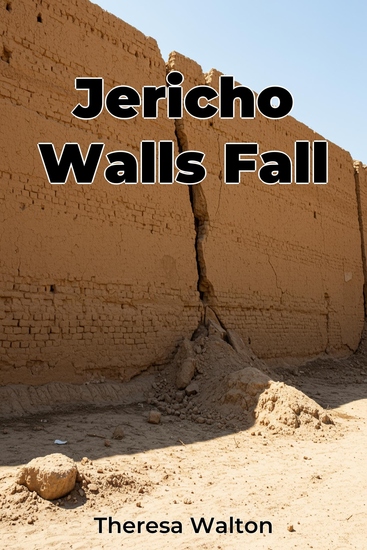
"Jericho Walls Fall" explores the destruction of Jericho by integrating biblical narrative, archaeological findings, and seismological data. It addresses the question of whether the biblical account of Jericho's fall is historically accurate by examining the tell's stratigraphy and seismic activity in the Jordan Valley. The book argues that the rapid collapse of Jericho's walls, evidenced by archaeological records, is strongly linked to seismic events in the region during the Bronze Age.

 
One intriguing fact is the detailed stratigraphy of Jericho itself, meticulously excavated over time, providing a tangible record of destruction layers. Another is the region’s documented history of earthquakes, offering a plausible explanation for the widespread structural damage.

 
The book progresses logically, starting with the biblical narrative and its interpretations, then transitioning to archaeological excavations and the geological context of the Jordan Valley. Later chapters analyze the structural vulnerabilities of Jericho’s walls and how seismic activity could have caused their collapse. This approach, blending archaeology, biblical studies, and geology, provides a unique and holistic understanding of the events surrounding Jericho’s destruction.

 
The book's value lies in its comprehensive analysis, offering a fresh, evidence-based perspective on this historical event.
Available since: 02/27/2025.
Print length: 65 pages.


Other books that might interest you

  • The Prince of Whitechapel - cover

    The Prince of Whitechapel

    Rachel Lichtenstein

    • 0
    • 0
    • 0
    Not Yet Available
    Show book
  • Voices of History Israel: The Holocaust - cover

    Voices of History Israel: The...

    Meshulam Riklis, Wladka Meed,...

    • 0
    • 0
    • 0
    In this important documentation, learn about the Holocaust through personal accounts and see firsthand the impact that it had on the history of the State of Israel. Never before released audio programs!Throughout the 1970's Dr. Samuel J. Citron took it upon himself to interview leading authorities on special topics in contemporary Jewish history, mostly relating to the State of Israel.Over the course of ten years of painstaking work, he completed the immense task of pulling together personal accounts of many of the more significant events of the last hundred years.The Holocaust, also known as the Shoah, was a genocide during World War II in which Nazi Germany, aided by local collaborators.This Collection from The Voices of History: Israel includes these recordings:Seder at Cassino (Italy): Meshulam RiklisThe Warsaw Ghetto Revolt: Wladka MeedAfter Liberation: Rabbi Judah NadichThe Eichmann Trial: Gideon HausnerThe Rescue of Danish Jewry - Part I Henrik Kraft, Chief Rabbi Bent Melchior, Ambassador Ebe Munk, Prof.Ole SecherThe Rescue of Danish Jewry - Part II
    Show book
  • Johnny Cash: A short biography - 5 Minutes: Short on time - long on info! - cover

    Johnny Cash: A short biography -...

    5 Minutes, 5 Minute Biographies,...

    • 0
    • 0
    • 0
    Johnny Cash, country music legend: Life and works in a short biography! Everything you need to know, brief and concise. Infotainment, education and entertainment at its best!
    Show book
  • Hacking Deficit Thinking - 8 Reframes That Will Change The Way You Think About Strength-Based Practices and Equity in Schools - cover

    Hacking Deficit Thinking - 8...

    Kelsie Reed, Byron McClure

    • 0
    • 0
    • 0
    Are you focused on what's wrong with your students? Now you can transform learning by reframing your view from what's wrong to what's strong. 


    "At risk." "Low." "Title I kids." If you've worked with students, you've probably heard or said these coded labels that reflect deficit thinking. This focus on weakness is a pervasive, powerful judgment that continues to harm students long after they leave school. It's time for educators to hack deficit thinking, think about SEL and about strength-based teaching, and reframe teaching and learning. 


    Nationally certified school psychologists McClure and Reed show teachers, administrators, and support staff how to unlearn student blame and reframe thinking to focus on students' strengths. When we acknowledge the impact of teaching practices and the broader structural inequities, we can help everyone reach their highest potential. 


    In Hacking Deficit Thinking, you'll learn how to: build on student strengths; think about student empathy; humanize your data; recognize the value of differences; think about teacher empathy; talk about equity in schools; tap into school-wide strengths; flourish as an educator.
    Show book
  • Birds Are the Key to Writing Success - "Elevate your writing game! Access compelling audio lessons designed to inspire and enhance your writing" - cover

    Birds Are the Key to Writing...

    Jareth Byers

    • 0
    • 0
    • 0
    Birds Are the Key to Writing Success 
    ⭐⭐ A Simplified Guide with Explanations Included ⭐⭐ 
    Are you ready to advance your career and enhance your knowledge through powerful storytelling and perseverance? 
    Looking for a comprehensive resource that encompasses everything you need to transform your life through effective writing? 
    Your search ends here! 
    This guide is your ultimate companion for deepening your understanding, honing your skills, and engaging with practical exercises. With this resource, you are set for success. 
    Updated for the latest 2025 writing landscape. 
    Key features of this enhanced guide: 
    - In-depth insights into the journey of storytelling and perseverance 
    - Thorough explanations of the principles behind impactful writing 
    - Effective strategies for preparing and overcoming writing challenges 
    Our guide stands out with comprehensive coverage, crucial for your success. Concepts are explored in depth, providing you with the knowledge you need to excel. 
    Please note that this guide is an independent resource and is not affiliated with any official writing program. 
    Designed with a clear structure and accessible language, our Writing Success Guide ensures seamless transitions between topics. Say goodbye to complicated jargon and welcome engaging, clear, and precise content. 
    So, why wait? Click the BUY NOW button, secure your guide, and start your journey to writing success in 2025!
    Show book
  • Sumerians - The History of Sumerian and Hittite Nations (2 in 1) - cover

    Sumerians - The History of...

    Kelly Mass

    • 0
    • 0
    • 0
    This book contains 2 topics, which are: 
    1 - Sumerians: The Sumerians were the people from Sumer, the first recognized society in the historic area of southern Mesopotamia (now southern Iraq), developed throughout the 6th and 5th centuries BC throughout the Chalcolithic and early Bronze Ages. In addition to age-old Egypt, the Caral-Supe culture, the Indus Valley civilization, the Minoan civilization, and age-old China, it is also one of the world's early civilizations. Sumerian farmers who lived along the Tigris and Euphrates valleys grew a great deal of grain and other items, which allowed them to establish metropolitan towns. Before 3000 BC, there was proto-writing. The earliest files date from between 3500 and 3000 BC and are from the cities of Uruk and Jemdet Nasr. 
    2 - Hittites: The Hittites were mentioned in the Bible. They were an Anatolian people that contributed to creating a kingdom in Kussara before 1750 BC, the Kanesh or Nesha kingdom between 1750 and 1650 BC, and finally an empire based upon Hattusa in north-central Anatolia around 1650 BC. Under uppiluliuma I, the empire reached its peak in the mid-14th century BC, when it ruled over much of Anatolia and areas of the northern Levant and Upper Mesopotamia. 
    Between the 15th and 13th centuries BC, the Hattusa Empire, also called the Hittite Empire, defended control of the Near East with the New Kingdom of Egypt, the Middle Assyrian Empire, and the Mitanni Empire. The Middle Assyrian Empire ultimately emerged as the dominant power, took much of the Hittite Empire, and ransacked the rest by Phrygian newbies to the area. The Hittites separated into numerous self-governing Syro-Hittite countries around c. 1180 BC, at the time of the Late Bronze Age collapse, some of which stayed till the 8th century BC before giving up to the Neo-Assyrian Empire.
    Show book