Begleiten Sie uns auf eine literarische Weltreise!
Buch zum Bücherregal hinzufügen
Grey
Einen neuen Kommentar schreiben Default profile 50px
Grey
Jetzt das ganze Buch im Abo oder die ersten Seiten gratis lesen!
All characters reduced
Art Censorship - cover

Art Censorship

Theresa Walton

Übersetzer A AI

Verlag: Publifye

  • 0
  • 0
  • 0

Beschreibung

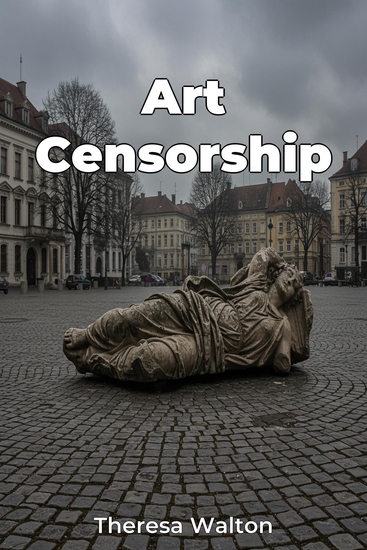
Art Censorship explores the suppression of artistic expression throughout history and its profound impact on cultural memory. This intersection of art, history, and power reveals how censorship aims to control narratives and shape our understanding of the world. Discover how art, acting as a mirror to societal values, often faces suppression during social upheaval when power structures feel threatened. 

 
The book examines the motivations behind censorship, whether rooted in religious doctrines, political ideologies, or social norms, and how these attempts to rewrite history influence cultural identity. For example, the alteration or banning of specific images reflects anxieties and power dynamics within a society. Art Censorship progresses through historical periods and geographical locations organized around themes like religious, political, and social morality related censorship. 

 
Through case studies and historical documents, Art Censorship demonstrates that suppressing art is not just about silencing voices but controlling the collective consciousness. This analytical approach provides valuable insights for anyone interested in art history, freedom of speech, and the ongoing debates concerning cultural expression. The book concludes by examining the legacy of art censorship in the digital age, considering contemporary challenges to artistic freedom.
Verfügbar seit: 25.02.2025.
Drucklänge: 68 Seiten.
Weitere Bücher, die Sie mögen werden

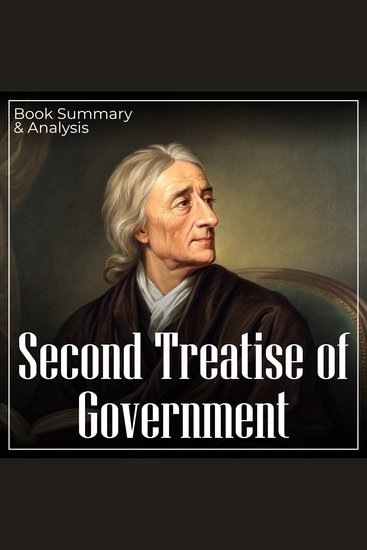
  • Second Treatise of Government: Book Summary & Analysis - cover

    Second Treatise of Government:...

    Briefly Summaries

    • 0
    • 0
    • 0
    This is a concise summary and analysis of Second Treatise of Government, by John Locke.
     
    It is not the original book and is not affiliated with or endorsed by John Locke.
     
    Ideal those seeking a quick and insightful overview.
     
    A foundational work in political philosophy and the Enlightenment, this text outlines a vision of a just and free society rooted in natural rights and the social contract. It argues for the legitimacy of government derived from the consent of the governed and provides a compelling case for individual liberty, property rights, and the rule of law. With its enduring influence on modern democratic systems, this work remains essential reading for understanding the principles of freedom and governance.
    Zum Buch
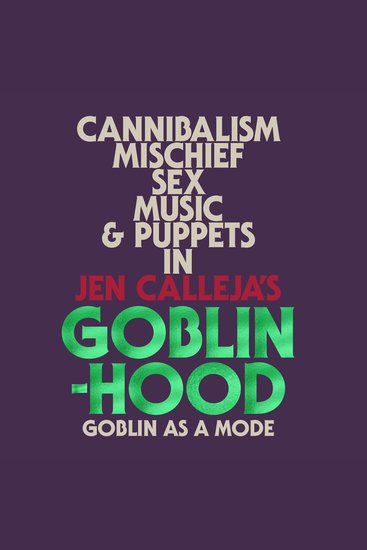
  • Goblinhood - Goblin as a Mode - cover

    Goblinhood - Goblin as a Mode

    Jen Calleja

    • 0
    • 0
    • 0
    As formally inventive as readers have come to expect from one of the most daring writers around, and as wild and tricky as its subject matter requires, Goblinhood: Goblin as a Mode  presents us with a series of essays and poems that playfully, artfully propound Jen Calleja's theory of 'goblinhood'——a theory that takes in all aspects of pop culture from film, tv, literature and art as well as the author's personal and original examinations of grief, lust, family histories and the physical fact of living in the world as it is.
    
    Goblinhood  is a perpetually and variously curious, visceral addition to Calleja's remarkable oeuvre.
    Zum Buch
  • Know - Where the Status Quo Ends and You Come to Life - cover

    Know - Where the Status Quo Ends...

    Amy Cerny Vasterling

    • 0
    • 0
    • 0
    To Be You or Not to Be You—What a Silly Question 
    From the day we are born, our culture embeds in us a system for navigating life. Know 
    challenges these societal rules and expectations, illuminating how The Model, or control, 
    traps us in a seemingly unbreakable cycle and leaves us living for a false sense of security. 
    Based on over twenty-two years of observational research, author Amy Cerny Vasterling reveals how our social hierarchy stunts personal growth, suppresses us into conformity, and disallows all people thrive. 
    Know explores how we became disconnected from ourselves, resulting in anxiety, 
    limitations, and more—while reclaiming our personal knowing leads us to freedom. Learn 
    how to break free from the tenets holding you stuck so you can trust yourself and navigate 
    life with clarity and confidence. 
    By returning to our personal knowing, we quietly collapse narcissism and become 
    an example by which others can grow naturally. Know offers a path to who we truly are and 
    shows how, when we attend to this work, our shared result is natural equality. The journey 
    begins within and ends as we bring our self to life. 
    Amy Cerny Vasterling is a future-focused public speaker, teacher, and intuitive sharing the importance of returning to your personal knowing. Based on over twenty-two years of observational research, she exposes what it takes to collapse narcissism, resulting in natural equality. Now she empowers individuals and communities to dynamically return to the truth of who they are so they can fully live life. 
    Amy Cerny Vasterling is a future-focused public speaker, teacher, and intuitive sharing the importance of returning to your personal knowing. Based on over twenty-two years of observational research, she exposes what it takes to collapse narcissism, resulting in natural equality. Now she empowers individuals and communities to dynamically return to the truth of who they are so they can fully live life.
    Zum Buch
  • Tao Te Ching - cover

    Tao Te Ching

    Lao Tzu

    • 0
    • 0
    • 0
    The Tao Te Ching, Daodejing, Dao De Jing, or Daode jing, also simply referred to as the Laozi, is a Chinese classic text. According to tradition, it was written around 6th century BC by the sage Laozi, a record-keeper at the Zhou dynasty court, by whose name the text is known in China. The text's true authorship and date of composition or compilation are still debated, although the oldest excavated text dates back to the late 4th century BC.The Tao Te Ching, along with the Zhuangzi, is a fundamental text for both philosophical and religious Taoism, and strongly influenced other schools, such as Legalism, Confucianism, and Chinese Buddhism, which when first introduced into China was largely interpreted through the use of Daoist words and concepts. Many Chinese artists, including poets, painters, calligraphers, and even gardeners, have used the Daodejing as a source of inspiration. Its influence has also spread widely outside East Asia, and is among the most translated works in world literature.
    Zum Buch
  • Marcelo by Marcelo - cover

    Marcelo by Marcelo

    Sarab Zavaleta

    • 0
    • 0
    • 0
    This is the biography of a young man with some neurological differences, written in the first person. Through his eyes, we see how he perceives his life and negotiates his reality. His world and his understandings of life may be different from the norm, but we learn to appreciate a special type of soul that should be acknowledged and celebrated as part of human diversity. This book also demonstrates the love and nurturance of his mother and the dynamics of his relationship with her. We also enjoy reading about the very comfortable lifestyle that Marcelo has been given, including his worldwide travels. This book is a unique contribution to our understanding of the autistic and human experience.
    Zum Buch
  • Battle of Borodino The: The History and Legacy of Napoleon’s Pyrrhic Victory during the Invasion of Russia - cover

    Battle of Borodino The: The...

    Editors Charles River

    • 0
    • 0
    • 0
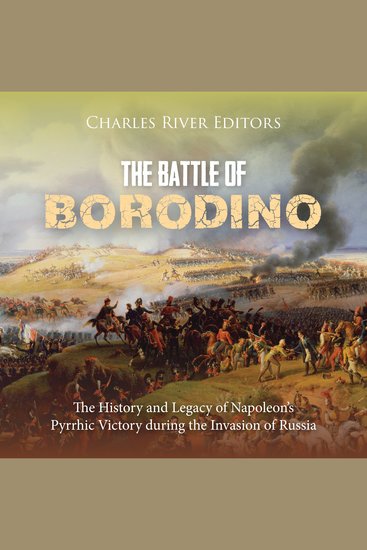
    On July 23, 1812, he launched his army across the border, despite the protestations of many of his Marshals. The Russian Campaign had begun, and it would turn out to be Napoleon’s biggest blunder. Russia’s great strategic depth already had a habit of swallowing armies, a fact many would-be conquerors learned the hard way. Napoleon, exceptional though he was in so many regards, proved that even military genius can do little in the face of the Russian winter and the resilience of its people. 
    From a purely military standpoint, much of the campaign seemed to be going in Napoleon’s favor since he met with little opposition as he pushed forwards into the interior with his customary lightning speed, but gradually this lack of engagements became a hindrance more than a help; Napoleon needed to bring the Russians to battle if he was to defeat them. On September 7, 1812, he must have thought his prayers had finally been answered, as the Russians had decided to stand and fight almost at the very gates of Moscow. Through his looking glass, Napoleon’s well-trained eye observed the weakness of his opponent’s defensive position. French and allied infantry advanced, anticipating that their Russian foes would again break as they had done two months earlier at Smolensk. The cavalry and Imperial Guard stood ready to complete the rout, this time preventing any organized withdrawal, and laying open an unopposed march to seize Moscow.  
    The Battle of Borodino, as it was later called, resulted in a combined casualty toll of over 75,000, a hideously long butcher’s bill that represented the bloodiest single day of the Napoleonic Wars. The Russian army retreated and Napoleon was able to occupy Moscow, hoping this would persuade the tsar to sue for peace. However, even as his advance guard pushed into the city, the retreating Russians put the capital to the torch. The Russian army’s retreat also ensured that it would live to fight another day, if necessary.
    Zum Buch