Rejoignez-nous pour un voyage dans le monde des livres!
Ajouter ce livre à l'électronique
Grey
Ecrivez un nouveau commentaire Default profile 50px
Grey
Abonnez-vous pour lire le livre complet ou lisez les premières pages gratuitement!
All characters reduced
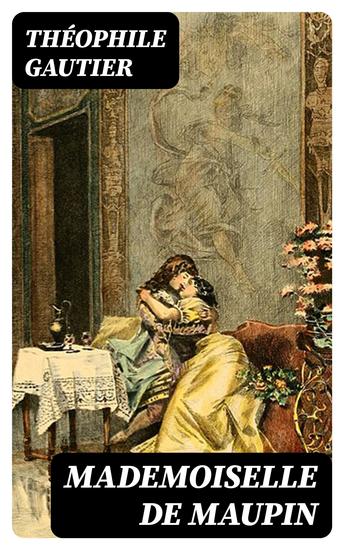
Mademoiselle de Maupin - cover

Mademoiselle de Maupin

Théophile Gautier

Traducteur I. G. Burnham

Maison d'édition: DigiCat

  • 0
  • 0
  • 0

Synopsis

Set against the vibrant backdrop of 19th-century France, Théophile Gautier's "Mademoiselle de Maupin" is a striking exploration of gender, identity, and the complexities of love. Written in a lush, Romantic style that merges prose and poetry, this novel intricately weaves the tale of the androgynous character, Mademoiselle Madeleine de Maupin, whose enigmatic charm captivates both men and women alike. Gautier deftly navigates the bohemian world of Paris, encapsulating the spirit of the era through richly detailed descriptions and philosophical musings, inviting readers into a tantalizing exploration of freedom and desire in a society bound by convention. Gautier, a key figure in the Romantic movement, was influenced by his own experiences in the culturally rich milieu of Paris. His fascination with beauty, art, and the performative nature of identity is evident in "Mademoiselle de Maupin," which mirrors the societal tensions he witnessed regarding gender roles and artistic expression. Gautier's life, steeped in the avant-garde, positioned him perfectly to ponder these themes, making the novel not only a narrative but also a reflection of his own artistic convictions. I highly recommend "Mademoiselle de Maupin" to readers who seek a transgressive love story intertwined with philosophical depth. It is a profound reflection on the human experience, challenging readers to reconsider societal norms and the fluid nature of identity. Gautier's masterful prose will leave you enchanted, propelling you into an exquisite journey of passion and self-discovery.
Disponible depuis: 13/11/2022.
Longueur d'impression: 323 pages.

D'autres livres qui pourraient vous intéresser

  • The Wise Woman - cover

    The Wise Woman

    George MacDonald

    • 0
    • 0
    • 0
    Two girls born to very different families become spoiled and rotten, though in very different ways.  A wise and powerful woman visits each of them and offers them a look at their true self, at how others live, and at how to grow and change. This powerful story dissects parenting, privilege, self-awareness, and the ability versus the choice to change one’s life. This series, published by ONE audiobooks, seeks to produce Classic Christian titles read by well known and loved audiobook narrators.  ONE takes great care to cast these titles with readers who will provide an unmatched listening experience for these important works. Simon Bubb brings his passion to every performance and is considered to be one of the top audiobook narrators in the industry.
    Voir livre
  • The Iliad - cover

    The Iliad

    Homer

    • 0
    • 0
    • 0
    The Iliad tells the dramatic story of the Trojan War, focusing on the wrath of Achilles and the clash between honor, pride, and fate. 
    This timeless masterpiece, attributed to the Greek poet Homer, is brought to life through an immersive narration that captures the grandeur, fury, and poetry of ancient warfare. With dramatic performances, vibrant storytelling, and evocative soundscapes, this audiobook invites listeners into the heart of one of the most influential works in literary history. 
    Whether you're a student, history lover, or mythology enthusiast, The Iliad offers a profound experience into the soul of ancient Greece — a journey of gods, warriors, and destiny.
    Voir livre
  • The Boscombe Valley Mystery - cover

    The Boscombe Valley Mystery

    Arthur Conan Doyle

    • 0
    • 0
    • 0
    The Boscombe Valley Mystery, one of the 56 short Sherlock Holmes stories written by Sir Arthur Conan Doyle, is the fourth of the twelve stories in The Adventures of Sherlock Holmes. It was first published in the Strand Magazine in 1891.Lestrade summons Holmes to a community in Herefordshire, where a local landowner has been murdered outdoors. The deceased's estranged son is strongly implicated. Holmes quickly determines that a mysterious third man may be responsible for the crime, unraveling a thread involving a secret criminal past, thwarted love, and blackmail.Sherlock Holmes and Dr Watson take a train to Boscombe Valley, in Herefordshire. En route, Holmes reads the news and briefs Watson on their new case.John Turner, a widower and a major landowner who has a daughter named Alice, lives there with a fellow expatriate from Australia, Charles McCarthy, a widower who has a son named James. Charles has been found dead near Boscombe Pool; it was reported that he was there to meet someone. Two witnesses testify that they saw Charles walking into the woods followed by James, who was carrying a gun. Patience Moran, daughter of a lodgekeeper, says that she saw Charles and James arguing and that, when James raised his hand as if to hit his father, she ran to her mother, and while she was telling her mother what she saw James rushed to their house seeking help. The Morans followed James back to the Pool, where they found his father dead. James was arrested and charged with murder. Alice Turner believes that James is innocent and has contacted Lestrade, a Scotland Yard detective who in turn has asked Holmes' help.Famous works of the author Arthur Conan Doyle's: "A Study in Scarlet", "Silver Blaze", "The Hound of the Baskervilles", "The Yellow Face", "A Scandal in Bohemia", "The Red-Headed League", A Case of Identity", "The Boscombe Valley Mystery", "The Five Orange Pips", "The Man with the Twisted Lip", "The Blue Carbuncle", "The Speckled Band", "The Engineer's Thumb", "The Noble Bachelor", "The Beryl Coronet", "The Copper Beeches" and many more.
    Voir livre
  • War and Peace - Book 7: 1810-11 (Unabridged) - cover

    War and Peace - Book 7: 1810-11...

    Leo Tolstoy

    • 0
    • 0
    • 0
    War and Peace is a literary work mixed with chapters on history and philosophy by the Russian author Leo Tolstoy. It was first published serially, then published in its entirety in 1869. It is regarded as one of Tolstoy's finest literary achievements and remains an internationally praised classic of world literature.
    Book 7: 1810-11: The Bible legend tells us that the absence of labor idleness was a condition of the first man's blessedness before the Fall. Fallen man has retained a love of idleness, but the curse weighs on the race not only because we have to seek our bread in the sweat of our brows, but because our moral nature is such that we cannot be both idle and at ease.
    Voir livre
  • The Garden Lodge - cover

    The Garden Lodge

    Willa Cather

    • 0
    • 0
    • 0
    "The Garden Lodge" is a short story by Willa Cather, first published in 1905. It tells the story of a woman asked by her husband if she would agree to tear down their garden lodge and build a new summer house there instead. She grows nostalgic as she remembers spending fond times there with tenor Raymond d'Esquerre when he was visiting. Although a moderate and no-nonsense woman, the singer rekindled her passion for music during his stay. She had to let go of it after her lazy brother killed himself and her father was crippled with debts. She then proceeds to go to the garden lodge and plays a piece of opera that she played with the tenor the previous summer. However, after a night's sleep she comes around and tells her husband she agrees the lodge should go.
    Voir livre
  • A Cullenden of Virginia - From their pens to your ears genius in every story - cover

    A Cullenden of Virginia - From...

    Thomas Wolf

    • 0
    • 0
    • 0
    Thomas Clayton Wolfe was born at the family home, 92 Woodfin Street, in Asheville, North Carolina on October 3rd, 1900.  
    Aged 15, Wolfe began his studies at the University of North Carolina at Chapel Hill (UNC) where he enrolled in a playwriting course. Wolfe graduated in 1920 and enrolled at the Graduate School for Arts and Sciences at Harvard. Here he studied playwriting under the tutelage of George Pierce Baker. In 1922 he received his master's degree from Harvard.  
    Wolfe now began the transition from studying to commercial playwright. He went to New York in November, 1923 trying to sell his plays to Broadway.  The Theatre Guild came close to producing Welcome to Our City but in the end declined.  Wolfe now believed his style of writing was more suited to fiction.  Grasping the opportunity this afforded him he sailed to England in October 1924 to write and from there on to France, Italy and Switzerland. 
    In 1926 Wolfe began writing a novel, O Lost. This would eventually become Look Homeward, Angel. It was based on his years in Asheville. The original manuscript of O Lost was over 1100 pages. Maxwell Perkins, one of the great book editors of the age, worked at his publishers, Scribner’s and he began to focus the book, cutting and re-shaping it to center it on the character of Eugene.   
    The novel was published in 1929. It was a success.   
    Wolfe now committed the next 4 years to writing a multi-volume epic entitled The October Fair.  At Scribner’s Perkins once more decided to edit it down to a single volume; Of Time and the River.  It was even more successful than his first. It was hailed as the literary event of 1935 and cemented his reputation as one of America’s foremost novelists.  
    In 1938, after submitting his new opus, which ran to an incredible one million words, to his new editor, Edward Aswell, Wolfe left to tour the West, a part of the country he had never before visited. Whilst travelling Wolfe became ill with pneumonia and spent three weeks in a Seattle hospital. Complications arose. The prognosis was serious.  He was diagnosed with miliary tuberculosis of the brain. 
    On September 6th, he was sent to Baltimore's Johns Hopkins Hospital for treatment. The ensuing operation revealed that the disease had overrun the entire right side of his brain.  
    Thomas Clayton Wolfe never regained consciousness and died shortly before his 38th birthday on September 15th, 1938.
    Voir livre