
Begleiten Sie uns auf eine literarische Weltreise!
Buch zum Bücherregal hinzufügen
Grey
Einen neuen Kommentar schreiben Default profile 50px
Grey
Jetzt das ganze Buch im Abo oder die ersten Seiten gratis lesen!
All characters reduced
Sister Carrie - cover

Sister Carrie

Theodore Dreiser

Verlag: DigiCat

  • 0
  • 0
  • 0

Beschreibung

In Theodore Dreiser's seminal work, "Sister Carrie," the narrative unfolds with a striking realism that encapsulates the struggles of the American dream in the early 20th century. Written in a naturalistic style, the novel follows the rise and fall of Carrie Meeber, a young woman who relocates to Chicago in search of fulfillment but ultimately encounters the harsh realities of love, ambition, and societal expectation. The rich, descriptive language intertwined with psychological depth allows the reader to navigate Carrie's poignant journey, reflecting broader themes of class, gender, and the moral ambiguities of a rapidly industrializing America. Dreiser, an influential figure in American literature, drew from his own experiences of poverty and ambition, shaping a narrative that portrays the tension between desire and reality. Growing up in a large, struggling family, he witnessed firsthand the societal constraints that women faced. His background, coupled with his belief in the importance of depicting life authentically, propelled him to craft "Sister Carrie," a work that boldly challenges prevailing moralistic narratives of his time. This novel is highly recommended for readers interested in exploring the complexities of the human spirit against a backdrop of socioeconomic change. With its unflinching honesty and depth, "Sister Carrie" offers a fascinating insight into the human condition, making it a timeless classic that continues to resonate with generations of readers.
Verfügbar seit: 16.09.2022.
Drucklänge: 386 Seiten.

Weitere Bücher, die Sie mögen werden

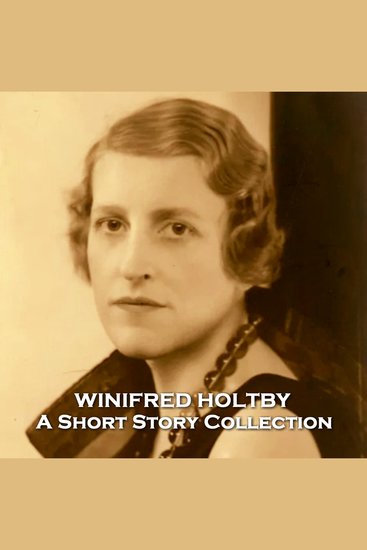
  • Winifred Holtby - A Short Story Collection - Ardent feminist and activist who wrote many stories before tragically dying young - cover

    Winifred Holtby - A Short Story...

    Winifred Holtby

    • 0
    • 0
    • 0
    Winifred Holtby was born on 23rd June 1898 to a prosperous farming family in the village of Rudston in Yorkshire.  
     
    A governess provided her early education before she went to Queen Margaret's School in Scarborough.  After passing the entrance exam for Somerville College, Oxford in 1917, she decided to join the Women's Army Auxiliary Corps in early 1918.  However, soon after her arrival in France, the War ended. 
     
    She returned to study at Oxford and met fellow student Vera Brittain.  After graduating from Oxford, in 1921, Winifred and Vera moved to London, hoping to establish themselves as authors. 
     
    Her early novels met with only moderate success but as a journalist she was both prolific and increasingly well-known.  Her articles graced more than 20 newspapers and magazines, including the Manchester Guardian newspaper.   
     
    Winifred was a committed feminist, socialist and pacifist.  She gave many lectures for the League of Nations Union.  She was also active in the Independent Labour Party and was a campaigner for the unionisation of black workers in South Africa. 
     
    In 1931 the symptoms of high blood pressure, recurrent headaches and bouts of lassitude brought forth a diagnosis of Bright's disease.  She was given two years to live and now put all her efforts into what was to become her crowning achievement: South Riding.  Released posthumously it received lavish praise and enormous sales.  Her canon of works tackle difficult subjects head on, many in unusual ways, brimming with verve and usually strong female protagonists. 
     
    Winifred Holtby died on 29th September 1935 in London.  She was 37. 
     
    1 - Winifred Holtby - A Short Story Collection - An Introduction 
    2 - The Voice of God by Winifred Holtby 
    3 - Truth is Not Sober by Winifred Holtby 
    4 - The Casualty List by Winifred Holtby 
    5 - The Man Who Hated God by Winifred Holtby 
    6 - Why Herbert Killed His Mother by Winifred Holtby
    Zum Buch
  • Hunchback of Notre-Dame The (Volume 2) - cover

    Hunchback of Notre-Dame The...

    Victor Hugo

    • 0
    • 0
    • 0
    The Hunchback of Notre-Dame or Notre-Dame de Paris is a French Gothic novel by Victor Hugo, published in 1831.
    The story is set in Paris in 1482 during the reign of Louis XI. The gypsy Esmeralda (born as Agnes) captures the hearts of many men, including those of Captain Phoebus and Pierre Gringoire, but especially Quasimodo and his guardian Archdeacon Claude Frollo. Frollo is torn between his obsessive lust for Esmeralda and the rules of Notre Dame Cathedral. He orders Quasimodo to kidnap her, but Quasimodo is captured by Phoebus and his guards, who save Esmeralda. Gringoire, who attempted to help Esmeralda but was knocked out by Quasimodo, is about to be hanged by beggars when Esmeralda saves him by agreeing to marry him for four years.
    Zum Buch
  • Middlemarch - cover

    Middlemarch

    George Eliot

    • 0
    • 0
    • 0
    Middlemarch is a complex tale of idealism, disillusion, profligacy, loyalty and frustrated love. This penetrating analysis of the life of an English provincial town during the time of social unrest prior to the Reform Bill of 1832 is told through the lives of Dorothea Brooke and Dr Tertius Lydgate and includes a host of other paradigm characters who illuminate the condition of English life in the mid-nineteenth century.America.
    Zum Buch
  • H G Wells 3 Complete Works - The Time Machine The Invisible Man War Of The Worlds - cover

    H G Wells 3 Complete Works - The...

    H. G. Wells

    • 0
    • 0
    • 0
    H.G. Wells, one of the most influential writers of science fiction and speculative fiction, has left an indelible mark on literature with his vast body of work. Wells's books, spanning across various genres, captivate readers with their imaginative narratives, thought-provoking concepts, and insightful social commentary. His novels, such as "The Time Machine," "The War of the Worlds," and "The Invisible Man," have become iconic and have helped shape the science fiction genre as we know it today. 
     
    Wells's books often explore scientific and technological advancements and their potential impact on society. In "The Time Machine," Wells takes readers on a journey to the future, addressing themes of class struggle, evolution, and the consequences of uncontrolled progress. In "The War of the Worlds," he weaves a thrilling tale of a Martian invasion, reflecting anxieties of the time and exploring the vulnerability of humanity in the face of an alien threat. With "The Invisible Man," Wells delves into the ethical implications of scientific discovery, examining the effects of invisibility on human behavior and morality. Throughout his works, Wells's keen observations of human nature and society add depth to his narratives, making his books not only exciting adventures but also profound explorations of the human condition. 
     
    H.G. Wells's books continue to resonate with readers across generations due to their timeless themes and their ability to provoke thought and inspire imagination. Wells's literary legacy extends beyond his contributions to science fiction, as his works remain relevant and impactful in today's world. His ability to combine thrilling narratives with profound social commentary solidifies his place as a master storyteller and a visionary author whose books continue to captivate and provoke contemplation in readers worldwide.
    Zum Buch
  • Mumu - Turgenev brilliantly displays the relationship between man and mans best friend and an awful choice it will bring - cover

    Mumu - Turgenev brilliantly...

    Ivan Turgenev

    • 0
    • 0
    • 0
    Ivan Sergeyevich Turgenev was born on 9th November 1818 in Oryol, Russia to parents from the nobility.  He and his two brothers were raised by their mother on the family estate.  Surrounded by foreign governesses he became fluent in French, German, and English.  Their father spent little time with them and this undoubtedly had an effect on him and his brothers.  When he was nine the family moved to Moscow to give their children a better education. 
     
    Turgenev studied for a year at the University of Moscow and then at the University of St Petersburg to study Classics, Russian literature, and philology.  During that time his father died from kidney stone disease.  In 1838 Turgenev studied philosophy and history at the University of Berlin for 3 years before returning to St Petersburg for his master's. 
     
    He started his career with the Russian Civil Service and it was only in 1852, after several earlier publications, that he made his name with his short story collection, ‘A Sportsman's Sketches’, based on his observations of peasant life and nature. 
      
    That same year he wrote an obituary for Nikolai Gogol: "Gogol is dead!... What Russian heart is not shaken by those three words?... He is gone, that man whom we now have the right (the bitter right, given to us by death) to call great."  The St Petersburg censor banned publication but the Moscow censor allowed it.  He was dismissed but Turgenev was held responsible and imprisoned for a month, and then exiled to his country estate.  
     
    Along with many other intellectuals Turgenev left Russia and settled in Paris in 1854.  During this period he wrote his finest stories and four novels.  
     
    Alexander II ascended the Russian throne in 1855, and the political climate relaxed.  Turgenev returned home.  
     
    ‘Fathers and Sons’, Turgenev's most famous and enduring novel, appeared in 1862. Its leading character is considered the first ‘Bolshevik’ in Russian literature. But the hostile reaction prompted Turgenev's decision to again leave Russia.  
     
    His health declined during his later years.  In January 1883, an aggressive malignant tumor was removed but by then it had metastasized in his upper spinal cord, causing him intense pain in his final few months of life.  
     
    Ivan Turgenev died on 3rd September 1883 of a spinal abscess, a complication of the metastatic liposarcoma, in his house near Paris.  He was buried in St Petersburg.  
     
    In Mumu, Turgenev hauntingly tells the story of a Gerasim, a six foot five deaf mute with the menial job of yard-porter who is ostracized by all those around him.  A dog, Mumu, becomes his only true and faithful friend.  One day he is given a dreadful and agonizing choice.
    Zum Buch
  • Account of Some Strange Disturbances in Aungier Street An - Irish author Le Fanu brings us a timeless classic and true example of a haunted house story - cover

    Account of Some Strange...

    Sheridan Le Fanu

    • 0
    • 0
    • 0
    Joseph Thomas Sheridan Le Fanu was born on August 28th, 1814, at 45 Lower Dominick Street, Dublin, into a literary family with Huguenot, Irish and English roots 
     
    The children were tutored but, according to his brother William, the tutor taught them little if anything. Le Fanu was eager to learn and used his father's library to educate himself about the world. He was a creative child and by fifteen had taken to writing poetry. 
     
    Accepted into Trinity College, Dublin to study law he also benefited from the system used in Ireland that he did not have to live in Dublin to attend lectures, but could study at home and take examinations at the university as and when necessary. 
     
    This enabled him to also write and by 1838 Le Fanu's first story The Ghost and the Bonesetter was published in the Dublin University Magazine. Many of the short stories he wrote at the time were to form the basis for his future novels.  Indeed, throughout his career Le Fanu would constantly revise, cannabilise, embellish and re-publish his earlier works to use in his later efforts. 
     
    Between 1838 and 1840 Le Fanu had written and published twelve stories which purported to be the literary remains of an 18th-century Catholic priest called Father Purcell. Set mostly in Ireland they include classic stories of gothic horror, with grim, shadowed castles, as well as supernatural visitations from beyond the grave, together with madness and suicide. One of the themes running through them is a sad nostalgia for the dispossessed Catholic aristocracy of Ireland, whose ruined castles stand in mute salute and testament to this history.  
     
    On 18 December 1844 Le Fanu married Susanna Bennett, the daughter of a leading Dublin barrister. The union would produce four children.  Le Fanu was now stretching his talents across the length of a novel and his first was The Cock and Anchor published in 1845. 
     
    A succession of works followed and his reputation grew as well as his income.  Unfortunately, a decade after his marriage it became an increasing source of difficultly. Susanna was prone to suffer from a range of neurotic symptoms including great anxiety after the deaths of several close relatives, including her father two years before.  
     
    In April 1858 she suffered an "hysterical attack" and died in circumstances that are still unclear. The anguish, profound guilt as well as overwhelming loss were channeled into Le Fanu’s work.  Working only by the light of two candles he would write through the night and burnish his reputation as a major figure of 19th Century supernaturalism. His work challenged the focus on the external source of horror and instead he wrote about it from the perspective of the inward psychological potential to strike fear in the hearts of men.  
     
    A series of books now came forth: Wylder's Hand (1864), Guy Deverell (1865), The Tenants of Malory (1867), The Green Tea (1869), The Haunted Baronet (1870), Mr. Justice Harbottle (1872), The Room in the Dragon Volant (1872) and In a Glass Darkly. (1872). 
     
    But his life was drawing to a close.  Joseph Thomas Sheridan Le Fanu died in Merrion Square in his native Dublin on February 7th, 1873, at the age of 58.  
     
    In this famous story two college students rent rooms in Dublin’s Aungier Street once owned by a brutal hanging judge who seems to still haunt both place and mind…..
    Zum Buch