Begleiten Sie uns auf eine literarische Weltreise!
Buch zum Bücherregal hinzufügen
Grey
Einen neuen Kommentar schreiben Default profile 50px
Grey
Jetzt das ganze Buch im Abo oder die ersten Seiten gratis lesen!
All characters reduced
Chains - Lesser novels and stories - cover

Chains - Lesser novels and stories

Theodore Dreiser

Verlag: Good Press

  • 0
  • 0
  • 0

Beschreibung

In Theodore Dreiser's "Chains," the author explores the intricate interplay of human desire, ambition, and social constraints through the life of an individual ensnared in the relentless gears of fate. Written in Dreiser's hallmark naturalistic style, the novel delves into the psychological and societal factors that shape personal destiny, illuminating the often harsh realities of the human condition. By employing a richly detailed narrative interspersed with vivid characterization, Dreiser captures the struggles and triumphs of his characters against a backdrop of early 20th-century America, a time rife with both opportunities and challenges.
Verfügbar seit: 02.03.2025.
Drucklänge: 230 Seiten.

Weitere Bücher, die Sie mögen werden

  • The Deerslayer - cover

    The Deerslayer

    Anonym

    • 0
    • 0
    • 0
    A young hunter. An untamed frontier. A test of courage that will forge a legend.
    Natty Bumppo—known as Deerslayer—steps into the wilds of early America for his first true adventure. Surrounded by vast lakes, dense forests, and dangerous enemies, he must rely on skill, honor, and instinct as he confronts life-or-death challenges. Along the way, he faces love, loyalty, and the brutal realities of frontier justice.
    
    Praised as "one of the finest American wilderness novels," Cooper's tale blends gripping action with rich atmosphere and moral depth. It introduces a hero whose integrity and bravery have captivated readers for generations.
    
    If you love classic frontier epics, rugged nature, and stories where character is tested against the raw edge of survival, this novel delivers unforgettable adventure.
    
    Open the book—and journey into the wilderness where legends are born.
    Zum Buch
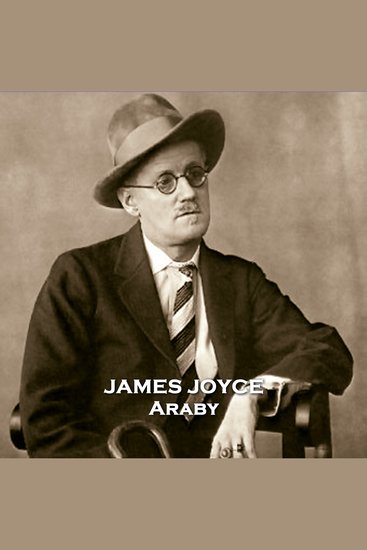
  • Araby - From their pens to your ears genius in every story - cover

    Araby - From their pens to your...

    James Joyce

    • 0
    • 0
    • 0
    James Augustine Aloysius Joyce was born on the 2nd February 1882 in Dublin into a middle-class family, and the eldest of ten surviving siblings 
    Admired as a brilliant student he briefly attended the Christian Brothers-run O'Connell School before excelling at the Jesuit schools of Clongowes and Belvedere.  From there he went on to attend University College Dublin from 1898, studying English, French and Italian 
    In 1902, Joyce was now in his early twenties, and went to Paris to study Medicine but soon abandoned his teachings.  Back in Dublin to attend to his dying Mother he met Nora Barnacle. They bonded immediately into a life-long match. Together they decided to emigrate to Europe.  The couple lived in Trieste, Rome, Paris, and finally Zürich where Joyce pursued a variety of jobs and ventures to supplement his literary pursuits but none of these paid off.  
    After publishing a poetry volume, ‘Chamber Music’, in 1907, his short story collection ‘The Dubliners’, in 1914, helped establish his talent in the rapidly changing world.  
    Although far from home Joyce’s literary heart and works were set in his recollections of Dublin.  Characters are close resemblances of family and friends and indeed enemies.  His landmark work ‘Ulysses’, published in 1922, is set in the streets and alleyways of the city as it parallels Homer’s Odyssey in a variety of styles including its famed stream of consciousness. 
    His pen continued to produce classics of the order of ‘A Portrait of the Artist as A Young Man’ and ‘Finnegan’s Wake’ together with several volumes of poetry and a play ‘The Exiles, in 1918.   
    On the 11th January 1941, Joyce underwent surgery in Zürich for a perforated duodenal ulcer. The next day he fell into a coma. On the 13th after a brief period of lucidity in which he called for his wife and son he passed.  He was 58.
    Zum Buch
  • Unwritten Novel An - From their pens to your ears genius in every story - cover

    Unwritten Novel An - From their...

    Virginia Woolf

    • 0
    • 0
    • 0
    Adeline Virginia Woolf was born on the 25th January 1882 in South Kensington in London. 
    Although lauded as a founder of modernist writing with such classics as ‘Orlando’, ‘Mrs Dalloway’ and ‘To the Lighthouse’ and, of course, many classic short stories, her background is filled with elements of tragedy that she somehow overcame to become such a revered writer.   Her mother died when she was 13, her half-sister Stella two years later and with it her first of several nervous breakdowns.  Appallingly it was later found that three of her half-brothers had sexually abused her so darkness must have seemed ever present.   
    She began writing professionally at age 20 but her father’s death two years later brought a complete mental collapse and she was briefly institutionalised.  Somehow she found within herself a literary career and with it great innovations in writing; she was a pioneer of “stream of consciousness”.    
    Her tight circle of friends were the founders of the Bloomsbury Group, a movement whose legacy still influences across the arts and society in many way to this day.   
    Whilst the dark periods continued to interrupt her emotional state her rate of work never ceased.  Until, on 28th March 1941, Woolf put on her overcoat, filled up its pockets with stones, and walked into the River Ouse, in Lewes, East Sussex and drowned herself.  Her body was not recovered until the 18th April.  She was 59. 
    She left behind a note which read in part “Dearest, I feel certain that I am going mad again.  I feel we can't go through another of those terrible times.  And I shan't recover this time.  I begin to hear voices, and I can't concentrate.  So I am doing what seems the best thing to do”.
    Zum Buch
  • The Pickwick Papers - cover

    The Pickwick Papers

    Charles Dickens

    • 0
    • 0
    • 0
    "A dizzying tour of stagecoaches, coaching inns, and the incomparable wit of Old England."
    
    Join the retired businessman and amateur philosopher Samuel Pickwick, Esq., as he leads the eccentric members of the Pickwick Club on a series of expeditions across the English countryside. What begins as a collection of disjointed sketches quickly evolves into a sprawling, hilarious narrative of mistaken identities, legal battles, and social commentary. From the terrifyingly clever rogue Alfred Jingle to the faithful, wisecracking valet Sam Weller—whose "Wellerisms" became a national sensation—this novel captures the joy, absurdity, and occasional darkness of life in the 1830s. The Pickwick Papers isn't just a book; it's the moment the world fell in love with Dickens.
    
    The introduction of Sam Weller changed the course of the novel and Dickens' career. His sharp, street-smart observations and devotion to Mr. Pickwick added a layer of warmth and linguistic playfulness that turned the book into a cultural phenomenon.
    
    Beneath the slapstick and the sports-gone-wrong lies a sharp eye for social absurdity. Dickens takes us from the ridiculous "Pickwickian sense" of political debates to the grim reality of the Fleet Prison, balancing laugh-out-loud comedy with the first glimpses of his lifelong crusade for social justice.
    
    The Pickwick Papers remains a favorite for its sheer abundance of life. It celebrates the virtues of friendship, curiosity, and good-heartedness in a world full of "sharpers" and scoundrels. It is the perfect entry point for anyone wanting to experience the "Inimitable" Dickens at his most joyful.
    
    Secure your seat on the stagecoach. Purchase "The Pickwick Papers" today.
    Zum Buch
  • Heart of Darkness - cover

    Heart of Darkness

    Joseph Conrad

    • 0
    • 0
    • 0
    Heart of Darkness (1899) is a short novel by Joseph Conrad, written as a frame narrative, about Charles Marlow's life as an ivory transporter down the Congo River in Central Africa.    The river is "a mighty big river, that you could see on the map, resembling an immense snake uncoiled, with its head in the sea, its body at rest curving afar over a vast country, and its tail lost in the depths of the land." In the course of his travel in central Africa, Marlow becomes obsessed with Mr. Kurtz.    The story is a complex exploration of the attitudes people hold on what constitutes a barbarian versus a civilized society and the attitudes on colonialism and racism that were part and parcel of European imperialism. Originally published as a three-part serial story, in Blackwood's Magazine, the novella Heart of Darkness has been variously published and translated into many languages.    In 1998, the Modern Library ranked Heart of Darkness as the sixty-seventh of the hundred best novels in English of the twentieth century. Short Summary Aboard the Nellie, anchored in the River Thames near Gravesend, England, Charles Marlow tells his fellow sailors about the events that led to his appointment as captain of a river-steamboat for an ivory trading company. He describes his passage on ships to the wilderness to the Company's station, which strikes Marlow as a scene of devastation: disorganized, machinery parts here and there, periodic demolition explosions, weakened native black men who have been demoralized, in chains, literally being worked to death, and strolling behind them a white Company man in a uniform carrying a rifle.    At this station Marlow meets the Company's chief accountant who tells him of a Mr. Kurtz, and explains that Kurtz is a first-class agent.
    Zum Buch
  • The Misanthrope - The Original Manuscript - cover

    The Misanthrope - The Original...

    Molière Molière

    • 0
    • 0
    • 0
    Alceste, the misanthrope, hates everyone including himself. But unlike in many pure farces with their cliche stock characters, the characters here are much more well-rounded, and who knows - Alceste might actually grow and change throughout the play. "Those who admired noble thoughts, select language, accurate delineations of character, and a perfect and entertaining style, placed this comedy from the very beginning where it is generally put, with the common consent of all students of sound literature, in the foremost rank of the good comedies of Moliere.
    Zum Buch