Begleiten Sie uns auf eine literarische Weltreise!
Buch zum Bücherregal hinzufügen
Grey
Einen neuen Kommentar schreiben Default profile 50px
Grey
Jetzt das ganze Buch im Abo oder die ersten Seiten gratis lesen!
All characters reduced
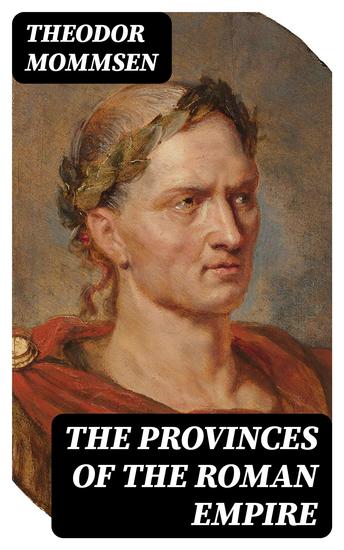
The Provinces of the Roman Empire - cover

The Provinces of the Roman Empire

Theodor Mommsen

Übersetzer William P. Dickson

Verlag: DigiCat

  • 0
  • 0
  • 0

Beschreibung

In "The Provinces of the Roman Empire," Theodor Mommsen delivers a comprehensive examination of the administrative and cultural landscapes of Rome's provinces from their conquests to the decline of the empire. Employing a meticulous narrative style enriched by vivid descriptions and insightful analyses, Mommsen situates the provinces within the broader context of Roman history, highlighting their diverse contributions to Roman civilization. This work is distinguished by its scholarly rigor, as well as its accessibility to a wider audience, making it an essential reference for both historians and general readers interested in the complexities of Roman provincial life. Theodor Mommsen, a distinguished historian and Nobel laureate, was deeply influenced by the tumultuous political landscape of 19th-century Germany, which compelled him to explore themes of governance and societal structure. His extensive knowledge of classical sources, coupled with his passion for understanding the intricacies of Roman administration, uniquely positioned him to undertake this monumental study. Mommsen's background as a legal scholar and his engagement with contemporary political thought profoundly shaped his perspective, allowing him to analyze the provinces not merely as peripheries but as vital components of the imperial narrative. "The Provinces of the Roman Empire" is a seminal work that captivates and informs. It invites readers to explore the rich tapestry of Roman provincial life, making it an indispensable addition to any scholar's library or enthusiast's bookshelf. Whether you are a seasoned historian or new to the subject, Mommsen's analysis will expand your understanding of the Roman Empire's enduring legacy.
Verfügbar seit: 13.11.2022.
Drucklänge: 694 Seiten.

Weitere Bücher, die Sie mögen werden

  • The Glory and the Sorrow - A Parisian and His World in the Age of the French Revolution - cover

    The Glory and the Sorrow - A...

    Timothy Tackett

    • 0
    • 0
    • 0
    What was it like to live through one of the most transformational periods in world history? In The Glory and the Sorrow, eminent historian Timothy Tackett answers this question through a masterful recreation of the world of Adrien Colson, a minor lawyer who lived in Paris at the end of the Old Regime and during the first eight years of the French Revolution. 


    Based on over a thousand letters written by Colson, this book vividly narrates everyday life for an "ordinary citizen" during extraordinary times, as well as the life of a neighborhood on a small street in central Paris. It explores the real, day-to-day experience of a revolution: not only the thrill, the joy, and the enthusiasm, but also the uncertainty, the confusion, the anxiety, and the disappointments. While Colson reported on major events such as the storming of the Bastille and the King's flight to Varennes, his correspondence underscores the extent to which the great majority of Parisians in no way anticipated the Revolution; the incessant circulation and power of rumors of impending disasters in Paris, not just in the summer of 1789 but continually throughout the Revolutionary decade; and how this affected popular psychology and behavior. 


    An evocative account of Colson's time and place, The Glory and the Sorrow is a compelling microhistory of Revolutionary France.
    Zum Buch
  • Yin Chih Wen - The Tract Of The Quiet Way - cover

    Yin Chih Wen - The Tract Of The...

    Teitaro Suzuki

    • 0
    • 0
    • 0
    Teitaro Suzuki's 'Yin Chih Wen: The Tract of the Quiet Way' explores ancient Chinese wisdom. Delving into the philosophy of Yin and Yang, Suzuki unveils the path of harmony and balance. This insightful tract reflects on tranquillity, Taoist principles, and the art of living a serene, contemplative life, offering timeless guidance for those seeking inner peace and spiritual understanding. Read in English, unabridged.
    Zum Buch
  • Running After Paradise - Hope Survival and Activism in Brazil’s Atlantic Forest - cover

    Running After Paradise - Hope...

    Colleen M. Scanlan Lyons

    • 0
    • 0
    • 0
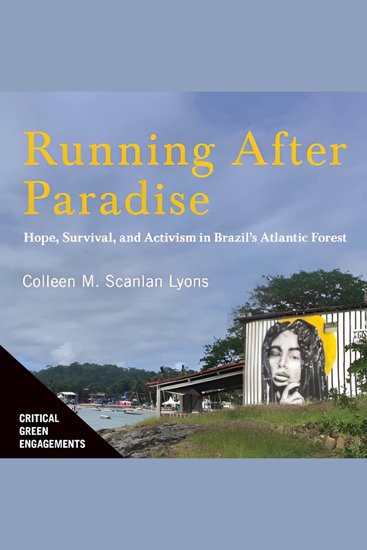
    Brazil’s Atlantic Forest is a paradise to many. In Southern Bahia, surfers, billionaires, travelers, and hippies mingle with environmentalists, family farmers, quilombolas (descendants of formerly enslaved people), and nativos, or “locals.” Each of these groups has connections to the unique environment, culture, and character of this region as their home, their source of a livelihood, or perhaps their vacation escape. And while these connections sometimes converge, at other times they clash. 
    The pressures on this tropical forest are palpable, and people’s responses to these pressures are also varied. What was once the state’s economic mainstay, cacao production, is only now beginning to make a comeback after a disease decimated the crops of large and small farmers alike. Tourism, another economic hope, is susceptible to economic crises and pandemics. And the threat of a massive state-led infrastructure project involving mining, a railroad, and an international port has loomed over the region for well over a decade. 
    Southern Bahia is at a crossroads: develop a sustainable, forest-based economy or risk losing the identity and soul of this place forevermore. Through the lives of environmentalists, farmers, quilombolas, and nativos—people who are in and of this place—this book brings the people alive who are grappling with this dilemma. 
    Anthropologist Colleen M. Scanlan Lyons brings the eye of a storyteller to present this complex struggle, weaving in her own challenges of balancing family and fieldwork alongside the stories of the people who live in this dynamic region. Intertwined tales, friendships, and hope emerge as people both struggle to sustain their lives in a biodiversity hotspot and strive to create their paradise. 
    For those interested, this book is also available in e-book and physical print formats, which contain the table of contents, maps, acknowledgements, pictures of the people and stories featured, footnotes, references, and an index.
    Zum Buch
  • Louvre and the Hermitage The: The History and Contents of Europe’s Biggest Art Museums - cover

    Louvre and the Hermitage The:...

    Editors Charles River

    • 0
    • 0
    • 0
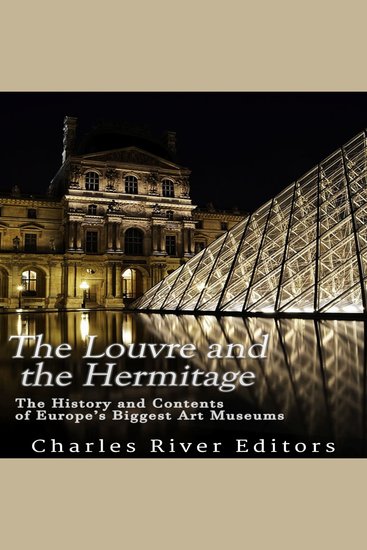
    The very name of the Louvre conjures up scenes of art and elegance, and of long halls filled with beauty and people strolling through them whispering quietly among themselves about the glories they are witnessing. Even those who have never been to the Louvre know some of its most prized possessions, from ancient statues to Leonardo Da Vinci’s “Mona Lisa”. As the world’s largest museum, the Louvre is unquestionably the cultural highpoint of Paris, a city that has long been considered the cultural center of Europe. 
    However, life is rarely as simple as one imagines, and the life of the Louvre is no different. While just about everyone is familiar with its history as an art museum, the Louvre’s history goes back over 800 years, and it used to have far different purposes, both as a medieval fortress and a palatial residence for French kings. The Louvre bore witness to mass murder during the French Revolution, and there have been countless accusations of theft and other questionable actions since its opening. 
    Catherine the Great came to power in the midst of the Enlightenment, which was flourishing in France and Britain, and she would rule as an Enlightened ruler. A known correspondent of Voltaire’s, Catherine sought to modernize Russia and turn it into a force in its own right, creating a rich and cultured court at the same time. Over the course of nearly 35 years in power, Catherine ushered in the Russian Enlightenment and presided over a period of time known as the Golden Age of the Russian Empire. 
    Moreover, Catherine had an unmatched passion for the arts, and she began a private art collection that would eventually evolve into galleries upon galleries of historical treasures shipped in from all over the world. This fabled museum was none other than the Hermitage, located in the heart of Saint Petersburg, a city founded by the imperial empire's very own Peter the Great.
    Zum Buch
  • Parachute to Berlin - cover

    Parachute to Berlin

    Lowell Bennett, Alan Bennett

    • 0
    • 0
    • 0
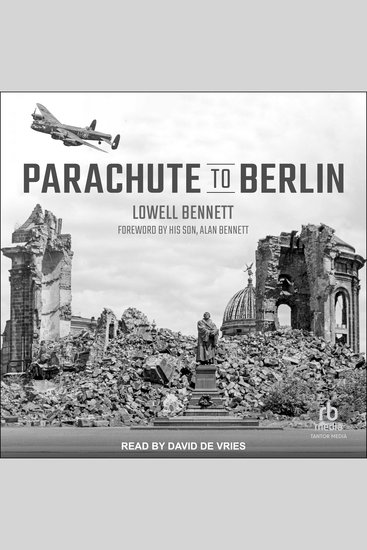
    The vivid account of a war correspondent shot down over Germany and taken prisoner. 


    Bennett was one of several journalists to fly a night raid over Berlin in November 1943. This is the vivid testimony of an American journalist shot down over Berlin. After he was captured in Berlin, he was taken on a tour of Germany and shown what the civilian population was being subjected to. Bennett spent the rest of the war in Stalag Luft I, where he started the newspaper POW WOW, secretly read by 9,000 prisoners. Bennett's experiences led him to condemn the Allied policy of systematically bombing civilian population centers.
    Zum Buch
  • Mythology across the Ancient World - The History of Mythological Stories and Rituals in Antiquity - cover

    Mythology across the Ancient...

    Editors Charles River

    • 0
    • 0
    • 0
    Although the Egyptians may not have passed their civilization directly on to later peoples, the key elements that comprised Egyptian civilization, including their religion, early ideas of state, and art and architecture, can be found among other civilizations. For instance, civilizations far separated in time and space, such as China and Mesoamerica, possessed key elements that were similar to those found in ancient Egypt. Indeed, since Egyptian civilization represented some fundamental human concepts, a study of their culture can be useful when trying to understand many other pre-modern cultures.  
    	Today the Mesopotamians and their religion are sources of curiosity, but thousands of years ago, the religion was an integral part of their lives. From their birth to their death, deities surrounded them, and whether their social interactions were on the level of a smaller city or that of a larger nation-state, deities played key roles in the social fabric of their society. Whereas the Israelites were one people who worshipped a single god, Babylon had a succession of different dynasties derived from many ethnic groups, and since Babylonian religion originated from a plethora of sources, there were very few elements that maintained primacy throughout the city’s history. For example, the Sumerian influence resulted in citizens worshipping many deities in the city, but those numbers were reduced after the Amorites came to power.  
    	One of the reasons Zeus remains one of the most recognizable gods in history is because of the spread of his influence. Due to the conquests of Alexander the Great, Zeus was brought along with other elements of Hellenization to Egypt and the Near East, and a few centuries later, Rome all but adopted him as their own chief god, Jupiter. From there, he was exported around the Roman Empire and fused with numerous other local gods in the process.
    Zum Buch