Begleiten Sie uns auf eine literarische Weltreise!
Buch zum Bücherregal hinzufügen
Grey
Einen neuen Kommentar schreiben Default profile 50px
Grey
Jetzt das ganze Buch im Abo oder die ersten Seiten gratis lesen!
All characters reduced
Prison Food - cover

Prison Food

Theo Rourke

Übersetzer A AI

Verlag: Publifye

  • 0
  • 0
  • 0

Beschreibung

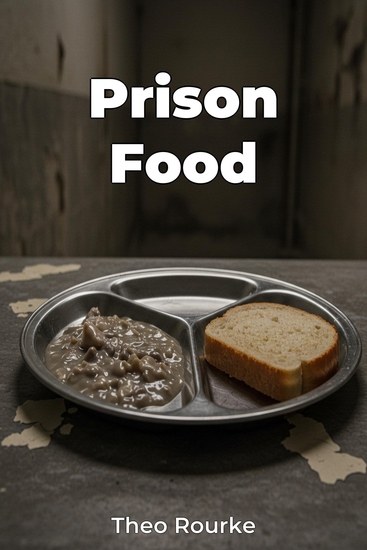
Prison Food explores the often-overlooked aspect of incarceration: the meals served to inmates. This book argues that what prisoners eat reflects a society's values concerning social justice and human rights. Delving into culinary history, it reveals how penal diets have evolved and highlights the stark reality that food in prisons is more than just sustenance; it's a measure of ethical standards. Did you know that the quality of prison meals can directly impact inmate behavior and rehabilitation potential? Also, the book sheds light on how prison food intersects with broader issues of social inequality and healthcare access.

 
The book takes a holistic approach, blending historical analysis with contemporary research. It begins by outlining the basic concepts of prison food systems, then analyzes how diets have been shaped by social attitudes and economic conditions across different periods and countries, from early workhouses to modern correctional facilities. Later chapters compare prison food policies globally and examine efforts to reform these systems. By using varied sources like inmate testimonials and governmental reports, Prison Food challenges assumptions about justice and human dignity.
Verfügbar seit: 11.03.2025.
Drucklänge: 61 Seiten.
Weitere Bücher, die Sie mögen werden

  • A Knitter's Guide to World War 1 - Featuring thirty war-time knitting patterns - cover

    A Knitter's Guide to World War 1...

    Joyce Meader

    • 0
    • 0
    • 0
    During World War I, thousands of garments and accessories were knitted for the men at the front to help with the war effort. This book brings together the genuine military knitting patterns of the day, taken from wool company booklets, needlework magazines and government pamphlets. The patterns are written in modern form, with useful advice on yarn choice and techniques for today's knitter.
    Zum Buch
  • From Wolf to Supermutt and Everything In Between - cover

    From Wolf to Supermutt and...

    Erika K Gősi

    • 0
    • 0
    • 0
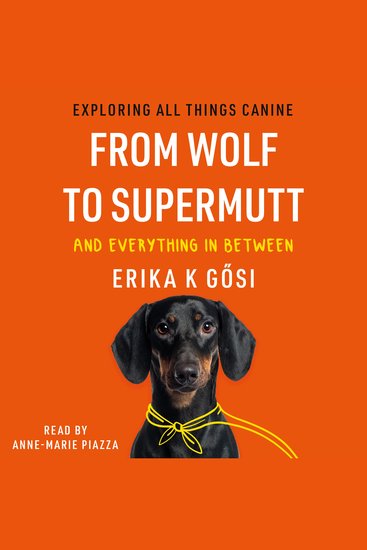
    When Erika adopted Mila, she naively believed that, like instant soup, she wouldn't have to go through the process of cooking all the ingredients from scratch. She wouldn't have to house train, obedience train or intensely socialise a mature dog. Mila quickly proved how misguided she was! Her favourite pastime was zealously chewing Persian rugs while the living room became her personal toilet. Alternatively, when asked to sit, lie down, or come, she'd throw herself on her back in submission and refuse to move. Thunder and fireworks sent her rushing around in a mindless panic, while the sight of other dogs turned her into a screaming banshee. Does this sound familiar?
    Introducing From Wolf to Supermutt and Everything In Between, a book to guide you and your dog to happiness and harmony. Predominantly written with information based on research studies, the book also includes anecdotes based on Erika's own experience to give it the personal factor. Erika's portrayal of all things canine begins with their evolution and domestication, the fundamental processes that triggered our ongoing relationship with dogs. Additionally, the book banishes a few myths, and explores the significance of nature vs nurture, including the importance of genetics, breeding and socialisation. Understanding how our dogs think and learn, knowing the source of canine behaviour problems, including the impact of detrimental and positive training methods, we can pre-empt many behaviour problems and positively shape our dogs into happy hounds.
    Zum Buch
  • The Passenger: Ireland - cover

    The Passenger: Ireland

    Passenger The

    • 0
    • 0
    • 0
    The best new writing, photography, art, and reportage from and about Ireland—in the series that’s “like a literary vacation” (Publishers Weekly). 
     
    Ireland is a land full of charm and conflict, a country that in just a few decades has gone from being a poor, semi-theocratic society to a thriving economy free from the influence of the Catholic Church. With the 1998 peace agreements, the conflict between nationalists and unionists seemed, if not resolved, at least dormant. But Brexit—with the ambiguous position it leaves Northern Ireland in—caused old tensions to resurface, with ramifications in politics, society, culture, and sport. 
     
    Meanwhile, south of the border, epochal transformation has seen a deeply patriarchal, conservative society give space to diversity, the only country in the world to enshrine gay marriage in law through a referendum. And there’s a whole other Ireland abroad, an Irish diaspora that looks to the old country with newfound pride but doesn’t forget the ugliness it fled from. 
     
    Memory and identity intertwine with the transformations—from globalization to climate change—that are remodeling the Irish landscape, from the coastal communities under threat of disappearing along with the Irish language fishermen use to talk about the sea, inland the peat bogs, until recently important sources of energy and jobs, are being abandoned. Pieces in this collection include: 
     
    The mass is ended by Catherine Dunne and Caelainn Hogan · The Way Back by Colum McCann · A Trip to Westeros by Mark O’Connell · Plus: life on the margins of two unions and right in the middle of Brexit, making war on each other for thirty years while playing on the same national rugby team, emigrating to the great enemy or transforming the country one referendum at a time, digging peat bogs and building cottages, talking of the sea in Gaelic, and much more . . .  
     
    “These books are so rich and engrossing that it is rewarding to read them even when one is stuck at home.” —The Times Literary Supplement
    Zum Buch
  • Flyfishing the High Country - cover

    Flyfishing the High Country

    John Gierach

    • 0
    • 0
    • 0
    ● Tactics for fishing high country lakes, the conflicting currents of high mountain streams, and the ever-changing waters of beaver ponds 


    ● Cutthroats, brook trout, goldens, rainbows, grayling 


    ● The best weather and seasons to fish and the tackle and flies to take into the high country 


    "The mountains—any mountains—can make you pay for your fishing with time, shoe leather, exertion, and even disappointment. But they usually give back more than they take in terms of solitude and a sense of adventure that you just won't find on more civilized waters." —John Gierach 


    Fly-fishing in scenic and remote mountain waters is a special kind of fishing, explored in depth by veteran fly fisher John Gierach. Along with Fly Fishing Small Streams, this guide, Gierach's first book, explains how to find the best waters and how to fish them to the best advantage.
    Zum Buch
  • Platoon - The Ultimate Trivia Collection - From The Movie Directed By Oliver Stone - cover

    Platoon - The Ultimate Trivia...

    Film Trivia Metaverse

    • 0
    • 0
    • 0
    PLATOON 
    THE ULTIMATE TRIVIA COLLECTION 
      
    FROM THE MOVIE DIRECTED BY OLIVER STONE 
      
    CREATED BY FILM TRIVIA METAVERSE 
      
    ABOUT THE FILM 
    Platoon (1986), directed by Oliver Stone, is a gritty Vietnam War film that follows Chris Taylor, a young and idealistic U.S. Army recruit, who is thrust into the harsh realities of combat. Assigned to a platoon in South Vietnam, Taylor faces moral and physical challenges as he navigates the brutal conflict. The film explores the psychological toll of war through the contrasting leadership styles of two sergeants: the callous Sergeant Barnes and the compassionate Sergeant Elias. The film delves into themes of loyalty, survival, and the moral ambiguity of war, offering a raw and realistic portrayal of the Vietnam War experience. 
      
    TRIVIA SAMPLES: 
      
    “According to Oliver Stone, he intentionally cast Tom Berenger and Willem Dafoe against type. Berenger, who played the ruthless Sergeant Barnes, was mainly known for playing good guys, while Dafoe, who had often played villains, took on the heroic role of Sergeant Elias. The casting was a success, earning both actors Oscar nominations.” 
      
    “Charlie Sheen credited Keith David with saving his life. During filming in an open-door Huey gunship, the helicopter banked too sharply, throwing Sheen toward the open door. David grabbed him and pulled him back inside just in time.” 
      
    “Lieutenant Wolfe’s character is frequently used in U.S. military leadership courses as an example of how not to behave as a junior officer.”
    Zum Buch
  • The Cultural Revolution - China's Radical Change - cover

    The Cultural Revolution -...

    Nova Ashford

    • 0
    • 0
    • 0
    The Cultural Revolution, which took place in China from 1966 to 1976, was one of the most tumultuous and transformative periods in the country’s history. Initiated by Mao Zedong, the founding father of the People’s Republic of China, the movement sought to preserve Chinese communism by removing capitalist, traditional, and cultural elements from Chinese society. At its core, the Cultural Revolution aimed to enforce Maoist ideology, reaffirm his leadership, and transform the cultural, social, and political fabric of China. It was a radical attempt to reshape Chinese society by addressing perceived corruption and ideological impurity within the Communist Party and broader society. 
    Mao’s motivations for launching the Cultural Revolution were multifaceted. After the failure of the Great Leap Forward (1958-1962), which had resulted in widespread famine and economic chaos, Mao’s position within the Communist Party had been weakened. The Cultural Revolution provided Mao with an opportunity to reassert his control over the party and eliminate rivals, many of whom were seen as too moderate or resistant to his vision of a truly communist society. It also reflected Mao’s concern that China was veering away from the revolutionary ideals that had initially driven the Communist Party. 
    The movement was largely propelled by the Red Guards, a youth-based movement that encouraged the younger generation to challenge authority and remove perceived counter-revolutionary influences. Under the banner of Maoism, the Red Guards sought to destroy the "Four Olds"—old customs, old culture, old habits, and old ideas. This led to widespread destruction of cultural heritage, including temples, books, and artworks. Intellectuals, teachers, and perceived enemies of the revolution were subjected to violent persecution, public humiliation, and forced labor, with many being sent to the countryside for "re-education."
    Zum Buch