Begleiten Sie uns auf eine literarische Weltreise!
Buch zum Bücherregal hinzufügen
Grey
Einen neuen Kommentar schreiben Default profile 50px
Grey
Jetzt das ganze Buch im Abo oder die ersten Seiten gratis lesen!
All characters reduced
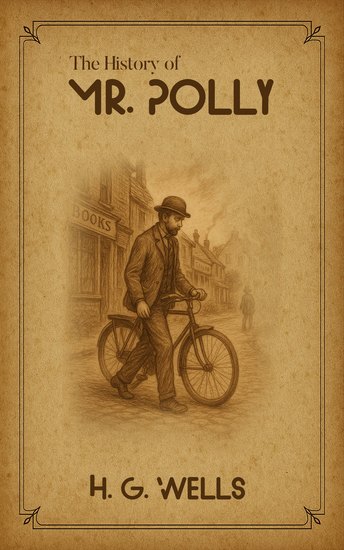
The History of Mr Polly - cover

The History of Mr Polly

H. G. Wells

Verlag: CLXBX

  • 0
  • 0
  • 0

Beschreibung

The History of Mr. Polly is a witty, humane, and deeply reflective novel by H. G. Wells that explores the quiet struggles of ordinary life, personal failure, and the search for meaning. First published in 1910, the novel stands apart from Wells's more famous scientific romances, offering instead a richly observed portrait of a man overwhelmed by the expectations of society and his own limitations.

The story follows Alfred Polly, a restless and good-hearted man whose life is shaped by poor decisions, social pressure, and a persistent sense of dissatisfaction. Trapped in an unhappy marriage and an unfulfilling business, Mr. Polly feels increasingly stifled by the routines and respectability of lower-middle-class English life. His inner world—full of humor, regret, and longing—stands in sharp contrast to the narrow path laid out before him.

As circumstances push Mr. Polly toward desperation, an unexpected turn of events forces him to confront the possibility of change and reinvention. Through Polly's journey, Wells examines themes of personal freedom, social constraint, class anxiety, and the courage it takes to escape a life that feels predetermined.

Combining gentle satire with profound empathy, The History of Mr. Polly is both a critique of social conformity and a celebration of individual resilience. With its memorable protagonist and insightful commentary, the novel remains a timeless exploration of the human desire for dignity, purpose, and a second chance at happiness.
Verfügbar seit: 10.02.2026.
Drucklänge: 246 Seiten.
Weitere Bücher, die Sie mögen werden

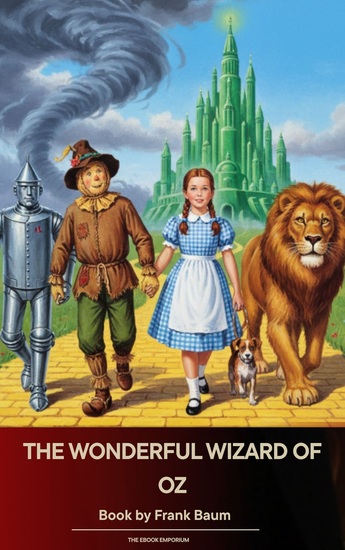
  • The Wonderful Wizard of Oz - cover

    The Wonderful Wizard of Oz

    Frank Baum

    • 0
    • 0
    • 0
    "Follow the Yellow Brick Road to the place where dreams and reality collide."
    
    When a Kansas cyclone carries young Dorothy Gale and her dog Toto to the magical Land of Oz, she begins an adventure that has captivated the world for over a century. To find her way home, she must seek out the Great Wizard in the heart of the Emerald City. Along the way, she assembles a legendary trio: a Scarecrow in search of a brain, a Tin Woodman longing for a heart, and a Cowardly Lion seeking courage. Together, they navigate a world of Deadly Poppies, Flying Monkeys, and the terrifying Wicked Witch of the West. L. Frank Baum's masterpiece is a celebration of self-reliance, friendship, and the discovery that the virtues we seek most are often already within us.
    
    Baum explicitly set out to create a new kind of wonder, stripping away the "bloodcurdling" morals of older tales. Instead, he populated Oz with uniquely American archetypes—the resilient girl from the plains, the mechanical man, and the "humbug" wizard who relies on technology and showmanship rather than actual magic.
    
    While the famous film featured ruby slippers, the original book features Silver Shoes. These shoes represent a hidden power that Dorothy possesses from the moment she arrives—a central theme of the book being that the characters' perceived deficiencies are actually their greatest strengths.
    
    The Wonderful Wizard of Oz remains essential because it is a story about the transition from childhood to maturity. It explores the idea that "home" is not just a location, but a sense of belonging and self-assurance. Its whimsical characters and unforgettable settings provide a rich layer of symbolism that continues to inspire artists, filmmakers, and dreamers.
    
    Discover the man behind the curtain. Purchase "The Wonderful Wizard of Oz" today.
    Zum Buch
  • The Strange Case of Dr Jekyll and Mr Hyde and Prince Otto - cover

    The Strange Case of Dr Jekyll...

    Robert Louis Stevenson

    • 0
    • 0
    • 0
    On their weekly walk, an eminently sensible, trustworthy lawyer named Mr. Utterson listens as his friend Enfield tells a gruesome tale of assault. The tale describes a sinister figure named Mr. Hyde who tramples a young girl, disappears into a door on the street, and reemerges to pay off her relatives with a check signed by a respectable gentleman. Since both Utterson and Enfield disapprove of gossip, they agree to speak no further of the matter. It happens, however, that one of Utterson’s clients and close friends, Dr. Jekyll, has written a will transferring all of his property to this same Mr. Hyde. Soon, Utterson begins having dreams in which a faceless figure stalks through a nightmarish version of London. 
     
    Puzzled, the lawyer visits Jekyll and their mutual friend Dr. Lanyon to try to learn more. Lanyon reports that he no longer sees much of Jekyll since they had a dispute over the course of Jekyll’s research, which Lanyon calls “unscientific balderdash.” Curious, Utterson stakes out a building that Hyde visits—which, it turns out, is a laboratory attached to the back of Jekyll’s home. Encountering Hyde, Utterson is amazed by how undefinably ugly the man seems as if deformed, though Utterson cannot say exactly how. Much to Utterson’s surprise, Hyde willingly offers Utterson his address. Jekyll tells Utterson not to concern himself with the matter of Hyde. 
     
    A year passes uneventfully. Then, one night, a servant girl witnesses Hyde brutally beat to death an old man named Sir Danvers Carew, a member of Parliament and a client of Utterson. The police contact Utterson, and Utterson suspects Hyde as the murderer. He leads the officers to Hyde’s apartment, feeling a sense of foreboding amid the eerie weather—the morning is dark and wreathed in fog. When they arrive at the apartment, the murderer has vanished, and police searches prove futile. 
    Zum Buch
  • Hammerpond Park Burglary The (Unabridged) - cover

    Hammerpond Park Burglary The...

    H. G. Wells

    • 0
    • 0
    • 0
    It is a moot point whether burglary is to be considered as a sport, a trade, or an art. For a trade, the technique is scarcely rigid enough, and its claims to be considered an art are vitiated by the mercenary element that qualifies its triumphs. On the whole it seems to be most justly ranked as sport, a sport for which no rules are at present formulated, and of which the prizes are distributed in an extremely informal manner. It was this informality of burglary that led to the regrettable extinction of two promising beginners at Hammerpond Park. The stakes offered in this affair consisted chiefly of diamonds and other personal bric-a-brac belonging to the newly married Lady Aveling. Lady Aveling, as the reader will remember, was the only daughter of Mrs Montague Pangs, the well-known hostess. Her marriage to Lord Aveling was extensively advertised in the papers, the quantity and quality of her wedding presents, and the fact that the honeymoon was to be spent at Hammerpond. The announcement of these valuable prizes created a considerable sensation in the small circle in which Mr Teddy Watkins was the undisputed leader, and it was decided that, accompanied by a duly qualified assistant, he should visit the village of Hammerpond in his professional capacity."
    Zum Buch
  • A Respectable Woman - From their pens to your ears genius in every story - cover

    A Respectable Woman - From their...

    Kate Chopin

    • 0
    • 0
    • 0
    Katherine O'Flaherty was born on the 8th February 1850 in St Louis, Missouri to parents of French and Irish descent. 
    At age 5, she was sent to the Sacred Heart Academy and, apart from a 2 year period at home when her father died, remained there until graduating in 1868.  Whilst there she began writing and became an avid reader of almost anything that crossed her path.   
    Kate married Oscar Chopin in 1870 and the couple moved to New Orleans, and later to the rural setting of Cloutierville, Louisiana to raise their 6 children.  
    In 1882 her husband died leaving her in a deep trench of debt.  Despite her best efforts to turn the businesses around they were sold, and she moved the family back to St Louis and the financial help of her mother.  Sadly, her mother died within the year.  Kate, now struggling with depression, pushed herself to write and gained a local reputation as a writer of short stories that captured the local color and vibrancy of her surroundings. 
    By the early 1890’s her short stories were published nationally.  With this widespread audience also came negative reviews, controversy, and cries of immorality as themes such as interracial relationships, the rights of women and other burning issues of the day were written about. 
    Despite the criticism, which unnerved her, she continued to write though in the main her works, around 100 short stories and two novels, were not attributed with any literary worth. 
    Kate Chopin died from a brain haemorrhage in St Louis Missouri on the 22nd of August 1904.  She was 54. 
    For much of the 20th Century her work was forgotten and out of print.  It was only in early 1970’s, with the rise of feminism and the call for a more just society that she was given the status her works had long described and shone a literary light at.  She is now safely revered as one of America’s great authors.
    Zum Buch
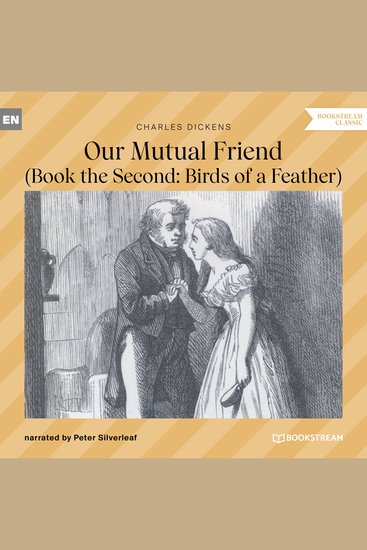
  • Our Mutual Friend - Book the Second: Birds of a Feather (Unabridged) - cover

    Our Mutual Friend - Book the...

    Charles Dickens

    • 0
    • 0
    • 0
    Charles Dickens was a writer and social critic who created some of the world's best-known fictional characters and is regarded as the greatest novelist of the Victorian era. His works enjoyed unprecedented popularity during his lifetime, and by the twentieth century critics and scholars had recognised him as a literary genius. His novels and short stories enjoy lasting popularity.
    BOOK THE SECOND: BIRDS OF A FEATHER: The school at which young Charley Hexam had first learned from a book the streets being, for pupils of his degree, the great Preparatory Establishment in which very much that is never unlearned is learned without and before book was a miserable loft in an unsavoury yard. Its atmosphere was oppressive and disagreeable; it was crowded, noisy, and confusing; half the pupils dropped asleep, or fell into a state of waking stupefaction; the other half kept them in either condition by maintaining a monotonous droning noise, as if they were performing, out of time and tune, on a ruder sort of bagpipe.
    Zum Buch
  • Virginia Woolfe 3 Complete Works - Mrs Dalloway To The Lighthouse The Voyage Out - cover

    Virginia Woolfe 3 Complete Works...

    Virginia Woolf

    • 0
    • 0
    • 0
    Virginia Woolf's literary legacy shines brightly through her acclaimed novels "Mrs. Dalloway," "To the Lighthouse," and "The Voyage Out." In "Mrs. Dalloway," Woolf skillfully weaves a tapestry of inner thoughts, social constraints, and the complexities of human existence. Through the introspective journey of Clarissa Dalloway, Woolf explores the intricacies of personal identity, the influence of societal expectations, and the enduring power of memory. The novel captures the nuances of everyday life, revealing the hidden desires, regrets, and hopes that shape the characters' lives. 
     
    "To the Lighthouse" stands as a literary masterpiece that captures the ebb and flow of time and the profound transformations that occur within relationships and individuals. Woolf delves into the dynamics of the Ramsay family as they navigate the changing tides of love, loss, and the pursuit of artistic fulfillment. Through vivid imagery and lyrical prose, she explores the intricate workings of human connections and the complexities of human emotions. 
     
    "The Voyage Out" takes readers on a captivating journey of self-discovery and the exploration of gender roles. Through the protagonist Rachel Vinrace, Woolf delves into the limitations and societal expectations placed upon women in the early 20th century. As Rachel embarks on a literal and metaphorical voyage, she grapples with her own desires, intellectual curiosities, and the restrictions imposed by a patriarchal society. Woolf's narrative brilliance shines as she intricately weaves together themes of feminism, self-realization, and the yearning for freedom. 
     
    Across these three novels, Woolf's prose is characterized by its poetic beauty, stream-of-consciousness technique, and keen observation of the human psyche.
    Zum Buch