Rejoignez-nous pour un voyage dans le monde des livres!
Ajouter ce livre à l'électronique
Grey
Ecrivez un nouveau commentaire Default profile 50px
Grey
Abonnez-vous pour lire le livre complet ou lisez les premières pages gratuitement!
All characters reduced
Pickling Growth - cover

Pickling Growth

Tessa Kwan

Traducteur A AI

Maison d'édition: Publifye

  • 0
  • 0
  • 0

Synopsis

Pickling Growth unveils the captivating story of pickling, an ancient food preservation method that has profoundly impacted global cuisines and trade. More than just a technique, pickling has acted as a catalyst for cultural exchange. Imagine how the simple act of preserving cucumbers, cabbage, or even eggs could facilitate exploration and shape regional foodways. From ancient Mesopotamia to modern kitchens, pickling’s journey is one of innovation and adaptation.

 
The book explores pickling's historical development across cultures, delving into the scientific principles that make it work, such as fermentation and acidity. It also showcases how pickling techniques have been used in diverse culinary applications, from Asian kimchi to European sauerkraut. By combining historical analysis, scientific explanations, and culinary explorations, Pickling Growth offers a unique perspective on this transformative practice.

 
Beginning with fundamental pickling concepts, the book progresses through historical development, scientific principles, and culinary applications, providing a comprehensive understanding of its impact.
Disponible depuis: 11/03/2025.
Longueur d'impression: 71 pages.
D'autres livres qui pourraient vous intéresser

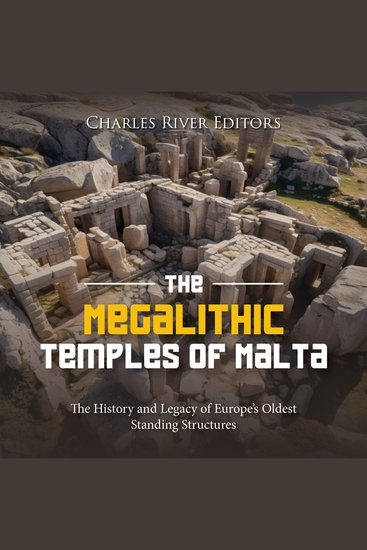
  • Megalithic Temples of Malta The: The History and Legacy of Europe’s Oldest Standing Structures - cover

    Megalithic Temples of Malta The:...

    Editors Charles River

    • 0
    • 0
    • 0
    Malta’s history goes back further than many know, which can be attested to by the numerous Neolithic and Bronze Age era megaliths that dot the island of Malta proper as well as the island of Gozo to the north. Naturally, when European archaeologists began unearthing the megaliths of Malta in the 19th century, they did not know what to think, which led to a plethora of theories, many of them quite fantastic. At least 23 of these temples were uncovered, but because the people who built them lacked the knowledge of writing, speculation over who built them and why remained well into the 20th century (Rountree 2003, 26). Some people theorized that the Malta megaliths were built by a race of giants, while others believed that it was the center of a “Mother Earth” cult that later spread through Neolithic Europe.  
    Early archaeologists were also perplexed about the physical origins of the Maltese megalith builders. Because Malta is such an isolated location, the builders had to have migrated there from elsewhere, but debates raged over the location. Equally confusing was when the megaliths were built. Although most legitimate historians believed from an early time that they were Neolithic structures, some argued that they were built much later and influenced by the Minoans and/or the Mycenaeans.  
    Even as some answers have arrived, scholars still debate the purpose of the megaliths. Although there is a near consensus that they served as religious temples, the deities that were worshiped as well as the rituals carried out in the structures remain a mystery and sources of further debate. As such, the ancient monuments remain enigmatic and serve as sources of pride for the modern Maltese people and awe-inspiring to all those who visit them.
    Voir livre
  • Jewish War The: A Captivating Guide to the First Jewish-Roman War and How the Great Revolt of Judea Impacted Ancient Rome and Jewish History - cover

    Jewish War The: A Captivating...

    Captivating History

    • 0
    • 0
    • 0
    Learn about the Jewish revolts against the overwhelming domination of ancient Rome.  
    The Romans, through sheer military strength, turned Judea into a client state. They forced the Jews to submit to Roman law and Roman taxation and to countenance Roman religion. The Jews of Judea exhibited unbelievable strength in resisting assimilation into Roman Hellenistic culture. Their history of dealing with foreign overlords inspired the Jews to hold out and then revolt against the Romans.  
    Are you curious to learn more? Or are you interested in learning about the Roman siege of Jerusalem? Perhaps you are intrigued about Josephus, the man from whom we get most of our information about the Jewish War. We cover all of this and more.  
    In this audiobook, you will learn about the following:What the Maccabee family accomplished and how they set an example for future leaders of Jewish revolts against foreign powersHow Josephus turned from a patriotic Jew to a supporter of the Roman cause and how he avoided suicide by luck or excelling in mathematicsWhat Jerusalem was like in the midst of the Roman siegeHow the Romans succeeded by utilizing clever engineering in breaching the walls of JerusalemThe fate of the Second Temple and its treasuresThe final gasps of Jewish resistance to Roman ruleAnd so much more!  
     Don’t miss this opportunity to learn about the valiant struggle of the Jews to free themselves from Roman domination. Scroll up and click the “add to cart” button today!
    Voir livre
  • Relationship Has Significance Only When It is a Process of Self-Revelation - cover

    Relationship Has Significance...

    Jiddu Krishnamurti

    • 0
    • 0
    • 0
    Relationship has significance only when it is a process of self-revelation - 17 July 1949 
    • Where there is authority there can be no discovery of something new. 
    • Relationship based on an idea cannot be a self-revealing process. 
    • Self-knowledge is understood, uncovered and its process revealed through 
    relationship. 
    • Is it possible to love without the interference of the mind? 
    • When the mind becomes supreme, all-important, then there can be no 
    affection. 
    • Q: What is that thinking that must come to an end? What do you mean by 
    thinking and thought?
    Voir livre
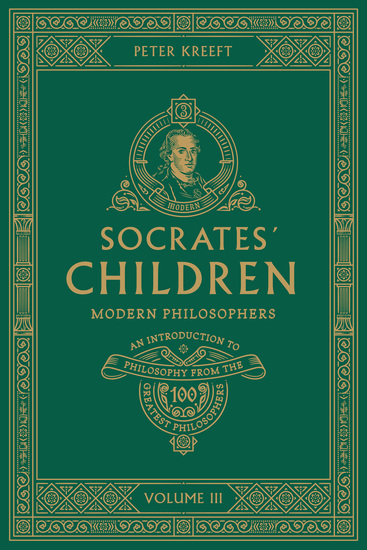
  • Socrates’ Children - An Introduction to Philosophy from the 100 Greatest Philosophers: Volume III: Modern Philosophers - cover

    Socrates’ Children - An...

    Peter Kreeft

    • 0
    • 0
    • 0
    Peter Kreeft, esteemed philosophy professor and author of over eighty books, has taught college philosophy for sixty years. Throughout those decades, he yearned for a beginner's philosophy text that was clear, accessible, enjoyable, and exciting (perhaps even funny). Finding none that met those criteria, he eventually decided to write it himself.  In this four-volume series, Kreeft delivers, with his characteristic wit and clarity, an introduction to philosophy via the hundred greatest philosophers of all time. Socrates’ Children examines the big ideas of four major eras―ancient, medieval, modern, and contemporary―and immerses the reader in the “great conversation,” the ongoing dialogue among the great thinkers of history, including the most influential philosopher of all: Socrates, the father of Western philosophy.  Volume III: Modern Philosophers explores a philosophical world caught up in the spirit of the Enlightenment―a time of both scientific discovery and social upheaval―and examines the philosophers who sought above all to answer the great questions of epistemology and politics: What is knowledge? How can we be certain? What is society? What is its greatest good? 
    Voir livre
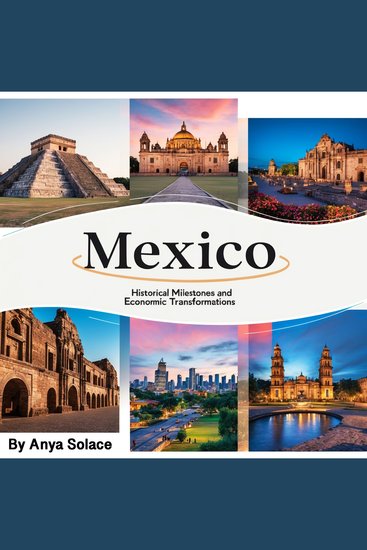
  • Mexico - Historical Milestones and Economic Transformations - cover

    Mexico - Historical Milestones...

    Anya Solace

    • 0
    • 0
    • 0
    Mexico’s history is a fascinating blend of ancient civilizations, colonial rule, and modern economic evolution. Situated at the crossroads of North and Central America, the country has played a crucial role in shaping regional and global events. From the sophisticated societies of the Mayans and Aztecs to the dramatic upheavals brought by Spanish colonization, each era has left an indelible mark on Mexico’s cultural and economic landscape. This book explores key milestones that have defined Mexico’s development and the economic transformations that continue to shape its future.  
    The origins of Mexico’s rich history begin with its diverse geography, which has influenced the rise of powerful civilizations. The Aztecs, with their vast empire and advanced societal structures, left behind a legacy of engineering, agriculture, and governance that still resonates today. Similarly, the Mayans developed sophisticated mathematical and astronomical systems, highlighting the intellectual achievements of pre-Columbian Mexico. These civilizations thrived for centuries before encountering the seismic changes that came with European arrival.  
    The Spanish conquest in the early 16th century marked a profound turning point. Hernán Cortés and his forces, aided by superior weaponry and alliances with indigenous groups, dismantled the Aztec Empire and imposed colonial rule. Spain’s domination reshaped Mexico’s social, economic, and political structures. The encomienda system placed indigenous populations under harsh labor conditions, while the introduction of Catholicism and European traditions altered local customs and belief systems. Despite the oppression, Mexico’s indigenous and mestizo populations adapted, creating a unique cultural fusion that remains a defining aspect of the country’s identity. 
    Voir livre
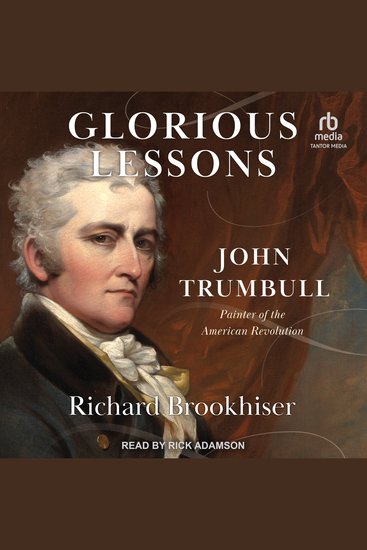
  • Glorious Lessons - John Trumbull Painter of the American Revolution - cover

    Glorious Lessons - John Trumbull...

    Richard Brookhiser

    • 0
    • 0
    • 0
    The complicated life and legacy of John Trumbull, whose paintings portrayed both the struggle and the principles that distinguished America's founding moment 


    John Trumbull (1756–1843) experienced the American Revolution firsthand—he served as aid to George Washington and Horatio Gates, was shot at, and was jailed as a spy. He made it his mission to record the war, giving visual form to what most citizens of the new United States thought: that they had brought into the world a great and unprecedented political experiment. His purpose, he wrote, was "to preserve and diffuse the memory of the noblest series of actions which have ever presented themselves in the history of man." Although Trumbull's contemporaries viewed him as a painter, Trumbull thought of himself as a historian. 


    Richard Brookhiser tells Trumbull's story of acclaim and recognition, a story complicated by provincialism, war, a messy personal life, and, ultimately, changing fashion. He shows how the artist's fifty-year project embodied the meaning of American exceptionalism and played a key role in defining the values of the new country. Trumbull depicted the story of self-rule in the modern world—a story as important and as contested today as it was 250 years ago.
    Voir livre