Begleiten Sie uns auf eine literarische Weltreise!
Buch zum Bücherregal hinzufügen
Grey
Einen neuen Kommentar schreiben Default profile 50px
Grey
Jetzt das ganze Buch im Abo oder die ersten Seiten gratis lesen!
All characters reduced
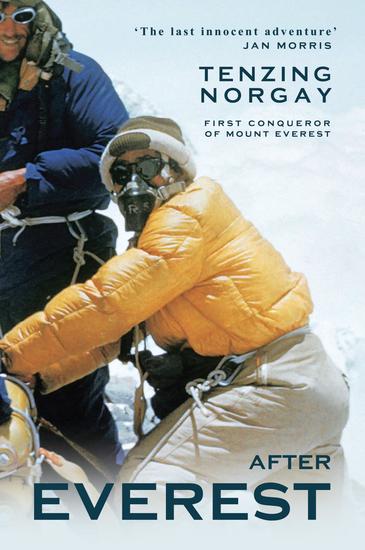
After Everest - 'The last innocent adventure' Ian Morris - The Lama who Conquered Everest - cover

After Everest - 'The last innocent adventure' Ian Morris - The Lama who Conquered Everest

Tenzing Norgay

Verlag: Gibson Square

  • 0
  • 0
  • 0

Beschreibung

On 29 May 1953 Tenzing Norgay and Edmund Hillary conquered Everest.Before it had claimed the lives of dozens of climbers, including George Leigh Mallory in 1924. Norgay, the descendant of generations of yak herders, was destined to become a Lama, but his love for the mountains was that much stronger and he ran away from his Buddhist monastery. He had but one dream despite the deaths of many mountaineers: to conquer Everest. For thirty years expeditions had been struggling to scale its fiendishly difficult icy slopes until he and Hillary finally succeeded. His memoir is a unique and eloquent tribute to Zen and the art of mountain climbing.
Verfügbar seit: 11.04.2024.
Drucklänge: 240 Seiten.

Weitere Bücher, die Sie mögen werden

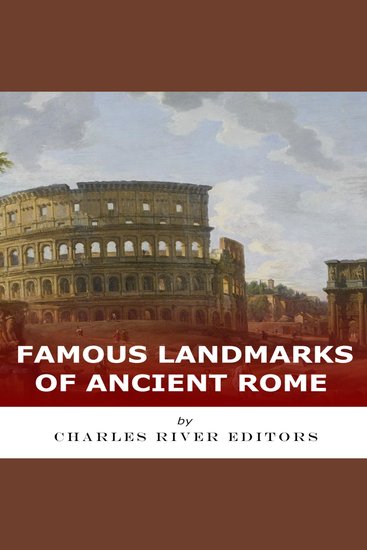
  • Famous Landmarks of Ancient Rome - cover

    Famous Landmarks of Ancient Rome

    Editors Charles River

    • 0
    • 0
    • 0
    When the Colosseum was built in the late 1st century A.D., the Romans, who were known for their architectural acumen, managed to amaze themselves. Martial, a Roman poet writing during the inauguration of the Colosseum, clearly believed the Colosseum was so grand a monument that it was even greater than the other Wonders of the Ancient World, which had been written about and visited endlessly by the Romans and Greeks in antiquity. Indeed, although the Wonders were wondrous to behold, the Colosseum was a spectacular achievement in architecture, something new and innovative, and therefore an amazing “Wonder” in its own way.  
    For well over a thousand years, the Forum was the scene of intense construction, as well as social, political, and commercial activity, making the Forum a boon for the study of Roman history, even though some buildings in the Forum are of such importance that they cannot be disassembled in order to discover the older layers underneath and thus find more evidence about the origins of this area. Ultimately, the Forum transformed from being a backwater used for grazing livestock into the religious and political center of Roman life, and it has long been an inspiration for subsequent generations, influencing the Renaissance, Romanticism, and even Fascism.  
    	Although Roman roads may not have attained the glamorous status of other inventions, their influence is just as profound; roads provide essential communication and transport lines for any country – throughout the hundreds of years when Rome was ascendant in the ancient world, the roads they built held together first their republic and then their empire into a cohesive unit. Since the Appian Way was first built in 312 BC, it has inspired poets, slaves, and conquerors, and Mark Antony, Spartacus, Hannibal, and Horace are just a few of the notable historical personalities who travelled on the Appian Way. 
    Zum Buch

  • Existential Therapy - Finding Meaning in the Chaos of Life - cover

    Existential Therapy - Finding...

    Vivian Westlake

    • 0
    • 0
    • 0
    Existential therapy is a deeply philosophical approach to psychotherapy, grounded in the belief that life’s greatest challenge is navigating its inherent uncertainties while striving to create meaning. At its core, this approach invites individuals to confront the universal dilemmas of existence: freedom, responsibility, isolation, mortality, and the search for purpose. These existential concerns, though often unsettling, are also the catalysts for personal growth and transformation. 
    In a world increasingly defined by chaos, existential therapy offers a path to clarity. It does not seek to provide simple answers or quick solutions but instead fosters a deeper understanding of the self. The process requires embracing the discomfort of life’s unanswered questions and exploring the choices that define who we are. This journey of self-discovery helps clients uncover their authentic values and live in alignment with them, even in the face of life’s inevitable challenges. 
    The roots of existential therapy lie in the existentialist philosophy of thinkers such as Søren Kierkegaard and Friedrich Nietzsche, who emphasized individuality and the importance of living authentically. Later, philosophers like Martin Heidegger and Jean-Paul Sartre explored the intricacies of existence, freedom, and the weight of human choice. These ideas profoundly influenced psychologists like Viktor Frankl, Rollo May, and Irvin Yalom, who brought existential philosophy into the realm of therapeutic practice.
    Zum Buch
  • The CQ Edge - How to Ignite Confidence Eliminate Anxiety and Maximize Your Communication Intelligence - cover

    The CQ Edge - How to Ignite...

    Su Bridgman

    • 0
    • 0
    • 0
    Tap into the empowering strategies in The CQ Edge to unleash your potential and elevate your communicative presence. Su Bridgman presents groundbreaking principles that synthesize profound insights, actionable strategies, and practical exercises to cultivate a resilient, captivating communicative essence.Whether it’s a high-stakes presentation or any other situation in which you speak to an audience, The CQ Edge empowers you to express with confidence, resonate with authenticity, and create the impact you want to achieve with every word spoken. It’s more than a learning experience; it’s a metamorphosis into the communicator you aspire to be, transforming not just the way you speak, but the way you are heard and remembered.It’s time to redefine the boundaries of your communicative landscape. Let The CQ Edge show you the way to becoming the speaker you always wished you could be.
    Zum Buch
  • The Rise of the Ottoman Empire - A New Power Emerges - cover

    The Rise of the Ottoman Empire -...

    Harris Ropes

    • 0
    • 0
    • 0
    The story of the Ottoman Empire begins not with grandeur and empire-building, but with the survival and adaptation of a small Turkic tribe navigating the collapse of greater powers. In the late 13th century, the Anatolian region was a mosaic of fragmented states, weakened by internal conflict and external invasions. Among these groups were the Turks, originally Central Asian nomads, who had migrated westward in waves over centuries. Their destiny would shift dramatically with the decline of the Seljuk Sultanate of Rum and the vacuum left by the Mongol invasions, creating space for new leadership to emerge. 
    The Seljuks had once dominated much of Anatolia, but their weakening rule after the Mongol defeat at the Battle of Köse Dağ in 1243 left the region divided among various beyliks, or small principalities. One such principality was led by a chieftain named Ertuğrul, who had settled near the Byzantine frontier. Upon his death, leadership passed to his son, Osman, a bold and ambitious leader who would become the namesake of the Ottoman dynasty. Osman’s emergence marked a turning point, as his military successes and political acumen allowed him to consolidate power and expand his territory, laying the foundation for what would become the Ottoman Empire. 
    Osman I’s rise coincided with a period of instability within the Byzantine Empire, which was plagued by civil wars and weakened borders. Taking advantage of this, Osman led raids into Byzantine lands, gradually carving out a small but growing domain. More than just a warrior, Osman capitalized on the frontier spirit, attracting ghazis—Muslim warriors motivated by the idea of fighting non-Muslims. These fighters brought not only military strength but also religious legitimacy to Osman’s rule, enabling him to establish a principality that combined spiritual purpose with political ambition.
    Zum Buch
  • Black Tornado - The Three Sieges of Mumbai 26 11 - cover

    Black Tornado - The Three Sieges...

    Sandeep Unnithan

    • 0
    • 0
    • 0
    November 26, 2008. Ten terrorists, armed with guns, grenades, and improvised explosive devices, slip past coastal security cordons on India's western seacoast in a fishing trawler. They board a rubber dinghy and disembark at Machhimar Nagar, Colaba, Mumbai. Over the next three agonizing days, India's 'Maximum City' is brought to its knees as the fidayeen wreak unprecedented havoc at pre-selected landmarks, holding India's commercial capital hostage. The 26/11 attacks, as they are now known, is widely regarded as the world's first hybrid terrorist attack. The attackers achieved through this long-drawn siege what Al Qaeda did through the high-visibility mass-casualty attack of September 11, 2001. 


    The response to this attack was the first instance of all three wings of the Indian armed forces coming together to fight terror. The attacks tested the mettle of India's elite counter-terrorist force, the National Security Guard 


    Black Tornado, as the operation was called by the NSG, is the story of these men called into action in the desperate hours following the most sensational terrorist attack the country has ever seen. Sandeep Unnithan puts together a blow-by-blow account of the terrorist strike and how the siege of Mumbai was thwarted by India's security forces.
    Zum Buch
  • Victory for the Axis - How World War II Might Have Been Won - cover

    Victory for the Axis - How World...

    Marcus Draysun

    • 0
    • 0
    • 0
    World War II was a conflict shaped by countless strategic decisions, moments of chance, and pivotal battles. While the Axis powers achieved stunning victories in the early years, several key turning points ultimately led to their downfall. But what if just a few of these moments had played out differently? Could the Axis have secured victory? 
    One of the most significant turning points was the Battle of Britain. After the fall of France in 1940, Germany stood at the doorstep of the United Kingdom, preparing for a possible invasion. The Luftwaffe launched a fierce aerial assault, aiming to cripple British defenses and force a surrender. However, the Royal Air Force, supported by radar technology and an unyielding civilian spirit, held firm. If the Luftwaffe had adjusted its strategy—focusing more on airfields instead of shifting to city bombings—the RAF might have been overwhelmed. A weakened Britain could have been forced to negotiate peace, removing a major Allied power from the war. 
    Another crucial moment came with Operation Barbarossa, Germany’s invasion of the Soviet Union in 1941. Hitler’s decision to open an Eastern Front spread Axis forces thin and underestimated Soviet resilience. If the invasion had started earlier in the year, avoiding the brutal Russian winter, German forces might have reached Moscow before Soviet reinforcements stabilized the front. Additionally, had Germany prioritized capturing Soviet oil fields in the Caucasus over direct assaults on major cities, the Wehrmacht could have sustained its war machine much longer. A Soviet collapse would have left Germany dominant in Europe, free to shift its focus elsewhere.
    Zum Buch