Begleiten Sie uns auf eine literarische Weltreise!
Buch zum Bücherregal hinzufügen
Grey
Einen neuen Kommentar schreiben Default profile 50px
Grey
Jetzt das ganze Buch im Abo oder die ersten Seiten gratis lesen!
All characters reduced
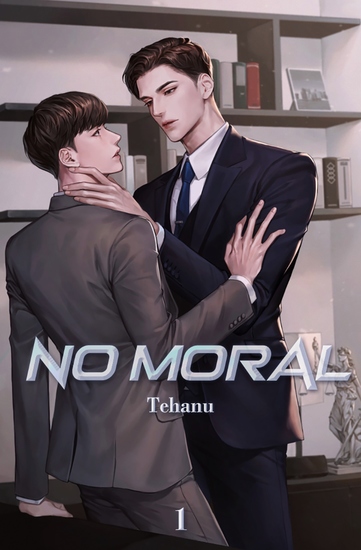
No Moral Vol 1 (novel) - cover

No Moral Vol 1 (novel)

Tehanu

Übersetzer WordExcerpt

Verlag: WordExcerpt

  • 0
  • 0
  • 0

Beschreibung

Yoonshin, a lawyer driven by an unwavering sense of justice, has spent his life defending the helpless and standing firm for what's right. On the other side stands Sehun, a master of strategy who values success at any cost, often bending the rules to achieve his goals. When their worlds collide, an uneasy partnership forms between them—two men with opposing views on justice, method, and morality. Yoonshin’s dedication to doing things the right way clashes with Sehun’s willingness to play dirty, and trust between them is hard to come by.
 
Yet, as they face their battles together, both men begin to evolve. Yoonshin starts to question whether his idealism can truly change the world, while Sehun begins to show a side of himself no one has ever seen before—vulnerable, raw, and uncertain. 
Verfügbar seit: 17.10.2024.
Drucklänge: 536 Seiten.

Weitere Bücher, die Sie mögen werden

  • Dr Sebi’s Holistic Cancer Detox - Holistic Herbal Remedies Alkaline Diet and Detox Strategies to Strengthen Immunity and Support Recovery Naturally - cover

    Dr Sebi’s Holistic Cancer Detox...

    Samuel Root

    • 0
    • 0
    • 0
    What if the path to wellness begins not with more intervention—but with less interference?


    When faced with a serious health challenge, the noise becomes deafening. Endless treatments, conflicting advice, fear-driven decisions that leave you feeling powerless in your own healing journey.


    It offers a different perspective—one rooted in the ancient wisdom that your body possesses remarkable intelligence when given the proper environment to thrive.
     
    This isn't about rejecting modern medicine or promising miracles. It's about understanding how cellular health, immune function, and systemic balance work together—and how natural approaches can support your body's innate capacity for renewal.


    Inside this comprehensive guide, you'll discover:
     
    - The foundational principles of alkaline living and cellular wellness
     
    - Herbal traditions used for centuries to support immune strength
     
    - Nutritional strategies that promote detoxification and vitality
     
    - How stress, emotions, and mindset influence physical health
     
    - Simple daily practices that create an environment for healing
     
    - Ways to support your body's natural defense mechanisms


    Whether you're navigating a diagnosis, supporting a loved one, or taking proactive steps toward optimal wellness, this book provides practical wisdom grounded in holistic principles.
     
    Your body's healing potential is greater than you may realize. Sometimes the most powerful medicine is giving it what it needs to do what it does best.


    Begin your journey toward balance and renewed vitality. Grab your copy today.
    Zum Buch
  • Plotting the Impossible: A Modern Guide to Story Architecture - cover

    Plotting the Impossible: A...

    Billy Grady

    • 0
    • 0
    • 0
    Every unforgettable story shares a hidden framework—a structure that pulls readers in, keeps them hooked, and leaves them breathless at the end. Plotting the Impossible is your key to mastering that architecture, whether you’re writing a high-stakes thriller, a sweeping romance, or a genre-defying masterpiece. 
    In this insightful and practical guide, bestselling author and coach Billy Grady reveals how to: 
    Build bulletproof plots that captivate from the first page to the last 
    Design twists and turns that surprise without breaking believability 
    Balance pacing and tension for maximum emotional impact 
    Adapt classic story structures to fit modern audiences and unique voices 
    Packed with real-world examples, actionable exercises, and step-by-step blueprints, Plotting the Impossible gives you the tools to create stories that feel both inevitable and unforgettable. 
    If you’ve ever wondered how to turn a wild idea into a perfectly constructed narrative, this book will show you how to make the impossible not just possible—but unforgettable.
    Zum Buch
  • Binaural Beats for ADHD Relief - Calm & Focus Your Mind with Brain Entrainment to Reduce Inattention Hyperactivity and Impulsivity - cover

    Binaural Beats for ADHD Relief -...

    Micah Vale

    • 0
    • 0
    • 0
    Find stillness, focus, and clarity—one tone at a time. 
    This specially designed audio program uses binaural beats to help manage symptoms of ADHD by guiding the brain into more balanced and attentive states. Through gentle brainwave entrainment, these sessions support improved focus, emotional regulation, and mental calm without the need for stimulation or screens. 
    Each track targets specific challenges commonly associated with ADHD:Reduce mental restlessness and impulsivityImprove attention span and sustained concentrationCalm racing thoughts and emotional overwhelmSupport mindfulness, presence, and nervous system regulation 
    Includes sessions of alpha and beta waves, backed with soothing, ambient music. 
    Backed by emerging neuroscience, binaural beats offer a non-invasive, sound-based tool to support mental clarity and inner balance—whether used as part of a daily routine, during study sessions, or simply to reset the mind. 
    *to experience the binaural beats headphones are required*
    Zum Buch
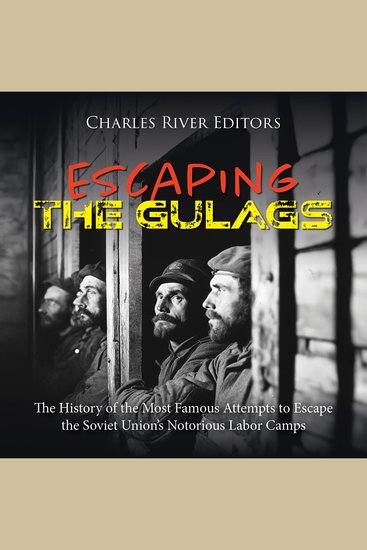
  • Escaping the Gulags: The History of the Most Famous Attempts to Escape the Soviet Union’s Notorious Labor Camps - cover

    Escaping the Gulags: The History...

    Editors Charles River

    • 0
    • 0
    • 0
    One of the most idiosyncratic horrors of Soviet Russia was the Gulag system, an extensive network of forced labor and concentration camps. Part of the rationale behind this system was that it could serve as slave labor in the drive for industrialization, while also serving as a form of punishment. The name Gulag is in fact an acronym, approximating to “Main Administration of Camps” (in Russian: Glavnoe Upravlenie Lagerei) and operated by the Soviet Union’s Ministry of the Interior.[1] The Gulag consisted of internment camps, forced labor camps, psychiatric hospital facilities, and special laboratories, and its prisoners were known as zeks. Such was the closed and secretive nature of the Soviet state that to this day, knowledge of the Gulag system comes mainly from Western studies, firsthand accounts by prisoners such as Aleksandr Solzhenitsyn, and some local studies after the fall of communism. 
    	The most recognisable version of the Gulag, a term that was never pluralized in Russia itself, existed from the 1930s-1950s, a period in which a huge network of camps and prisons was established across the vast Soviet federation. Prisoners were often used as forced labor, made to do physically arduous and soul-destroying tasks. Some workers helped to build large infrastructure projects, and indeed the system was partly rationalized in terms of economics.  
    	By the early 1960s, Gulags were synonymous with various forms of punishments, including house arrest, imprisonment in isolated places, or confinement to a mental hospital where a prisoner would be declared insane or diagnosed with a “political” form of psychosis. In its later years, the Gulags held a particular place in the public’s imagination, both within the USSR and in the outside world. They could mean exile, brutal punishment, or simply being banished to Siberia.
    Zum Buch
  • Arctic Convoys - Bletchley Park and the War for the Seas - cover

    Arctic Convoys - Bletchley Park...

    David Kenyon

    • 0
    • 0
    • 0
    An incisive account of the Arctic convoys, and the essential role Bletchley Park and Special Intelligence played in Allied success 


    Between 1941 and 1945, more than eight hundred shiploads of supplies were delivered to the Soviet Union protected by allied naval forces. Each journey was a battle against the elements, with turbulent seas, extreme cold, and the constant dread of torpedoes. These Arctic convoys have been mythologized as defenseless vessels at the mercy of deadly U-boats—but was this really the case? 


    David Kenyon explores the story of the war in the Arctic, revealing that the contest was more evenly balanced that previously thought. Battles included major ship engagements, aircraft carriers, and combat between surface ships. Amid this wide range of forces, Bletchley Park's Naval Section played a decisive role in Arctic operations, with both sides relying heavily on Signals Intelligence to intercept and break each other's codes. Kenyon presents a vivid picture of the Arctic theater of war, unearthing the full-scale campaign for naval supremacy in northern waters.
    Zum Buch
  • European History - cover

    European History

    Introbooks Team

    • 0
    • 0
    • 0
    Europe’s relationship with culture, even at the most basic level, dates back to at least 20,000 BCE. The Venus of Willedorf and the cave paintings of Altamira and Lascaux are examples of the presence of civilization in Europe thousands of years ago. By 5000 BC, evidence proves that areas of Europe had begun to show hierarchical societies and a firm agricultural background had been formed by many of these societies. 
    While a clear division of boundaries did not exist back then, the history of Europe if we go back to thousands of years ago, during the Neolithic age, can be mainly traced through their settlements and tools. 
    A strong political and social era did not emerge before the Roman and Byzantine period. Thus, Europe’s history began to take form when the Roman’s empire rose to its glory. Europe has undoubtedly seen different periods of settlement before the Roman Empire as well, but evidence, clear dates and archaeology is at its minimal during these periods. 
    While many people completely believe that history is somewhat similar to story-telling, the only thing that makes a difference is the presence of facts and evidence when it comes to history. Every historian has to comb through each fact closely before choosing what actually happened from what is being purported as may have happened. 
    The facts of European history have been put together in this book. The chapters are named primarily after an event that may have been the most prominent one during a period, but every chapter will cover more than just that event. It will cover the things that led to the event and the ones after the event as well. 
    Every era had some striking events that changed the way Europeans led their lives. From periods of anarchy to golden rules and back to chaos again, Europe, from the time it has known power and politics, has been controlled and ruled by many powerful people. 
    The boundaries within which these events happened may not have been recognized as what is considered Europe today. At that time, rulers knew their empires and they knew the regions across which their powers lay, and as historians try to gather evidence today, we can finally put the pieces together to understand and study the great European history. 
    Zum Buch