Rejoignez-nous pour un voyage dans le monde des livres!
Ajouter ce livre à l'électronique
Grey
Ecrivez un nouveau commentaire Default profile 50px
Grey
Abonnez-vous pour lire le livre complet ou lisez les premières pages gratuitement!
All characters reduced
Can't Say No - Girl Time Surprise - cover

Can't Say No - Girl Time Surprise

Tawny Day

Maison d'édition: Spicy Cocktail Press

  • 0
  • 0
  • 0

Synopsis

A sexy chance encounter she never saw coming!
 
Twenty-two year old Kelly loves her job, but sometimes it gets hot and sweaty. After a long day at work, she decides to use the shower in the women’s bathroom. She’s not worried about being interrupted since she’s the only girl who works there. When she steps out of the shower all clean and damp, she’s shocked to see another woman standing there. Kelly isn’t sure what to do when her towel drops to the floor in surprise - but the woman sure as hell does. Now she’s getting the workout of her life from a gorgeous stranger who knows all the tricks!
 
*Explicit* *Erotic* *Hot*
 
Can't Say No: Girl Time Surprise is a stand-alone erotic short story in the Can’t Say No series about Kelly. Read them in order to enjoy the full experience!
Disponible depuis: 17/01/2023.
Longueur d'impression: 31 pages.

D'autres livres qui pourraient vous intéresser

  • Composing Capital - Classical Music in the Neoliberal Era - cover

    Composing Capital - Classical...

    Marianna Ritchey

    • 0
    • 0
    • 0
    The familiar old world of classical music, with its wealthy donors and ornate concert halls, is changing. The patronage of a wealthy few is being replaced by that of corporations, leading to new unions of classical music and contemporary capitalism. In Composing Capital, Marianna Ritchey lays bare the appropriation of classical music by the current neoliberal regime, arguing that artists, critics, and institutions have aligned themselves—and, by extension, classical music itself—with free-market ideology. More specifically, she demonstrates how classical music has lent its cachet to marketing schemes, tech firm-sponsored performances, and global corporate partnerships. As Ritchey shows, the neoliberalization of classical music has put music at the service of contemporary capitalism, blurring the line between creativity and entrepreneurship, and challenging us to imagine how a noncommodified musical practice might be possible in today’s world.
    Voir livre
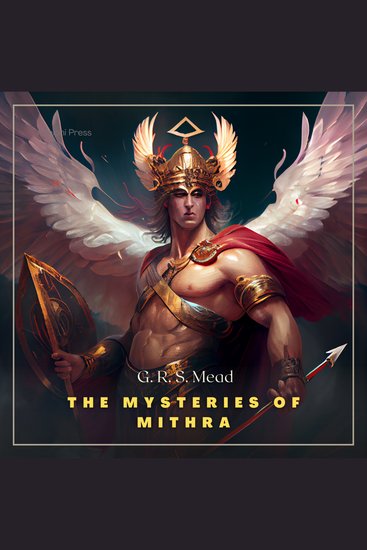
  • The Mysteries of Mithra - cover

    The Mysteries of Mithra

    George Robert Stow Mead

    • 0
    • 0
    • 0
    The Mysteries of Mithra by G.R.S. Mead is an important text in the field of Hellenistic culture, exploring the cult of Mithraism as an important contributor to religious and philosophical thought during the Greco-Roman period. As a seminal work, it provides valuable insight into the origins and practice of Mithraism, which was seen as a source for spiritual transformation and enlightenment in this era of antiquity. Read in English, unabridged.
    Voir livre
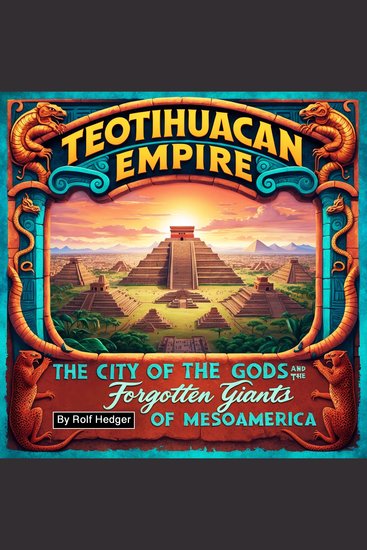
  • Teotihuacan Empire - The City of the Gods and the Forgotten Giants of Mesoamerica - cover

    Teotihuacan Empire - The City of...

    Rolf Hedger

    • 0
    • 0
    • 0
    Teotihuacan, known as the "City of the Gods," remains one of the most enigmatic civilizations of ancient Mesoamerica. Its origins date back to around 400 BCE, when small settlements began to emerge in the Valley of Mexico. Over the centuries, these settlements merged, gradually forming what would become the largest and most influential city of its time. The exact reasons for its rise are still debated, but archaeologists believe that a combination of favorable geography, trade opportunities, and sociopolitical factors contributed to Teotihuacan’s emergence as a dominant power. 
    The valley’s rich volcanic soil provided fertile land for agriculture, supporting crops such as maize, beans, and squash. The region was also strategically located along key trade routes, allowing early inhabitants to engage in commerce with neighboring cultures. As the population grew, so did the need for organization, leading to the development of complex social structures. Unlike other civilizations that revolved around a single ruling dynasty, Teotihuacan appears to have been governed by a collective leadership, possibly a council of elites who controlled different aspects of city life. 
    One of the most intriguing aspects of Teotihuacan’s early history is the origin of its name. The Aztecs, who discovered the abandoned ruins centuries later, named it "Teotihuacan," meaning "the place where gods were born." This suggests that even in ancient times, the city held a sense of divine significance. Mythology and spiritual beliefs were deeply intertwined with its development, as seen in its grand temples and pyramids, which were aligned with celestial movements.
    Voir livre
  • Dyslexia Wrestling with an Octopus - 10 Tips to Help Your Child - cover

    Dyslexia Wrestling with an...

    Beth Beamish

    • 0
    • 0
    • 0
    Does your child have dyslexia? 
    Backed by research and over a decade of personal experience, I've developed a holistic approach to help your child succeed.Find out about the eight areas of dyslexic challenge.Discover tools to teach your child to read, spell, and master the multiplication tablesUnderstand other learning challenges commonly found alongside dyslexiaUncover the links between dyslexia and common health challengesLearn how to build your child's strengths and competencies 
    Recommended by Dyslexia Assessor Craig Keane, Director of Develop Us in Wales. "I'm a specialist dyslexia assessor and teacher. I was looking for a book to recommend to parents of children I assess and teach. I wasn't expecting to learn much from the book because I'm a specialist in this field. I was wrong! Beth presents interesting statistics about dyslexia and how it can impact people in society. She explores different ways you can explain dyslexia to anyone of any age using the octopus theory! I highly recommend this book to parents, teachers, specialists and anyone who would like to educate themselves about dyslexia!"  
    "While reading this book, I have several "Ah ha!" moments that explain my child's behaviour. The book made me feel I had confided all my concerns to her, and she gave me answers. I read articles, research papers and other books, but none have really explained to me so well the many "whys?" and what I need to know about my child." Amazon review.
    Voir livre
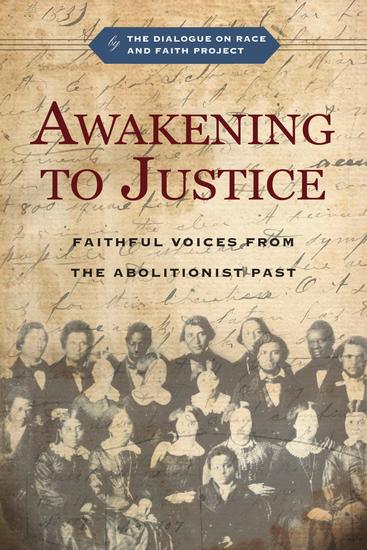
  • Awakening to Justice - Faithful Voices from the Abolitionist Past - cover

    Awakening to Justice - Faithful...

    Estrelda Y. Alexander,...

    • 0
    • 0
    • 0
    "O where are the sympathies of Christians for the slave and where are their exertions for their liberation? . . . It seems as if the church were asleep."
    David Ingraham, 1839
    In 2015, the historian Chris Momany helped discover a manuscript that had been forgotten in a storage closet at Adrian College in Michigan. He identified it as the journal of a nineteenth-century Christian abolitionist and missionary, David Ingraham. As Momany and a fellow historian Doug Strong pored over the diary, they realized that studying this document could open new conversations for twenty-first-century Christians to address the reality of racism today. They invited a multiracial team of fourteen scholars to join in, thus launching the Dialogue on Race and Faith Project.
    Awakening to Justice presents the groundbreaking work of these scholars. In addition to reflecting on Ingraham's journal, chapters also explore the life and writings of two of Ingraham's Black colleagues, James Bradley and Nancy Prince. Appendixes feature writings by all three abolitionists so readers can engage the primary sources directly.
    Through considering connections between the revivalist, holiness, and abolitionist movements; the experiences of enslaved and freed people; abolitionists' spiritual practices; various tactics used by abolitionists; and other themes, the authors offer insight and hope for Christians concerned about racial justice. They highlight how Christians associated with Charles Finney's style of revivalism formed intentional, countercultural communities such as Oberlin College to be exemplars of interracial cooperation and equality.
    Christians have all too often compromised with racism throughout history, but that's not the whole story. Hearing the prophetic witness of revivalist social justice efforts in the nineteenth century can provide a fresh approach to today's conversations about race and faith in the church.
    Voir livre
  • Doomsday: The End Is Near - cover

    Doomsday: The End Is Near

    Raphael Terra

    • 0
    • 0
    • 0
    This audiobook has been recorded using Text to speech (TTS). 
     
    According to the Doomsday Clock, we, as a planet populated by humans with nowhere else to go, have 100 seconds left to live. 
     
    Humanity teeters on the brink of self-destruction. While this sounds like the start of an apocalyptic disaster movie, it is in fact, reality. This is the worrying fact of life in the 21st Century. 
     
    The Doomsday Clock is a warning of man’s ability to create something that could destroy everything - humanity’s very existence. It is a count-down timer to the point of no return – humanity’s doomsday. 
     
    It symbolizes how close we, as a species, have come to destroying the world with dangerous man-made technologies. The deadline of Midnight represents the moment of apocalypse, and how close the clock is set to that deadline warns how close humanity is to ultimate disaster. 
     
    With the intention of warning the public and inspiring action, the clock’s hands are set in accordance to how great is the threat of destruction. 
     
    Now, in the 21st century we are closer to Doomsday than ever before.
    Voir livre