Begleiten Sie uns auf eine literarische Weltreise!
Buch zum Bücherregal hinzufügen
Grey
Einen neuen Kommentar schreiben Default profile 50px
Grey
Jetzt das ganze Buch im Abo oder die ersten Seiten gratis lesen!
All characters reduced
SILENT SHRIEK - Monster Serial Child Killers of recent India - cover

SILENT SHRIEK - Monster Serial Child Killers of recent India

Tarak Ghosh

Verlag: BookRix

  • 0
  • 0
  • 0

Beschreibung

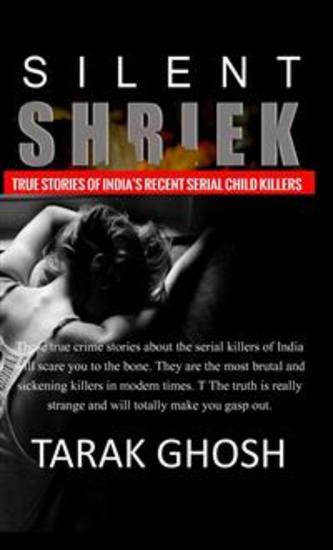
These true crime stories about three serial child killers from recent India will scare you to the bone. They are the most brutal and sickening murders in modern times. They Killed children, raped their dead bodies and even ate their limbs by cooking. The truth is really strange and will totally make you gasp out.  
So you may better get an insight into the mind of these devilish killers... 
  
This book introduces you with the three Monster Serial Child Killers of recent India and their method of operation, their criminal activities and their psychology. This book also gives you the police investigation report, trial and punishment and how they managed to strike fear into the hearts of the laborers. One of them was Surinder Koli who killed girls and cooked their limbs. 
He cooked a breast of the first women he murdered and ate it. He ate the arm of the second woman, the liver of his third victim. 
  
Another killer Darbara Singh suffered from pedophilia and the third Ravinder Singh suffered from necrophilia. Both of them targeted the migrant laborers’ 3-8 years old children, abducted them and sexually abused the dead bodies after killing them brutally. Ravinder had been raping and killing minors since 2008 and only four out of his alleged thirty victims managed to survive. 
  
 During the period of 7 months (April to October 2004), twenty three children of non-Punjabi migrants, went missing from Jalandhar, India. Many of these children were sexually assaulted and 17 of them were killed by Darbara, six children managed to escape. Darbara also loved to rape the dead bodies. He was such a devilish killer that his family refused to claim his body after his death in 2018. 
  
  
These true crime stories about three serial child killers from recent India will scare you to the bone. They are the most brutal and sickening murders in modern times. They Killed children, raped their dead bodies and even ate their limbs by cooking. The truth is really strange and will totally make you gasp out.  
So you may better get an insight into the mind of these devilish killers... 
  
This book introduces you with the three Monster Serial Child Killers of recent India and their method of operation, their criminal activities and their psychology. This book also gives you the police investigation report, trial and punishment and how they managed to strike fear into the hearts of the laborers. One of them was Surinder Koli who killed girls and cooked their limbs. 
He cooked a breast of the first women he murdered and ate it. He ate the arm of the second woman, the liver of his third victim. 
  
Another killer Darbara Singh suffered from pedophilia and the third Ravinder Singh suffered from necrophilia. Both of them targeted the migrant laborers’ 3-8 years old children, abducted them and sexually abused the dead bodies after killing them brutally. Ravinder had been raping and killing minors since 2008 and only four out of his alleged thirty victims managed to survive. 
  
 During the period of 7 months (April to October 2004), twenty three children of non-Punjabi migrants, went missing from Jalandhar, India. Many of these children were sexually assaulted and 17 of them were killed by Darbara, six children managed to escape. Darbara also loved to rape the dead bodies. He was such a devilish killer that his family refused to claim his body after his death in 2018. 
  
          Normal  0          false  false  false    EN-US  X-NONE  X-NONE
Verfügbar seit: 22.12.2023.
Drucklänge: 98 Seiten.
Weitere Bücher, die Sie mögen werden

  • A Burst of Light - and Other Essays - cover

    A Burst of Light - and Other Essays

    Audre Lorde

    • 0
    • 0
    • 0
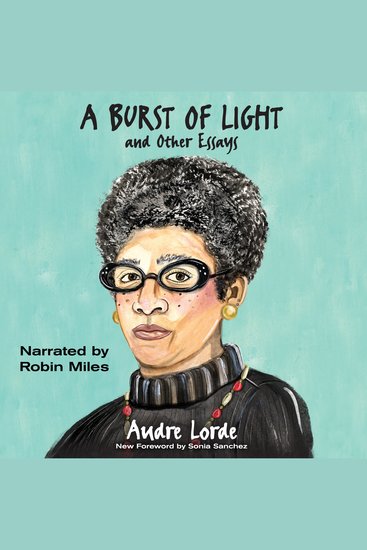
    "Lorde's words — on race, cancer, intersectionality, parenthood, injustice — burn with relevance 25 years after her death." — O, The Oprah Magazine Winner of the 1988 Before Columbus Foundation National Book Award, this path-breaking collection of essays is a clarion call to build communities that nurture our spirit. Lorde announces the need for a radical politics of intersectionality while struggling to maintain her own faith as she wages a battle against liver cancer. From reflections on her struggle with the disease to thoughts on lesbian sexuality and African-American identity in a straight white man's world, Lorde's voice remains enduringly relevant in today's political landscape. Those who practice and encourage social justice activism frequently quote her exhortation, "Caring for myself is not self-indulgence, it is self-preservation, and that is an act of political warfare." In addition to the journal entries of "A Burst of Light: Living with Cancer," this edition includes an interview, "Sadomasochism: Not About Condemnation," and three essays, "I Am Your Sister: Black Women Organizing Across Sexualities," "Apartheid U.S.A.," and "Turning the Beat Around: Lesbian Parenting 1986," as well as a new Foreword by Sonia Sanchez. "You don't read Audre Lorde, you feel her." — Essence "Lorde's timeless prose in this collection provides contemporary social justice warriors the language, strategies, and lessons around resistance, through the power of intersectionality, a Pan-African vision, and — ultimately — through the power of love and radical self-care." — NBC News "When I don't know what to do, I turn to the Lorde." — Alexis Pauline Gumbs, Bitch Media "Whenever my mind is heavy with questions and my heart thirsts for nourishment, I turn to the writing of Audre Lorde. Every time I revisit the words of Audre Lorde, I marvel over how relevant they continue to be." — AfterEllen.com "The self-described black feminist lesbian mother poet used a mixture of prose, theory, poetry, and experience to interrogate oppressions and uplift marginalized communities. She was one of the first black feminists to target heteronormativity, and to encourage black feminists to expand their understanding of erotic pleasure. She amplified anti-oppression, even as breast cancer ravaged her ailing body." — Evette Dionne, Bustle Magazine
    Zum Buch
  • Runaway Groom - Cold Feet―or Cold-Blooded Murder - cover

    Runaway Groom - Cold Feet―or...

    Jr. Ron Peterson

    • 0
    • 0
    • 0
    Petie Miller vanishes without a trace two days before his wedding in Virginia's Shenandoah Valley in 1983. Some speculate it's a case of cold feet, but investigators suspect cold-blooded murder. The bride's stepfather, a violent career criminal named Charlie Almond, is the prime suspect. Circumstantial evidence suggests that Almond killed Miller and successfully disposed of the body. But with no witnesses, no forensic evidence, and no body, Almond is allowed to walk free. Meanwhile, Miller's father never stops seeking answers about what happened to his son. For three decades, he tirelessly pushes the investigation forward, imploring the authorities to keep his son's case file open. Finally, thirty-two years later in 2015, new witnesses emerge and Almond, now an octogenarian, is charged with first-degree murder. Chances of a guilty verdict seem slim, but special prosecutor Phil Figura, known in courtrooms as the "Dragonslayer," is determined to bring justice. Can Figura win a conviction in the oldest, coldest "no body" murder trial in United States history?Bestselling true crime author Ron Peterson, Jr. was provided exclusive access to the police case file to research this compelling story. He interviewed over fifty sources and worked closely with prosecutor Phil Figura and lead investigator Aaron LeVeck to chronicle the incredible true events in this book.
    Zum Buch
  • The Stranger Who Was Myself - cover

    The Stranger Who Was Myself

    Barbara Jenkins

    • 0
    • 0
    • 0
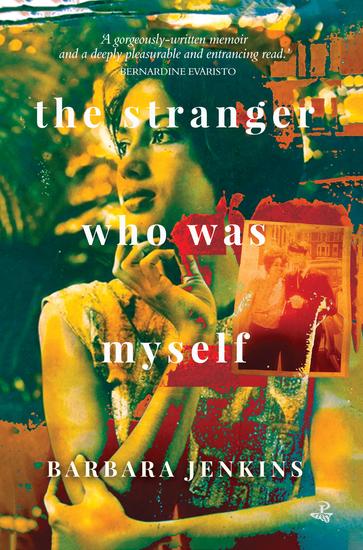
    Barbara Jenkins writes about the experiences of a personal and family-centred life in Trinidad with great psychological acuteness, expanding on the personal with a deep awareness of the economic, social and cultural contexts of that experience. She writes about a childhood and youth located in the colonial era and an adult life that began at the very point of Trinidad's independent nationhood, a life begun in poverty in a colonial city going through rapid change. It is about a life that expanded in possibility through an access to an education not usually available to girls from such an economic background. This schooling gave the young Barbara Jenkins the intense experience of being an outsider to Trinidad's hierarchies of race and class. She writes about a life that has gender conflict at its heart, a household where her mother was subject to beatings and misogynist control, but also about strong matriarchal women.
    As for so many Caribbean people, opportunity appeared to exist only via migration, in her case to Wales in the 1960s. But there was a catch in the arrangement that the years in Wales had put to the back of her mind: the legally enforceable promise to the Trinidadian government that in return for their scholarship, she had to return. She did, and has lived the rest of her life to date in Trinidad, an experience that gives her writing an insider/outsider sharpness of perception.
    'From her childhood in colonial Port of Spain, to becoming a migrant student and young mother in Wales and then returning to Trinidad post-Independence, Jenkins tells her own life story with the emotional sensitivity of a natural storyteller, the insight of a philosopher, the scope of a historian and the good humour of a Trini. This beautifully written and moving memoir will feel achingly familiar to anyone who knows what it is like to navigate race, class and girlhood while growing up in the West Indies, anyone who has ever felt like an outsider.' Ayanna Lloyd Banwo, author of When We Were Birds.
    Zum Buch
  • Born White Zulu Bred - A Memoir of a Third World Child - cover

    Born White Zulu Bred - A Memoir...

    GG Alcock

    • 0
    • 0
    • 0
    You may have read GG Alcock's books about the kasi economy; now follow his journey to the dynamic world of KasiNomics and learn about the tribal forces that shaped him.
    Born White Zulu Bred is the story of a white child and his brother raised in poverty in a Zulu community in rural South Africa during the apartheid era. His extraordinary parents, Creina and Neil Alcock, gave up lives of comfort and privilege to live and work among the destitute people of Msinga, whose material and social well-being became their mission.
    But more than that, this is a story about life in South Africa today which, through GG's unique perspective, explores the huge diversity of the country's people – from tribal Zulu warriors to sophisticated urban black township entrepreneurs. A journey from the arid wastes of Msinga into the thriving informal economies of urban townships.
    GG's view is that we do not live in a black and white world but in a world of contrast and diversity, one which he wants South Africans, and a world audience, to see for what it is without descending into racial and historical clichés. He takes us through the mazes of township marketplaces, shacks and crowded streets to reveal the proud and dignified world of township entrepreneurs who are transforming South Africa's economy. This is the world that he moves in today as a successful businessman, still walking those spaces and celebrating the vibrant informal economies that are taking part in the KasiNomic Revolution.
    GG's story is about being truly African, even as a white person, and it draws on the adventures, the cultural challenges, the informal spaces and the future possibilities of South Africa.
    Zum Buch
  • The Murderer - Bulgakov expertly explores life and death choices set on the backdrop of the Bolshevik Revolution - cover

    The Murderer - Bulgakov expertly...

    Mikhail Bulgakov

    • 0
    • 0
    • 0
    Mikhail Bulgakov was born on 15th May 1891 in Kiev, in the Kiev Governorate of the Russian Empire, into a Russian family.  He was one of seven children. 
     
    In 1901, Bulgakov attended the First Kiev Gymnasium, and developed a keen interest in Russian and European literature, theatre and opera.  After the death of his father in 1907, his mother assumed responsibility for his education.  After graduating Bulgakov entered the Medical Faculty of Kiev University and then took up a post as physician at the Kiev Military Hospital. 
     
    At the outbreak of the First World War, he volunteered as a doctor and was sent directly to the front, where he was badly injured at least twice.  To suppress chronic pain, especially in the abdomen, he injected morphine.  It took years to wean himself off. 
     
    He now took up medical posts in various towns and in 1919, he was mobilised by the Ukrainian People's Army and assigned to the Northern Caucasus.  There, he became seriously ill with typhus and barely survived.  
     
    After this illness, Bulgakov abandoned his medicine to pursue writing.  He moved to Vladikavkaz and had two plays staged there with great success.  He wrote too for various newspapers and other outlets, but his critics were many.  And growing. 
     
    When a Moscow's theatre director severely criticised Bulgakov, Stalin personally protected him, saying that a writer of Bulgakov's quality was above ‘party words’ like ‘left’ and ‘right’.   Indeed, it is said that Stalin watched ‘The Days of the Turbins’ at least 15 times. 
     
    It was not to last and by March 1929, Bulgakov's career was ruined when Government censorship stopped publication of any of his work and plays. 
     
    In despair, Bulgakov wrote a personal letter to Stalin.  He requested permission to emigrate.  He received a phone call from the Soviet leader, who asked the writer whether he really desired to leave. He replied that a Russian writer cannot live outside of his homeland.  Stalin thus gave him permission to continue working. In May 1930, he re-joined the theater, as stage director's assistant.  
     
    During the last stressful decade of his life, and in poor health, Bulgakov continued to work on ‘The Master and Margarita’, wrote plays, critical works, stories, and continued translations and dramatisations of novels.  Many of them were not published, others were derided by critics.  
     
    On 10th March 1940, Mikhail Afanasyevich Bulgakov died from nephrosclerosis.  He was 48. 
     
    ‘The Master and Margarita’ was not published in any form until the mid-1960’s 
     
    Here Bulgakov relates a story as told by a doctor describing the terrible things that humanity is capable of doing in times of war.
    Zum Buch
  • True Crime Case Histories - Volume 11 - 12 Disturbing True Crime Stories of Murder Deception and Mayhem - cover

    True Crime Case Histories -...

    Jason Neal

    • 0
    • 0
    • 0
    12 True Crime Stories of Murder & Mayhem 
    Book 11 of the True Crime Case Histories Series 
    Over 8,000 Five-Star Ratings 
    True crime is not for everyone. However, there is a small subset of us that, for some reason or another, finds themselves drawn to true crime stories. Perhaps it’s a desire for truth and justice, an obsession with understanding the criminal mind, or just curiosity about how the cases were solved. 
    True Crime Case Histories Volume 11 presents 12 new stories spanning the past 50 years, exposing the dark realities of human behavior.  
    A sampling of the stories includes: 
    The Magnificent Gentleman: In a seaside California town, a troubled young man with psychological issues, racism, deep-seated resentment, and misogynistic beliefs carried out a horrific rampage, targeting women and innocent bystanders as a violent expression of his distorted worldview. 
    Hidden Betrayals: A successful interior designer uncovers a shocking betrayal when she learns that someone she trusted her entire life has secretly amassed a collection of her intimate photos, prompting her to take drastic measures to ensure he pays the ultimate price for his actions. 
    The Sunday School Teacher: The disappearance of an eight-year-old girl triggers a harrowing investigation when a Sunday School teacher uncovers a cryptic note that guides authorities to a horrifying scene. 
    Bloodstained Secrets: A small town in Ohio was shocked by the discovery of a body in the basement of a suburban home, leading the police on a complex investigation tangled with secrets, deceit, and a web of hidden relationships. 
    The Leg Thing: A 17-year-old who got pleasure from the sound of someone else's bones breaking. 
    Plus, many more true crime stories
    Zum Buch