Begleiten Sie uns auf eine literarische Weltreise!
Buch zum Bücherregal hinzufügen
Grey
Einen neuen Kommentar schreiben Default profile 50px
Grey
Jetzt das ganze Buch im Abo oder die ersten Seiten gratis lesen!
All characters reduced
Sons and Others - On Loving Male Survivors - cover

Sons and Others - On Loving Male Survivors

Tanaka Mhishi

Verlag: 404 Ink

  • 0
  • 0
  • 0

Beschreibung

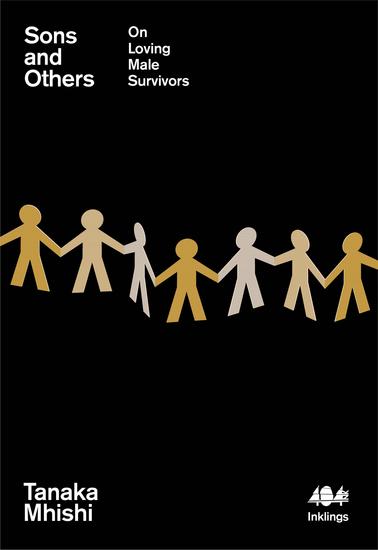
In the UK, around one in six men will experience some form of sexual violence. Many of these men who experience sexual abuse are dismissed, only brought up as the butt of a joke, an exception to the rule or, perhaps at worst, are used as a rhetorical tool against female victims.
Conversations on sexual violence have understandably focused on women's voices and experiences, with data indicating that women are still the majority of victims and not enough is being done to prevent this violence. As most perpetrators of this violence against women are men, it becomes almost easy to mistake that male survivors stories are exceptions or irrelevances. The fact is that we share a world and our experiences are closely interwoven.
Sons and Others challenges misconceptions and misrepresentations of sexual violence against men across media and society and offers a new way of seeing and understanding these men in our lives, asking how the violence they experience affects us all.
Verfügbar seit: 29.09.2022.
Drucklänge: 112 Seiten.

Weitere Bücher, die Sie mögen werden

  • The Spy in the Archive - How One Man Tried to Kill the KGB - cover

    The Spy in the Archive - How One...

    Gordon Corera

    • 0
    • 0
    • 0
    How do you steal a library? Not just any library but the most secret, heavily guarded archive in the world. The answer is to be a librarian. The work goes on for decades but remains so low key, that even after your escape, no one even notices you are gone.The Spy in the Archive tells the remarkable story of how Vasili Mitrokhin—an introverted archivist—ended up changing the world. As the in-house archivist for the KGB, the secrets he was exposed to turned him into a dissident and then a spy; a traitor to his country but a man determined to expose the truth about the dark forces that had subverted Russia, forces still at work in the country today.Historian and journalist Gordon Corera tells of the operation to extract this prized asset from Russia for the first time. It is an edge-of-the-seat thriller with vivid flashbacks. It is the story of what it was like to live in the Soviet Union, to raise a family there, and then of one man's journey from the heart of the Soviet state to disillusion, betrayal, and defection.At its heart is Mitrokhin's determination to take on the most powerful institution in the world by revealing its darkest secrets. This is narrative nonfiction at its best.
    Zum Buch
  • The Folklore of Rome - Myth Magic Dying and the Making of The Empire - cover

    The Folklore of Rome - Myth...

    Davis Truman

    • 0
    • 0
    • 0
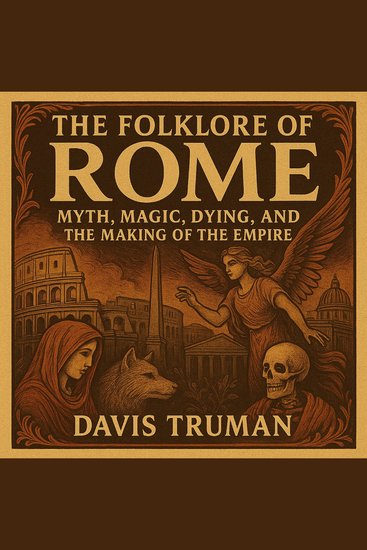
    Step beyond the ruins and into the pulse of ancient Rome—not the Rome of marble triumphs and imperial decrees, but of whispered spells, ghostly omens, and mythic memory. The Folklore of Rome: Myth, Magic, Dying, and the Making of the Empire is an immersive exploration of how stories, superstitions, and sacred rites shaped the world’s most enduring civilization from its legendary beginnings to its imperial zenith. 
    In these pages, history meets enchantment. Chapter by chapter, the book reveals how Roman identity was bound to its folklore: the way Livy’s histories blurred myth and moral lesson, how domestic charms and street-corner incantations governed daily life, and how rituals of dying transformed death into a civic and spiritual act. From household gods to battlefield omens, from public festivals to private fears, Rome’s imagination was alive with unseen forces—powers that both inspired and restrained its people. 
    With vivid scholarship and a storyteller’s touch, The Folklore of Rome uncovers the Empire’s hidden heartbeat: the dreams, doubts, and supernatural beliefs that gave meaning to conquest and glory. More than a study of myths and rituals, it is a rediscovery of Rome as a living myth itself—a civilization forever poised between the mortal and the divine.
    Zum Buch
  • Fort Sumter's Flame - How Secession and Lincoln's Election Lit the Civil War - cover

    Fort Sumter's Flame - How...

    Davis Truman

    • 0
    • 0
    • 0
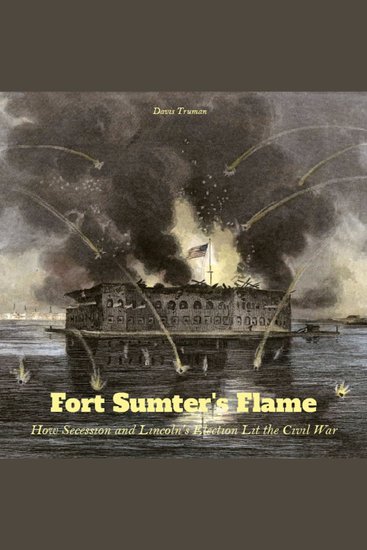
    "Fort Sumter's Flame: How Secession and Lincoln's Election Lit the Civil War" delves deep into the turbulent months leading up to the American Civil War, when the nation teetered on the edge of destruction. This meticulously researched book traces the chain of events that began with Abraham Lincoln's election in 1860, which sent shockwaves through the Southern states, igniting their cries for secession. As tensions escalated, the focus of the nation's turmoil turned to Fort Sumter, a small federal outpost in Charleston Harbor. Here, the first shots of the Civil War were fired, sparking a conflict that would define the nation's future. 
    Authoritative and compelling, "Fort Sumter's Flame" explores the political and social factors that fueled the secessionist movement and brings to life the key figures whose decisions set the stage for war. The book vividly portrays a divided nation where compromise seemed impossible and conflict inevitable. From the bitter debates in Congress to the anxious uncertainty of everyday Americans, this book captures the passion, fear, and resolve that led to the Civil War. 
    Through gripping narratives and insightful analysis, "Fort Sumter's Flame" offers readers a front-row seat to the events that transformed the United States forever. It's an essential read for anyone seeking to understand the origins of America's most devastating conflict and the enduring legacy of the Civil War.
    Zum Buch
  • Babylonians - The History of the Babylonian and Assyrian Empires - cover

    Babylonians - The History of the...

    Kelly Mass

    • 0
    • 0
    • 0
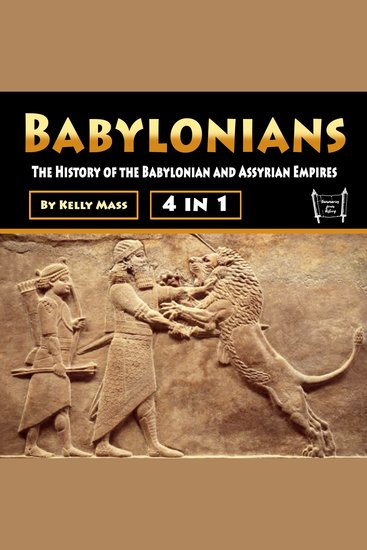
    This is a book that contains 4 different books. These are: 
    1: Assyria, frequently referred to as the Assyrian Empire, was a Mesopotamian kingdom and empire in the Ancient Near East that lasted from maybe the 25th century BC (in the form of the Assur city-state till its collapse between 612 BC and 605 BC, covering the Early to Middle Bronze Age to the Late Iron Age. 
    2: Babylon was an old city that was home to some of the world's most effective empires. It was the capital of the Babylonian Empire and was considered a center of commerce, art, and more. It's thought to have been the world's biggest early city, perhaps the first to reach a population of more than 200,000 people. 
    3: The term "Phoenicians" describes the people living in Phoenicia, a sometimes-forgotten civilization that was age-old and remarkable. Let's check out the tradition, the history, and the specifics of Phoenicia. 
    Phoenicia was a thalassocratic (a state with mostly maritime worlds) society that thrived in the eastern Mediterranean's Levant area, mainly in modern-day Lebanon. It was fixated the coast of Lebanon, with some seaside parts of modern-day Syria and Galilee included for good procedure, varying as far north as Arwad and as far south as Acre and perhaps Gaza. Phoenician civilization stretched the Mediterranean from Cyprus to the Iberian Peninsula between 1100 and 200 BC. 
    4: Whether you have played a Prince of Persia video game, seen the movie, or just heard about it in history class, it is hard to ignore the Persian Empire, which was among the greatest empires of the world for some time. The typical area for the Persian Empire was what is now Iran. The Persians had a vast influence on surrounding countries and regions. Their style, art, music, rule, and culture has had an influence on the development of science and the forming of nations.
    Zum Buch
  • Mali Empire - Gold Mansa Musa and the Wealth of West Africa - cover

    Mali Empire - Gold Mansa Musa...

    Rolf Hedger

    • 0
    • 0
    • 0
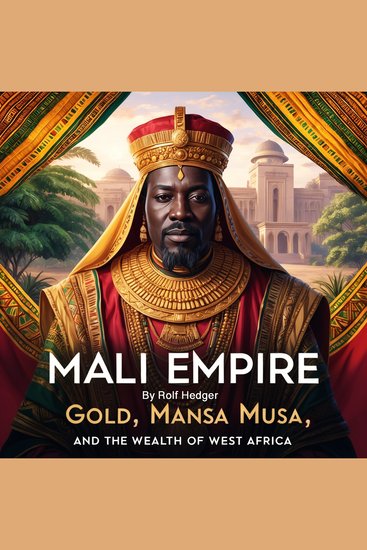
    The Mali Empire emerged in the early 13th century, rising from the remnants of the Ghana Empire and the consolidation of the Malinke people under a visionary leader, Sundiata Keita. The region that would become Mali was already a center of commerce, culture, and political organization, benefiting from its strategic position along the trans-Saharan trade routes. However, it was the collapse of Ghana and the subsequent struggle for power that allowed Mali to emerge as a dominant force in West Africa. 
    The Ghana Empire, which had once controlled vast gold reserves and major trade routes, began to decline due to internal conflicts, overexpansion, and pressure from external forces such as the Almoravid invasions. As Ghana weakened, many of its vassal states and ethnic groups, including the Malinke people, sought independence and new opportunities for leadership. The Malinke, a subgroup of the Mande-speaking people, inhabited the area along the upper Niger River and had long engaged in trade and farming. Their political organization had been fragmented, but under Sundiata Keita, they would come together to form a unified and powerful state. 
    Sundiata Keita’s rise to power is deeply rooted in legend and oral tradition, preserved in the Epic of Sundiata. According to the narrative, Sundiata was born into the Keita royal family but faced exile due to political rivalries. During this time, the Sosso Kingdom, under the rule of Sumanguru Kanté, expanded its influence and sought to dominate the Malinke. Sundiata, gathering allies among different clans and neighboring groups, returned from exile to lead a coalition against Sumanguru at the Battle of Kirina around 1235. His victory in this decisive conflict not only ended Sosso rule but also laid the foundation for the Mali Empire.
    Zum Buch
  • Western Han Dynasty The: A History of China - cover

    Western Han Dynasty The: A...

    Hui Wang

    • 0
    • 0
    • 0
    The Western Han Dynasty: A History of China, PART THREE takes you on a journey through ambition, betrayal, war, and the struggle for power. From Emperor Yuan’s court to the dynasty’s fall and rebirth under Liu Xiu, this book brings to life the rulers, rebels, and visionaries who shaped one of China’s most fascinating eras. 
    Inside the imperial palace, love and power intertwined. Figures like Zhao Feiyan, a dancer turned empress, and the “Cut-Sleeve Emperor,” whose personal life left a historic mark, rose to prominence. Meanwhile, political schemes brewed. Wang Mang, a seemingly noble reformer, seized the throne, triggering chaos, rebellion, and his own dramatic downfall. 
    Beyond the palace, Han power extended through diplomacy and war. General Chen Tang’s bold campaign proved Han’s far-reaching influence. Meanwhile, Wang Zhaojun, sent to marry a Xiongnu chieftain, sacrificed her status to bring peace beyond the Great Wall. 
    As the empire crumbled, Liu Xiu waited. Patient and strategic, he seized the moment to lead a rebellion that restored the Han Dynasty. His rise marked the climax of this era of transformation. 
    This is more than history—it’s a saga of power, betrayal, sacrifice, and resilience. If you love epic tales of real-life intrigue and legacy, this book will draw you deep into the Western Han's dramatic rise, fall, and rebirth.
    Zum Buch