Rejoignez-nous pour un voyage dans le monde des livres!
Ajouter ce livre à l'électronique
Grey
Ecrivez un nouveau commentaire Default profile 50px
Grey
Abonnez-vous pour lire le livre complet ou lisez les premières pages gratuitement!
All characters reduced
The Philosophy of Spirit - cover

The Philosophy of Spirit

Tallapragada Subba Row

Maison d'édition: Edizioni Aurora Boreale

  • 0
  • 0
  • 0

Synopsis

Tallapragada Subba Row (July 6, 1856 - June 24, 1890) was a mystic and a Theosophist from a Hindu background.
In 1882, he invited Helena Petrovna Blavatsky and Henry Steel Olcott to Madras (now Chennai), where he convinced them to make Adyar the permanent headquarters for the Theosophical Society. Upon this meeting and thereafter, Subba Row became able to recite whatever passage was so requested of him from the Bhagavad Gita, Upanishads, and many other sacred texts of India. He had, apparently, never studied these things prior to the fateful meeting, and it is stated that when meeting Blavatsky and Damodar K. Mavalankar, all knowledge from his previous lives came flooding back.
Among the many memorable works he left to humanity, they include his commentaries on the Bhagavad Gita, Esoteric Writings, and his Collected Writings in two volumes.
The essay The Philosophy of Spirit, that we propose to our readers today, was written in December 1883 and included in the Subba Row’s Collection of Esoteric Writings, published for the Bombay Theosophical Publication Fund by Rajaram Tookaram in Bombay in 1910.
Disponible depuis: 10/04/2024.
D'autres livres qui pourraient vous intéresser

  • A Rare Recording of Gertrude Stein Reading Her Own Writing - cover

    A Rare Recording of Gertrude...

    Gertrude Stein

    • 0
    • 0
    • 0
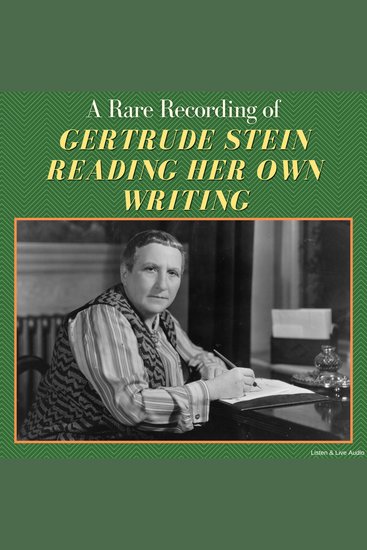
    Gertrude Stein (February 3, 1874 - July 27, 1946) was an American novelist, poet, playwright, and art collector. Born in Allegheny, Pennsylvania, and raised in Oakland, California, Stein moved to Paris in 1903, and made France her home for the remainder of her life. She hosted a Paris salon, where the leading figures of modernism in literature and art, such as Pablo Picasso, Ernest Hemingway, F. Scott Fitzgerald, Sinclair Lewis, Ezra Pound, Sherwood Anderson and Henri Matisse, would meet. The following three recordings are from Stein's novel, The Making of Americans (1925), and her poems, How She Bowed to her Brother (1931) and If I Told Him - A Completed Portrait of Picasso (1923)
    Voir livre
  • A Theologico-Political Treatise - cover

    A Theologico-Political Treatise

    Benedict Spinosa

    • 0
    • 0
    • 0
    Benedict Spinoza's 'A Theologico-Political Treatise' challenges prevailing religious and political dogmas of his time. With bold reasoning, Spinoza advocates for intellectual freedom, questioning the role of theology in governance. This seminal work lays the groundwork for secularism, advocating for a state where reason prevails over religious authority. A visionary treatise, it remains a cornerstone in discussions on freedom, politics, and the separation of church and state. Read in English, unabridged.
    Voir livre
  • Operation Mockingbird: The Controversial History of the CIA’s Efforts to Manipulate American Media Outlets - cover

    Operation Mockingbird: The...

    Editors Charles River

    • 0
    • 0
    • 0
    Freedom of the press isn’t just a fundamental right in America but a key part of the democratic process. When the United States secured its independence against Britain in the War of Independence in 1783, there was no certainty about what the new country would look like in terms of national governance. In 1787, delegates from the various states convened in Philadelphia to draft a constitution that would define this. 
    Freedom of the press became one of the core principles of democracy in the United States. People could only place their votes in an informed way if the press was free to provide information about politicians and their actions. Politicians must also know that their actions were accountable through a press that informed voters honestly and accurately. 
    Up to the 1960s, most Americans were confident they had access to a truly free press, but then series of revelations emerged that suggested the Central Intelligence Agency (CIA) had been subverting journalists in the US and elsewhere through the use of bribery, blackmail, and covert operations. By the late 1970s, this alleged CIA plan had a name: Operation Mockingbird.  
    Many people were understandably horrified at the notion that the federal government had attempted to operate counter to the First Amendment through one of its intelligence agencies, and Operation Mockingbird was widely discussed. These debates continue to the present day, including whether there actually was a covert CIA operation named Mockingbird, whether the operation truly sought to subvert the press in the US and elsewhere, and whether the operation really ended by 1976, as the CIA claimed. As such, nearly 50 years later, Operation Mockingbird remains a controversial topic. 
    Voir livre
  • Why People Kill - cover

    Why People Kill

    Raphael Terra

    • 0
    • 0
    • 0
    This audiobook has been recorded using Text to speech (TTS). 
     
    Nothing can be more terrifying than knowing the streets are being prowled by a twisted serial killer. To be a female of a certain age and profession on the streets of 19th century London, with the knowledge that one of your clients could be Jack the ripper himself. 
     
    There were many more Jack the Rippers in the world. 
     
    Every human has a capacity for good or evil. We are all dark and light. This has been known for thousands of years. It has been written, preached and symbolised across the world. 
     
    Just as there are those in history who have stood out for their compassion and good works, there are also those who have become infamous for their propensity to evil. From serial killers who murder one human after another to dictators who order mass genocide upon their own citizens - evil knows no bounds. 
     
    But what is it that creates these people? Is there an inbuilt genetic lock inside awaiting the turning of a key? Or are these people the result of their life experiences? Does abuse by parents play a key role? Does society itself have to answer for the actions of the murderers that it creates? 
     
    It is time to delve deep into the world and mind of serial killers and discover why they kill.
    Voir livre
  • When the Sky Fell - Challenging Paradigms of Our Ancient Past and Cosmic Ancestry (Cliff's Notes) - cover

    When the Sky Fell - Challenging...

    Clifford L Falen Jr

    • 0
    • 0
    • 0
    This audiobook is narrated by an AI Voice.   
    Dive into a thought-provoking exploration that challenges conventional understanding, inspired by decades of dedicated study in biblical history, ancient texts, and fringe science. This book, part of the "Cliff's Notes" series, distills complex ideas from groundbreaking works like Immanuel Velikovsky's Ages in Chaos, Zecharia Sitchin’s Earth Chronicles, and the Electric Universe theory into an accessible narrative. It encourages open-mindedness, urging listeners to question assumptions, seek deeper truths, and expand their understanding of history and celestial mechanics. Discover alternative perspectives that aim to enrich, rather than invalidate, existing beliefs, blending timelines and offering fresh insights into ancient narratives.
    Voir livre
  • Mystery of Capital The: Book Summary & Analysis - cover

    Mystery of Capital The: Book...

    Briefly Summaries

    • 0
    • 0
    • 0
    This is a concise summary and analysis of The Mystery of Capital, by Hernando de Soto.
    It is not the original book and is not affiliated with or endorsed by Hernando de Soto.
    Ideal those seeking a quick and insightful overview.
     
    The Mystery of Capital explores the enduring question of why capitalism thrives in some regions while failing in others. This thought-provoking book uncovers the hidden power of formal property rights as the foundation of economic growth and development. Drawing on real-world examples from across the globe, it reveals how systems of informal ownership trap wealth in "dead capital" and prevent millions from participating fully in the modern economy. With a compelling narrative and rigorous analysis, this book provides a roadmap for transforming societies by unlocking the potential of property systems to create widespread prosperity.
    Voir livre