Begleiten Sie uns auf eine literarische Weltreise!
Buch zum Bücherregal hinzufügen
Grey
Einen neuen Kommentar schreiben Default profile 50px
Grey
Jetzt das ganze Buch im Abo oder die ersten Seiten gratis lesen!
All characters reduced
Scholarship Growth - cover

Scholarship Growth

Talia Mercer

Übersetzer A AI

Verlag: Publifye

  • 0
  • 0
  • 0

Beschreibung

Scholarship Growth explores how the pursuit of historical knowledge has molded academic disciplines and public understanding. It examines the evolution of historical scholarship, from narrative accounts to analytical methodologies, and its impact on university history departments. The book reveals how these developments shape collective memory and national identity, illustrating that our understanding of the past is a dynamic process influenced by academic practices and societal values.

 
The book adopts a meta-historical approach, focusing on the history of history itself. By tracing the development of historical scholarship from the 19th century through the digital age, the book highlights the complex interplay of intellectual trends, institutional structures, and social forces. For example, the rise of postcolonial perspectives significantly altered historical narratives.

 
Structured in three parts, the book progresses from foundational concepts of historiography to the impact of historical scholarship on public historical awareness. It analyzes the role of history in shaping national narratives and influencing heritage preservation. This approach offers valuable insights for historians, graduate students, and anyone interested in the forces that shape our understanding of the past.
Verfügbar seit: 29.03.2025.
Drucklänge: 67 Seiten.
Weitere Bücher, die Sie mögen werden

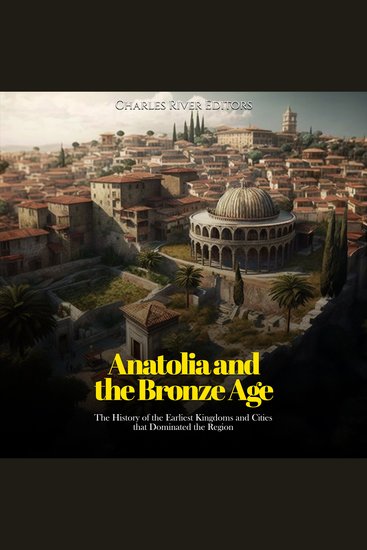
  • Anatolia and the Bronze Age: The History of the Earliest Kingdoms and Cities that Dominated the Region - cover

    Anatolia and the Bronze Age: The...

    Editors Charles River

    • 0
    • 0
    • 0
    While the Bronze Age is recognized as one of history’s most important phases, it’s been hard for historians to precisely date. The idea of the Bronze Age comes from a three-age system developed in the 19th century through which archaeologists and historians believe cultures evolve. These three ages are the Stone Age, the Bronze Age, and the Iron Age, and the concept of the system stems from the simultaneous development of museums in Europe during that time. In the Royal Museum of Nordic Antiquities in Denmark, Christian Jürgensen Thomsen, the director of the museum, began classifying objects of stone, bronze, or iron to better categorize and exhibit them. Each archaeological artifact was thus sorted according to their materials and further organized by shape and style. Through such methodology, working alongside archaeological reports, he was able to show how certain objects changed over time. 
    	During the Late Bronze Age, from about 1500-1200 BCE, the Near East was a time and place where great kingdoms and empires vied for land and influence, playing high stakes diplomatic games, trading, and occasionally going to war with each other in the process. The Egyptians, Hittites, Babylonians, Assyrians, and several smaller Canaanite kingdoms were all part of this system, which was one of the first true “global” systems in world history and also one of the most materially prosperous eras in antiquity. The major kingdoms are well-known to most people, but among them were powerful neighbors, many of whom have been mostly overlooked.  
    The transition from the Bronze to the Iron Age during the late 13th and early 12th centuries BCE arguably changed the structure and course of world history more fundamentally than any period before or since, and at the center of this period of turmoil was a group of people known today as the Sea Peoples, the English translation of the name given to them by the Egyptians.
    Zum Buch
  • The Importance of Being Educable - A New Theory of Human Uniqueness - cover

    The Importance of Being Educable...

    Leslie Valiant

    • 0
    • 0
    • 0
    If we hope to share our planet successfully with one another and the AI systems we are creating, we must reflect on who we are, how we got here, and where we are heading. The Importance of Being Educable puts forward a provocative new exploration of the extraordinary facility of humans to absorb and apply knowledge. The remarkable "educability" of the human brain can be understood as an information processing ability. It sets our species apart, enables the civilization we have, and gives us the power and potential to set our planet on a steady course. While we can readily absorb systems of thought about worlds of experience beyond our own, we struggle to judge correctly what information we should trust. 


    In this visionary book, Leslie Valiant argues that understanding the nature of our own educability is crucial to safeguarding our future. After breaking down how we process information to learn and apply knowledge, and drawing comparisons with other animals and AI systems, he explains why education should be humankind's central preoccupation. 


    Will the unique capability that has been so foundational to our achievements and civilization continue to drive our progress, or will we fall victim to our vulnerabilities? If we want to protect our collective future, we must better understand and prioritize the importance of being educable.
    Zum Buch
  • ISEE Power Play: Unlock Your Exam Success - "Supercharge your exam success with ISEE Power Play! Enjoy dynamic audio lessons tailored for peak performance" - cover

    ISEE Power Play: Unlock Your...

    Ronan Ashwell

    • 0
    • 0
    • 0
    Master Your Future with Strategic Practice and Insightful Guidance 
    ⭐⭐ Simplified Audio Guide with Explanations ⭐⭐ 
    Are you eager to advance your career and enhance your skills by successfully navigating the Master Your Future Exam 2024-2025? 
    Searching for a thorough guide that encompasses all the necessary components to excel in the Master Your Future Exam 2024-2025? 
    Your quest ends here! 
    This guide is your ultimate resource for enriching your knowledge, applying your abilities, and engaging in practical exercises. With this companion, you’re set up for success. 
    Updated to reflect the Master Your Future Exam 2024-2025 Structure. 
    Key features of this comprehensive guide include: 
    - In-depth insights about the Master Your Future Exam 2024-2025 Certification 
    - Detailed explanations centered on mastering your future with strategic practice 
    - Effective strategies for exam preparation and problem-solving 
    Our guide stands out due to its thorough coverage, which is crucial for your exam triumph. Concepts are explored in detail, ensuring a precise understanding. 
    Crafted with a clear framework and easily digestible language, our guide guarantees smooth transitions between topics. Say farewell to complicated jargon and embrace clear, accurate, and engaging content. 
    So, why delay? Click the BUY NOW button, secure your guide, and embark on your journey to succeeding in the Master Your Future Exam 2024-2025! 
    Get ready to master your future today!
    Zum Buch
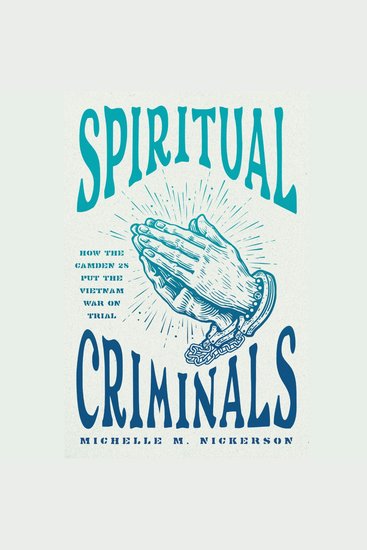
  • Spiritual Criminals - How the Camden 28 Put the Vietnam War on Trial - cover

    Spiritual Criminals - How the...

    Michelle M. Nickerson

    • 0
    • 0
    • 0
    A surprising look at the 28 Catholic radicals who raided a draft board in 1971—and got away with it. 
     
    When the FBI arrested twenty-eight people in connection to a break-in at a Camden, New Jersey, draft board in 1971, the Bureau celebrated. The case should have been an easy victory for the department—the perpetrators had been caught red-handed attempting to destroy conscription documents for draftees into the Vietnam War. But the results of the trial surprised everyone, and in the process shook the foundations of American law, politics, and religion. 
     
    In Spiritual Criminals, Michelle M. Nickerson shares a complex portrait of the Camden 28, a passionate group of grassroots religious progressives who resisted both their church and their government as they crusaded against the Vietnam War. Founded by priests, nuns, and devout lay Catholics, members of this coalition accepted the risks of felony convictions as the cost of challenging the nation’s military-industrial complex and exposing the illegal counterintelligence operations of the FBI. By peeling away the layers of political history, theological traditions, and the Camden 28’s personal stories, Nickerson reveals an often-unseen spiritual side of the anti-war movement. At the same time, she probes the fractures within the group, detailing important conflicts over ideology, race, sex, and gender that resonate in the church and on the political Left today.
    Zum Buch
  • The Duty of Civil Disobedience - cover

    The Duty of Civil Disobedience

    Henry David Thoreau

    • 0
    • 0
    • 0
    The Duty of Civil Disobedience by Henry David Thoreau, narrated by Marcus Locke, is a thought-provoking essay that explores the individual's moral responsibility to resist unjust government actions. Written in 1849, Thoreau's work has become a cornerstone of political philosophy, advocating for peaceful protest and nonviolent resistance to oppressive authority. Thoreau emphasizes the importance of following one's conscience over conforming to laws that violate fundamental human rights. 
    Narrator Marcus Locke brings Thoreau’s powerful message to life, delivering the essay with clarity and conviction. His narration invites listeners to reflect on their role in society and the power of individual action against injustice. Locke’s voice captures the calm yet resolute tone of Thoreau’s work, making this audiobook an engaging and inspiring experience for those interested in civil rights, social justice, and personal activism. 
    This audiobook is perfect for listeners drawn to philosophical works and the history of social movements, as well as anyone seeking inspiration for standing up for their beliefs. The Duty of Civil Disobedience remains a timeless call to action, encouraging peaceful resistance to unjust laws and policies.
    Zum Buch
  • The Gospel of Wealth - cover

    The Gospel of Wealth

    Andrew Carnegie

    • 0
    • 0
    • 0
    Seen as the playbook of philanthropy, Andrew Carnegie’s essay “The Gospel of Wealth” explores his idea of how and when a vast fortune should be spent. Originally published in 1889.
    Zum Buch