Begleiten Sie uns auf eine literarische Weltreise!
Buch zum Bücherregal hinzufügen
Grey
Einen neuen Kommentar schreiben Default profile 50px
Grey
Jetzt das ganze Buch im Abo oder die ersten Seiten gratis lesen!
All characters reduced
Deaf Culture Dynamics - cover

Deaf Culture Dynamics

Talia Mercer

Übersetzer A AI

Verlag: Publifye

  • 0
  • 0
  • 0

Beschreibung

"Deaf Culture Dynamics" explores the multifaceted world of Deaf communities, highlighting that these vibrant cultures are shaped by shared language, social practices, and a strong sense of identity. The book emphasizes that sign languages are not mere gestures but fully developed languages crucial to Deaf identity and community. Readers will gain insights into the historical struggles and triumphs of Deaf advocacy movements, including the impact of the Americans with Disabilities Act (ADA) on linguistic rights and accessibility. This book uniquely presents Deaf cultures not as a consequence of hearing loss, but as dynamic social entities with distinct values and artistic expressions. It contrasts exclusionary oralist methods in education with inclusive bilingual-bicultural approaches, examining their impact on Deaf individuals. By integrating linguistic, historical, and sociological analyses, the book offers a holistic understanding of Deaf communities, drawing on empirical research and personal narratives. The book is structured into three parts, beginning with core concepts of Deaf identity and community formation, then analyzing historical advocacy movements, and finally exploring contemporary issues such as cochlear implantation and globalization. It connects to fields like sociolinguistics and disability studies, providing valuable knowledge for educators, policymakers, and anyone interacting with Deaf individuals.
Verfügbar seit: 05.05.2025.
Drucklänge: 76 Seiten.

Weitere Bücher, die Sie mögen werden

  • Exploring the Poles: The History of the Initial Expeditions that Attempted to Reach the North Pole and South Pole - cover

    Exploring the Poles: The History...

    Editors Charles River

    • 0
    • 0
    • 0
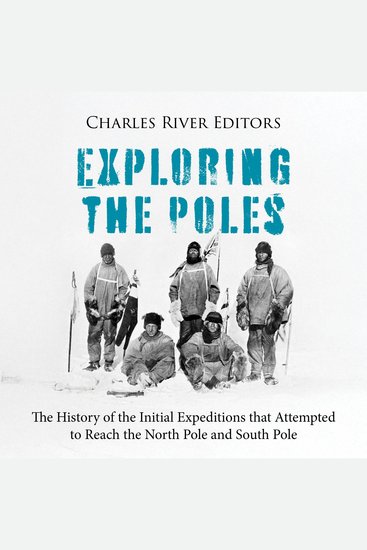
    Exploration of Earth’s wilderness areas became an international obsession in the late 19th and early 20th centuries, as economically advantaged nations, in particular European powers and the United States were well equipped to mount exhaustive expeditions. From previously inaccessible forests and jungle country to the world’s great mountain ranges, adventurers sought out the greatest extremes of climate and terrain in a race to plant the first flag where humanity struggled to survive. 
    	An earlier wave of explorers led to the opening of the New World, and early polar expeditions saw ancient ships of various nations sail along the coastlines of Greenland and within reach of the Arctic and Antarctic continents. Many 19th century figures approached the polar region with an eye to traversing it. Most notable among them was British explorer Sir James Clark Ross, who took the Erebus and the HMS Terror to the southernmost coastlines of the planet. Ross is probably the first explorer to realize that Antarctica was a continent and not just a large chain of islands, and he discovered the section of the shelf that was to become the Victoria Barrier. Asian nations also took part in Antarctic exploration when Nobu Shirase of Japan mounted his 1911 expedition, while Sir Edgeworth David, a Welsh-Australian, was the first person to successfully reach the summit of Mt. Erebus. Richard Evelyn Byrd is believed to be the first pilot to cross the Antarctic continent, and even well past the era of great polar expeditions, British figures such as Edmund Hillary, conqueror of Mount Everest, made several expeditions to the South Pole. 
    	Nevertheless, the golden age of polar exploration of the furthermost continents did not reach its zenith until the turn of the 20th century, and national rivalries abounded between the major seafaring nations of the world.
    Zum Buch
  • What We Can Do - A Climate Optimist's Guide to Sustainable Living - cover

    What We Can Do - A Climate...

    Charlie Sellars

    • 0
    • 0
    • 0
    In this radically optimistic climate change book, find yourself empowered to achieve sustainable living across every facet of your life—the personal, the professional, and the political. 
      
    “Never has decisive action on climate and environment been more important. This book will help citizens understand that while no one can do everything, everyone can do something—and offers a myriad of ways they can get started too.” —Dr. Trista Patterson, Time100 Climate Leader, 2023, and co-founder of Playing for the Planet 
      
    Charlie Sellars pulls insight from his experience as a director of sustainability at Microsoft, which has underlined its commitment to be a green business with a pledge to become carbon negative, water positive, and zero waste by 2030 while protecting ecosystems. He also serves on the governing body of the iMasons Climate Accord, an industry coalition united to decarbonize digital infrastructure. 
      
    Inside this sustainable living book, you will learn how to: 
     - Harness environmental science to make more sustainable decisions using the “Make It, Move It, Lose It, Use It” impact framework. 
     - Turn your job into a sustainability job, no matter what you do for a living. 
     - Unleash the power of your voice at the ballot box and in your local community. 
      
    This refreshingly optimistic environmental book for adults and recent graduates makes for a great climate change gift, like Hannah Ritchie’s Not the End of the World and Katharine Hayhoe’s Saving Us. 
       
    Nobody can do everything, but everybody can do something. It’s not too late to defeat the climate crisis, and What We Can Do will show you how. 
    “What We Can Do brings cutting-edge sustainability techniques used by chief sustainability officers into the hands and context of everyday individuals. The result? A book that finally empowers readers to maximize their impact across every facet of their lives” —Ann Tracy, chief sustainability officer, Colgate-Palmolive
    Zum Buch
  • Black Gods of the Asphalt - Religion Hip-Hop and Street Basketball - cover

    Black Gods of the Asphalt -...

    Onaje X. O. Woodbine

    • 0
    • 0
    • 0
    J-Rod moves like a small tank on the court, his face mean, staring down his opponents. "I play just like my father," he says. "Before my father died, he was a problem on the court. I'm a problem." Playing basketball for him fuses past and present, conjuring his father's memory into a force that opponents can feel in each bone-snapping drive to the basket.On the street, every ballplayer has a story. Onaje X. O. Woodbine, a former streetball player who became an all-star Ivy Leaguer, brings the sights and sounds, hopes and dreams of street basketball to life. He shows that big games have a trickster figure and a master of black talk whose commentary interprets the game for audiences. The beats of hip-hop and reggae make up the soundtrack, and the ballplayers are half-men, half-heroes, defying the ghetto's limitations with their flights to the basket.Basketball is popular among young black American men but not because, as many claim, they are "pushed by poverty" or "pulled" by white institutions to play it. Black men choose to participate in basketball because of the transcendent experience of the game. Through interviews with and observations of urban basketball players, Onaje X. O. Woodbine composes a rare portrait of a passionate, committed, and resilient group of athletes who use the court to mine what urban life cannot corrupt. If people turn to religion to reimagine their place in the world, then black streetball players are indeed the hierophants of the asphalt.
    Zum Buch
  • Body of Knowledge Card Deck - Sensorimotor Practices for Awareness Regulation and Expansion - cover

    Body of Knowledge Card Deck -...

    Pat Ogden

    • 0
    • 0
    • 0
    Our bodies hold a wealth of knowledge that, with the right tools, we can tap into at any time. 


    Our physical habits—of sensation, posture, and movement—reflect implicit knowledge of our histories of trauma, relationships, and resources, as well as our future possibilities. However, this wealth of information often eludes our awareness. The intention of the somatic practices in this card deck is to experientially illuminate the innate and unique knowledge that resides in our bodies, and to nurture a more deeply embodied connection with ourselves, others, and the world. 


    The cards are divided into fifteen themes: ancestors and community, body connection, body sensation, boundaries, breath, containment, culture, five fundamental movements, grounding, mindfulness, movement, posture, the senses, positivity, resources, and the future. Our bodies have different lessons to teach us at different points in our lives, so listeners are encouraged to revisit these enlightening, somatic exercises time and again to glean new insights.
    Zum Buch
  • Tradwife – The Return to Traditional Femininity - The Role of the Traditional Wife in Modern Society - cover

    Tradwife – The Return to...

    Alice Parker

    • 0
    • 0
    • 0
    In a fast-paced, modern world, a growing number of women are rediscovering the values of traditional femininity. The tradwife movement emphasizes homemaking, nurturing, and supporting family life in ways that echo the past while shaping the future. 
    This audiobook explores the philosophy, challenges, and rewards of embracing a traditional wife role. Why are so many women choosing to return to old-fashioned values? Is this movement about empowerment or submission? 
    Tradwife – The Return to Traditional Femininity is an insightful journey into the lifestyle, mindset, and cultural shifts behind the tradwife phenomenon. Perfect for those interested in relationships, femininity, and personal fulfillment.
    Zum Buch
  • The Me1st Method - Hands-On Leadership Development for New Roles and Big Challenges - cover

    The Me1st Method - Hands-On...

    Mike Palanski

    • 0
    • 0
    • 0
    At its heart, leadership is all about facing new challenges. Whether it’s leading a new team at work, orchestrating a community fundraiser, or starting a business, successful leaders rise to the challenge. 
    But we know that even successful leaders can sometimes feel frustrated, confused, uncertain, or just plain lost. As a result, they start trying to change their circumstances and to motivate the people around them to do more. More trying…followed by more frustration…and confusion. 
    Is this you? 
    Well, what if you could replace confusion with clarity and uncertainty with confidence? What if you could move forward with courage and support? 
    In The Me1st Method, leadership professor and coach Mike Palanski shows you the step-by-step framework for facing the Next Big Challenge. 
    This book is specifically written for motivated leaders who are in new roles and facing big challenges. Whether starting in a new role, career, or organization, leading a major new project, or simply desiring to do something radically different, leaders will find insight and encouragement to develop keen insights and create meaningful change.
    Zum Buch