Begleiten Sie uns auf eine literarische Weltreise!
Buch zum Bücherregal hinzufügen
Grey
Einen neuen Kommentar schreiben Default profile 50px
Grey
Jetzt das ganze Buch im Abo oder die ersten Seiten gratis lesen!
All characters reduced
Life in the Clearings versus the Bush - cover

Life in the Clearings versus the Bush

Susanna Moodie

Verlag: DigiCat

  • 0
  • 0
  • 0

Beschreibung

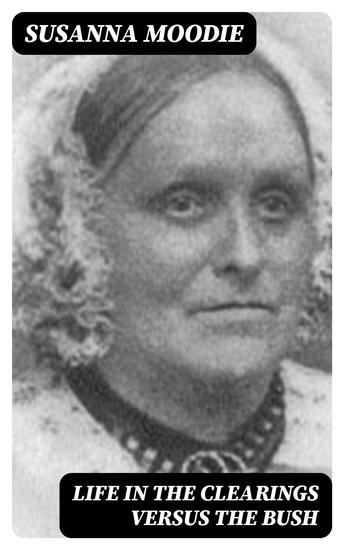
In "Life in the Clearings versus the Bush," Susanna Moodie crafts a vivid narrative that juxtaposes the civilized life of the settler with the untamed wilderness of Canada. Written in a richly descriptive literary style, the book serves as both a memoir and a social commentary, capturing the struggles, triumphs, and the harsh realities faced by early European settlers in the 19th century. Moodie's poignant observations and evocative prose transport readers into the heart of the Canadian bush, while her insightful comparisons highlight the stark contrasts between the comforts of colonial life and the challenges of nature. Susanna Moodie, born in England in 1803, immigrated to Canada with her husband in search of a better life. Her firsthand experiences as a settler, combined with her background in literature, inform her nuanced portrayal of life in the New World. Moodie's ability to articulate the complexities of identity, gender, and the immigrant experience stems from her own creative and challenging journey, making her a significant voice in Canadian literature. "Life in the Clearings versus the Bush" is a compelling read for anyone interested in the intricacies of colonial life, nature, and the immigrant narrative. Moodie's keen observations and heartfelt reflections not only shed light on the past but also invite contemporary readers to ponder the enduring conflicts between civilization and wilderness.
Verfügbar seit: 04.09.2022.
Drucklänge: 263 Seiten.
Weitere Bücher, die Sie mögen werden

  • Kublai Khan: The Life and Legacy of the Legendary Mongolian Emperor of China - cover

    Kublai Khan: The Life and Legacy...

    Editors Charles River

    • 0
    • 0
    • 0
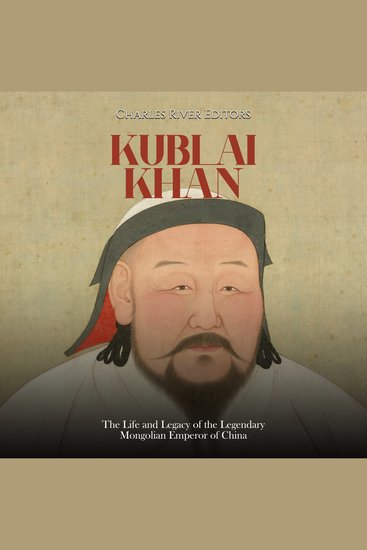
    Aside from Genghis, the most famous of the Mongolian rulers was Genghis’s grandson, Kublai Khan, who was raised as Mongolian in the traditional way, but also exposed to Chinese culture. Kublai’s father Tolui made sure all of his sons could ride and hunt, but he was apparently also concerned that they understood the characteristics and possibilities of the more settled regions under Mongolian rule. Thus, while Kublai and his brothers were still boys, his grandfather Genghis arranged a great Mongolian hunt. This traditional event involved many thousands of riders starting in a great circle and gradually moving into the center, driving the game in front of them. It was a hunt, but it was also a traditional kind of practice military exercise. Kublai killed a couple of small animals, and Genghis is reported to have been pleased with his grandsons.  
    	As Great Khan, Kublai Khan ruled the Mongolian Empire from his capital in modern-day Beijing, with a court that included Mongolians, Arabs, and Persians from throughout his empire. While Genghis may have been a warrior, Kublai was a man of culture, intellect and curiosity, and his court was a luxurious one rich in art, music, and goods. Under his reign, trade along the Silk Road was both easier and more efficient than ever before. Toll gates were removed, and traders could move freely from place to place. It was said that even women could travel safely with goods without fear of harm.  
    	Kublai was clearly an influential ruler, but what helped his legacy endure was that he hosted the famous Italian traveler Marco Polo, who stayed in China for years and described what he saw in detail. When Marco Polo’s travelogue was published back in Europe, it immediately became one of the most famous works on the continent, and while modern historians still debate which parts were factual and fictional, there can be no question that Kublai Khan was a monumental leader in Asia. 
    Zum Buch
  • Summary: The Untethered Soul - The Journey Beyond Yourself by Michael A Singer: Key Takeaways Summary & Analysis Included - cover

    Summary: The Untethered Soul -...

    Brooks Bryant

    • 0
    • 0
    • 0
    Disclaimer: This is not the official book, but a summary & it does not accompany the official. 
    The book operates as both a spiritual guide and a self-help book, offering practical insights grounded in the principles of mindfulness and meditation. It encourages individuals to let go of painful past experiences and apprehensive futures, advocating for a life lived fully in the present moment. The potent exercises in the book guide individuals in releasing themselves from the clutches of their fears, compulsions, and insecurities. 
    Michael A. Singer employs a writing style that is both accessible and profound, making profound spiritual concepts understandable for readers at all levels of spiritual exploration. He draws from various spiritual traditions, blending them seamlessly with modern psychological insights to offer a contemporary roadmap to inner peace and self-realization. 
    As you detail the summary, consider emphasizing the transformative journey the book proposes, highlighting the step-by-step process Singer lays out for achieving mental clarity and emotional freedom. Showcase how the lessons in "The Untethered Soul" not only guide readers to a deeper understanding of themselves but also foster a newfound harmony with the world around them.
    Zum Buch
  • On the Duty of Civil Disobedience - cover

    On the Duty of Civil Disobedience

    Henry David Thoreau

    • 0
    • 0
    • 0
    Dive into Henry David Thoreau's profound essay On the Duty of Civil Disobedience, where he argues passionately for the right of the individual to oppose governmental injustice. Originally penned in 1849, Thoreau's insights remain as vital and relevant today, influencing civil rights leaders from Mahatma Gandhi to Martin Luther King Jr. 
    Thoreau challenges listeners to act according to conscience rather than blindly follow laws, particularly those that uphold unjust systems. His compelling narrative not only examines the conflicts between individual ethics and state demands but also promotes nonviolent resistance as a powerful tool for social change. 
    Perfect for those interested in philosophy, politics, and human rights, Thoreau's essay is a timeless call to place morality above conformity. Revisit this classic to inspire your personal or community advocacy efforts in the pursuit of justice and equality. Embrace Thoreau’s vision where individual integrity shapes and challenges the societal status quo. 
    This audiobook was narrated and produced by RAM Studios, where humans and artificial intelligence collaborate to create an excellent listening experience. (The reading is done primarily by AI)
    Zum Buch
  • Charlemagne - King of the Franks King of Lombardy and Emperor of the Romans - cover

    Charlemagne - King of the Franks...

    Kelly Mass

    • 0
    • 0
    • 0
    From 768 to 800, Charlemagne, also referred to as Charles the Great, was King of the Franks, King of the Lombards, and Emperor of the Romans. Charlemagne combined many western and main Europe at the time of the Early Middle Ages. Since the fall of the Western Roman Empire 3 centuries before, he was the first acknowledged emperor to rule from western Europe. The Carolingian Empire is the name given to Charlemagne's broadening Frankish world. Antipope Paschal the Third later canonized him.Pepin the Short and Bertrada of Laon had an oldest child, Charlemagne, who was born before their main marriage.Following his dad's death in the year 768, he ended up being king of the Franks, at first as co-ruler with his brother Carloman I till the latter's death in the year 771. He followed his dad's position to the papacy as sole king and became its protector, driving the Lombards out of northern Italy and leading an attack into Muslim Spain. He waged a project against the Saxons to his east, requiring them to convert to Christendom or face death, resulting in events like the Massacre of Verden. He reached the peak of his power in the year 800, when Pope Leo the Third crowned him "Emperor of the Romans" on Christmas Day at Rome's Old St. Peter's Basilica.
    Zum Buch
  • Delusion and Mass Delusion - cover

    Delusion and Mass Delusion

    Joost A. M. Meerloo

    • 0
    • 0
    • 0
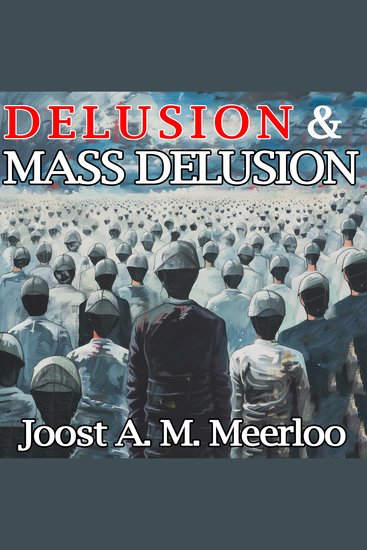
    "Delusion and Mass Delusion" by Joost A. M. Meerloo is a seminal work that dissects the intricate psychology behind individual and collective delusions. Published in 1949, this insightful book delves into the mechanisms through which manipulation, propaganda, and coercion can sway individuals and entire societies into embracing false beliefs and irrational behaviors. Drawing from extensive psychiatric expertise and historical examples, Meerloo explores the vulnerabilities of the human mind to external influences, shedding light on the profound impact of social dynamics on shaping beliefs and perceptions. With profound insights into the roots of mass hysteria, indoctrination, and ideological fanaticism, "Delusion and Mass Delusion" remains a timeless exploration of the complexities of human psychology and societal behavior.
    Zum Buch
  • From The Britons to the Battle Of Hastings - prehistory to 1066 - cover

    From The Britons to the Battle...

    Gilbert Abbott à Beckett

    • 0
    • 0
    • 0
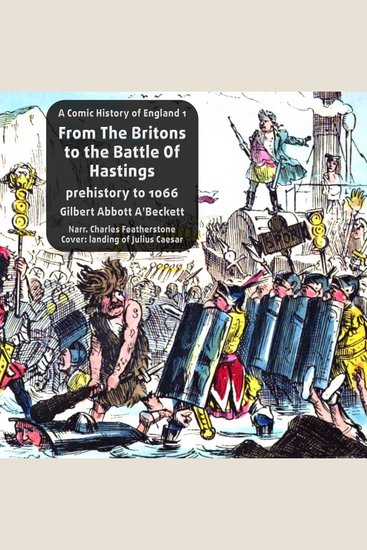
    A captivating, uproarious and informative journey through the beginnings of British history.  
    Gilbert Abbott à Beckett was one of the great journalists of his time, being a descendant of Thomas Becket who edited Figaro, was a founder member of Punch, and wrote for The Times, The Morning Herald, and The Illustrated London News.  
    He also wrote around fifty plays, as well as two operas, and is best known for this history of England. 
    This volume covers: 
    The Britons—The Romans—Invasion By Julius Cæsar 
    Invasion By The Romans Under Claudius—Caractacus—Boadicea—Agricola—-Galgacus—Severus—Vortigern Calls In The Saxons. 
    The Saxons—The Heptarchy. 
    The Union Of The Heptarchy Under Egbert. 
    The Danes—Alfred. 
    From King Edward The Elder To The Norman Conquest. 
    Edmund Ironsides—Canute—Harold Harefoot—Hardicanute—Edward The Confessor—Harold—The Battle Of Hastings.
    Zum Buch