Begleiten Sie uns auf eine literarische Weltreise!
Buch zum Bücherregal hinzufügen
Grey
Einen neuen Kommentar schreiben Default profile 50px
Grey
Jetzt das ganze Buch im Abo oder die ersten Seiten gratis lesen!
All characters reduced
Acoustics - The Art of Sound - cover

Acoustics - The Art of Sound

Steve Marshall

Verlag: Wooden Books

  • 0
  • 0
  • 0

Beschreibung

What is the difference between an echo and a reverberation? Where do you best place microphones for that perfect recording? How do you calculate the best note to whistle in a toilet? In this fascinating little book, musician Steve Marshall explores the field of acoustics. From decibels to dolphins, stereo to surround, this book will appeal to singers, musicians, architects, biologists, and anyone who ever wanted to know more about the wonderful world of sound.
Verfügbar seit: 10.01.2022.

Weitere Bücher, die Sie mögen werden

  • Information Theory and Coding for Beginners - An Introduction to the Principles and Applications of Data Compression and Error Correction - cover

    Information Theory and Coding...

    Daniel Garfield

    • 0
    • 0
    • 0
    "Information Theory and Coding for Beginners: An Introduction to the Principles and Applications of Data Compression and Error Correction" is a comprehensive guide to the field of Information Theory and Coding. Written for readers with little to no background in this area, this book offers a clear and engaging introduction to the principles and applications of data compression and error correction. 
    The book covers the fundamentals of Information Theory, including basic concepts and terminology, Shannon's Information Theory, and compression and transmission rates. It then explores source coding techniques, such as Huffman Coding, Arithmetic Coding, and Lempel-Ziv-Welch Coding, as well as lossy compression methods like Transform Coding and Predictive Coding. The book also covers channel coding techniques, including error detection and correction methods like Parity Checking, Checksums, and Cyclic Redundancy Check (CRC), and error-correcting codes like Block Codes, Convolutional Codes, Turbo Codes, and LDPC Codes. 
    Through a series of real-world applications, the book illustrates the importance of Information Theory and Coding in data compression and error correction for various fields, including wireless communication, optical communication, and storage systems. It also examines emerging trends and technologies in the field, such as Quantum Information Theory, Network Coding, and Machine Learning in Coding. 
    "Information Theory and Coding for Beginners" provides a comprehensive and accessible guide to the principles and applications of data compression and error correction. With clear explanations, real-world examples, and practical applications, this book is an essential resource for anyone interested in understanding the fundamental principles of Information Theory and Coding. 
     
    Zum Buch
  • Transform Your Thinking: Secrets to Navigating Life's Complex Webs - "Transform your perspective! Engage with captivating audio lessons that simplify life’s complexities for success" - cover

    Transform Your Thinking: Secrets...

    Sullivan Wexley

    • 0
    • 0
    • 0
    Transform Your Thinking: Secrets to Navigating Life's Complex Webs 
    ⭐⭐ Simplified Guide & Explanations Included ⭐⭐  
    Are you eager to advance in your career while solidifying your mindset to effectively navigate life's challenges? 
    Looking for an all-inclusive guide that covers everything you need to overcome obstacles with confidence? 
    Your search ends here! 
    This guide is your ultimate companion for enhancing your understanding, applying your skills, and engaging in practical exercises. With this resource, you're prepared for success. 
    Updated for 2024-2025 life navigation strategies. 
    Key Features of this Comprehensive Guide: 
    - In-depth insights into mastering your mindset 
    - Thorough explanations of navigating life's challenges 
    - Effective strategies for preparation and tackling hurdles  
    Our guide sets itself apart with extensive coverage that is vital for your journey. Concepts are explored in detail, not just skimmed over. 
    Please note that this guide is an independent resource and is not affiliated with any official entity. 
    Crafted with a clear structure and straightforward language, our guide ensures seamless transitions between topics. Say goodbye to confusing jargon and embrace clear, precise, and technically accurate content. 
    So, why wait? Click the BUY NOW button, secure your guide, and embark on your path to mastering your mindset and confidently navigating life’s challenges! 
    Transform Your Thinking: Secrets to Navigating Life's Complex Webs - Your key to unlocking personal success and resilience!
    Zum Buch
  • The Digital Revolution - Transforming Society - cover

    The Digital Revolution -...

    Nova Ashford

    • 0
    • 0
    • 0
    The origins of the digital revolution can be traced back to several key developments in technology, many of which were shaped by visionary thinkers and groundbreaking innovations. At the heart of this transformation was the invention of the computer, a device that would later evolve into the complex machines that now permeate every aspect of modern life. Early computing, which began in the 1930s and 1940s, was initially limited to large, cumbersome machines used by governments and research institutions. These machines, like the ENIAC and the UNIVAC, were monumental in size and expensive to maintain, but they laid the groundwork for the digital age that would follow. 
    The true revolution, however, began with the development of the microprocessor in the 1970s. This small, powerful component allowed computers to shrink in size, becoming affordable for individuals and small businesses. Companies like Intel and AMD played pivotal roles in creating chips that would power everything from personal computers to smartphones. The release of the first microprocessor-powered personal computers in the late 1970s and early 1980s, such as the Apple II and the IBM PC, marked the beginning of a new era in computing. 
    Parallel to the rise of personal computing was the development of the internet, which would fundamentally change how people connect with one another and access information. The internet's roots can be traced to the 1960s, when the U.S. Department of Defense developed ARPANET, a network designed to share information across computers in a decentralized manner. As the internet expanded during the 1990s, it transformed from a tool for academic and government use into a platform for businesses and individuals alike. The introduction of the World Wide Web, developed by Tim Berners-Lee in 1991, made the internet more accessible and user-friendly, leading to the explosion of online content and services that would define the digital age.
    Zum Buch
  • Origin (and future) of the Ketogenic Diet The - by Dr Dominic D'Agostino and Travis Christofferson - Charity Publication: In support of Dr Thomas Seyfrieds cancer research - cover

    Origin (and future) of the...

    Dr. Dominic D'Agostino, Travis...

    • 0
    • 0
    • 0
    This is the Origin-Story of the Ketogenic Diet - authored by Dr. Dominic D'Agostino and Travis Christofferson 
    For everybody who is interested how this way of eating came about and how it was used in the treatment of epillepsy in the early 20th century - and then, forgotten. 
    50% of the profits will be donated to Dr. Thomas Seyfrieds Cancer Research, so give this to yourself, your friends and anybody who is into living a long happy and healthy life! 
    P.S.: Any review would be greatly appreciated to get the Low-Carb message out!
    Zum Buch
  • Natural language processing - Decoding Human Language: Algorithms Techniques and Applications - cover

    Natural language processing -...

    Robert Patel

    • 0
    • 0
    • 0
    Step into the transformative world of Natural Language Processing (NLP) where human communication and machine intelligence converge. Discover an book that unveils the intricate dance of algorithms and linguistics, providing insights into the mesmerizing journey of decoding the complexities of human language. Immerse yourself in a narrative that intertwines theory, application, and innovation. 
    "Natural Language Processing: Decoding Human Language" isn’t just a reading experience but a voyage through the multi-dimensional realms of language comprehension and artificial intelligence. Each chapter is meticulously crafted, unraveling the nuances of linguistic structures, the sophistication of algorithms, and unveiling applications that are reshaping the world. From the foundational elements of language structure to the avant-garde innovations in machine learning, neural networks, and beyond - every page is a revelation, every chapter a gateway to a new world of knowledge. 
    Imagine grasping the art and science that empowers virtual assistants, enables real-time translations, and unlocks insights from vast repositories of unstructured text. Envision possessing the expertise to contribute to a field that’s not just a technological revolution, but a renaissance of human-machine interaction, communication, and accessibility. With practical insights, real-world applications, and explorative journeys into future trends and opportunities, this book is not just about understanding NLP but mastering it. 
    Embark on this enlightening adventure and transform your perspective on language, technology, and human interaction. Immerse yourself in a world where language meets computation, where human expressions are deciphered by algorithms, and where every sentence, word, and syllable opens new frontiers of understanding, innovation, and opportunity.
    Zum Buch

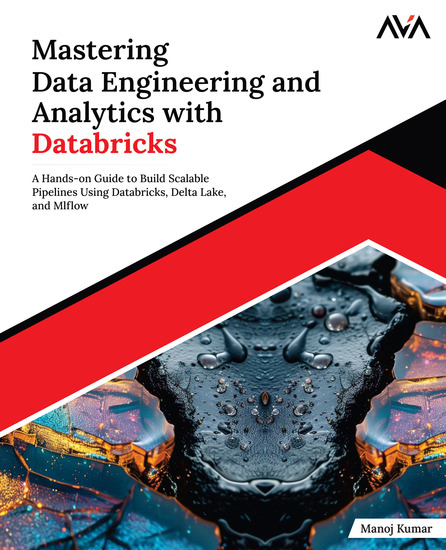
  • Mastering Data Engineering and Analytics with Databricks - A Hands-on Guide to Build Scalable Pipelines Using Databricks Delta Lake and MLflow - cover

    Mastering Data Engineering and...

    Manoj Kumar

    • 0
    • 0
    • 0
    Master Databricks to Transform Data into Strategic Insights for Tomorrow’s Business Challenges
    Book Description
    In today’s data-driven world, mastering data engineering is crucial for driving innovation and delivering real business impact. Databricks is one of the most powerful platforms which unifies data, analytics and AI requirements of numerous organizations worldwide. 
    Mastering Data Engineering and Analytics with Databricks goes beyond the basics, offering a hands-on, practical approach tailored for professionals eager to excel in the evolving landscape of data engineering and analytics. 
    This book uniquely blends foundational knowledge with advanced applications, equipping readers with the expertise to build, optimize, and scale data pipelines that meet real-world business needs. With a focus on actionable learning, it delves into complex workflows, including real-time data processing, advanced optimization with Delta Lake, and seamless ML integration with MLflow—skills critical for today’s data professionals. 
    Table of Contents
    SECTION 1
    1. Introducing Data Engineering with Databricks
    2. Setting Up a Databricks Environment for Data Engineering
    3. Working with Databricks Utilities and Clusters
    SECTION 2
    4. Extracting and Loading Data Using Databricks
    5. Transforming Data with Databricks
    6. Handling Streaming Data with Databricks
    7. Creating Delta Live Tables
    8. Data Partitioning and Shuffling
    9. Performance Tuning and Best Practices
    10. Workflow Management
    11. Databricks SQL Warehouse
    12. Data Storage and Unity Catalog
    13. Monitoring Databricks Clusters and Jobs
    14. Production Deployment Strategies
    15. Maintaining Data Pipelines in Production
    16. Managing Data Security and Governance
    17. Real-World Data Engineering Use Cases with Databricks
    18. AI and ML Essentials
    19. Integrating Databricks with External Tools   
    Index
    Zum Buch