Begleiten Sie uns auf eine literarische Weltreise!
Buch zum Bücherregal hinzufügen
Grey
Einen neuen Kommentar schreiben Default profile 50px
Grey
Jetzt das ganze Buch im Abo oder die ersten Seiten gratis lesen!
All characters reduced
Best of Terror (2020) - Top 300 Horror Movies - cover

Best of Terror (2020) - Top 300 Horror Movies

Steve Hutchison

Verlag: Tales of Terror

  • 0
  • 0
  • 0

Beschreibung

The following recommendations represent the top 13% of 2250 horror movie reviews.

I use a classification method that combines genres, subgenres, ambiances, and antagonists. My evaluation ratings are stars, story, creativity, action, quality, creepiness, and rewatchability
Verfügbar seit: 17.04.2023.

Weitere Bücher, die Sie mögen werden

  • Ashoka: The Great - cover

    Ashoka: The Great

    Saurabh Kumar

    • 0
    • 0
    • 0
    The Mauryan Empire (322–185 BC) was one of the world's greatest empires that has ever existed.Ashoka ruled it from 268 BCE-233 BCE. Under his reign, the empire reached its zenith with excellence in numerous areas. 
    Zum Buch
  • Light Beer Taxes and a Racist Dog - A Gen Z Guide To Navigating Your Early to Mid-Twenties - cover

    Light Beer Taxes and a Racist...

    Bobby D'Angelo

    • 0
    • 0
    • 0
    Figured it was time to get this out. Thank you for listening!!
    Zum Buch
  • The Design of a Country Estate - cover

    The Design of a Country Estate

    Cathy Purple Cherry

    • 0
    • 0
    • 0
    Architect Purple Cherry tells the story of this luxurious country estate in the Mid-Atlantic—along the Chester River on the Eastern Shore in Centreville, Maryland—and how the vision came to life. The book includes an abundance of hard-working information that focuses on the thought processes behind each decision, whether it is the materials employed or the location of each building for walkability and use. Rife with inspiration on every page—whether your dream is a cozy cabin in the woods or an expansive country estate like this one—this book will appeal to luxury home enthusiasts and design professionals alike, transporting readers to a real-life fantasy.
    Zum Buch
  • Sundaland: The History of the Asian Landmass that Started Sinking After the Ice Age - cover

    Sundaland: The History of the...

    Editors Charles River

    • 0
    • 0
    • 0
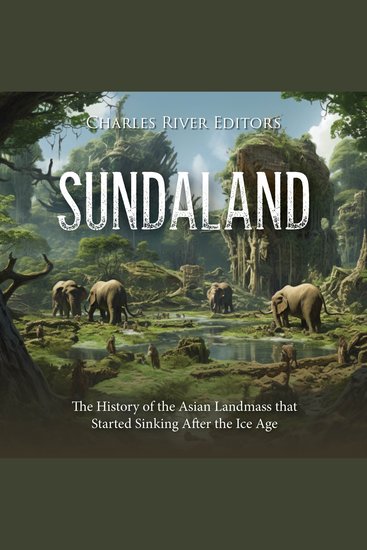
    By the time the Pleistocene Epoch ended around 12,000 years ago, Homo sapiens had become one of the most significant species on the planet. 	It was also near the end of that period of time that modern humans began to gradually populate what would become Europe, Asia, and the Americas, eventually becoming the inheritors of the Paleolithic era and the only human species to make it into the Neolithic era. The process was long and difficult, and the survival of the species only happened through a combination of human tenacity and a fair amount of luck. As much as humans evolved during the Pleistocene, the topography, geography, and environment changed even more. 
    The cold Pleistocene temperatures lowered water levels across the planet, exposing land that was not there before or after the period. At the same time, significant regions of the planet were very different during the Pleistocene, including Southeast Asia, particularly the modern islands of Bali, Borneo, Sumatra, and the Malay Peninsula, roughly equivalent to parts of Indonesia, Malaysia, Myanmar, and Thailand. This region, which modern scholars refer to as Sunda or Sundaland, was unique because all of it was connected by land, meaning today’s islands were once part of a contiguous subcontinent, and in terms of the people, flora, and fauna, it was very different than it is today. If a modern traveler could somehow transport back to the Pleistocene, Sundaland would look nothing like modern Southeast Asia and would resemble as much of a lost world as something out of a science fiction novel.  
    Although much is still unknown about Sundaland, researchers have uncovered plenty of evidence bringing this lost world to life. As anthropologists and archaeologists developed new models and discovered ancient material culture, they learned that Sundaland played a significant role in the development of Neolithic Southeast Asia in many ways. 
    Zum Buch

  • The Urban Experience - Living Working and Thriving in Cities (4 in 1) - cover

    The Urban Experience - Living...

    Lyric Vale

    • 0
    • 0
    • 0
    The city is humanity's most profound expression of collective living—an intricate tapestry of buildings, spaces, interactions, and institutions that shapes not only how we navigate physical environments but fundamentally influences how we learn, connect, work, and find meaning. This comprehensive exploration delves into the multifaceted reality of The Urban Experience, examining how architectural expression, growth patterns, spatial forms, and educational systems converge to create the distinctive character and quality of metropolitan life. From the most intimate scale of building design to the expansive dynamics of regional development, this book illuminates the interconnected dimensions that define how human existence unfolds within urban contexts. 
    The narrative of urban experience transcends descriptive analysis; it encompasses the lived reality of city dwellers navigating environments that simultaneously constrain and liberate, challenge and inspire. By examining the complex interplay between architectural innovation, urban morphology, educational systems, and human perception, this book reveals how cities function as both physical environments and experiential landscapes where collective memory, individual aspiration, and institutional structures intersect. Readers will journey through diverse dimensions of urban life—from the phenomenological impact of architectural space to the evolutionary patterns of urban form and the transformative potential of metropolitan educational systems—discovering how these elements collectively shape opportunities, constraints, and quality of life for billions of urban inhabitants. Through interdisciplinary analysis, theoretical frameworks, and real-world case studies, we provide urban scholars, design professionals, educators, and civic leaders with integrated perspectives on creating cities that not only accommodate human activity but nurture human potential, creativity, learning, and collective well-being.
    Zum Buch
  • Imperial Chinese Foundations - Uniting the Land (3 in 1) - cover

    Imperial Chinese Foundations -...

    Rolf Hedger

    • 0
    • 0
    • 0
    The story of China's imperial unification represents one of history's most consequential political transformations. "Imperial Chinese Foundations: Uniting the Land" explores the three dynasties that forged China's imperial system—a political structure that would endure for over two millennia. 
    The brief but revolutionary Qin Dynasty (221-206 BCE) ended centuries of warring states by conquering all rivals under the leadership of the First Emperor, Qin Shi Huang. Through military might, standardized writing, currency, measurements, and a unified legal code, the Qin created China's first centralized bureaucratic empire—though their harsh Legalist policies triggered rebellion after the emperor's death. 
    The Western Han Dynasty (206 BCE-9 CE) consolidated imperial rule through a more pragmatic blend of Confucian ideology and centralized governance. Under Emperor Wu's dynamic leadership, the Han expanded Chinese territory, opened the Silk Road, established the civil service examination system, and created cultural and political institutions that would define Chinese civilization for millennia. 
    As power shifted to the Eastern Han (25-220 CE), the dynasty initially flourished before facing mounting challenges from natural disasters, court intrigues, and the Yellow Turban Rebellion. Yet even as political cohesion weakened, this period saw remarkable innovations—including paper, the seismograph, and advances in mathematics and medicine—while Buddhism began its profound influence on Chinese civilization. 
    Through examining these three foundational dynasties, we witness the birth and evolution of the imperial Chinese state that would serve as a template for governance across East Asia and continue to influence Chinese identity into the modern era.
    Zum Buch