Begleiten Sie uns auf eine literarische Weltreise!
Buch zum Bücherregal hinzufügen
Grey
Einen neuen Kommentar schreiben Default profile 50px
Grey
Jetzt das ganze Buch im Abo oder die ersten Seiten gratis lesen!
All characters reduced
The Complete Works - Novels Novellas Short Stories & Poetry - cover

The Complete Works - Novels Novellas Short Stories & Poetry

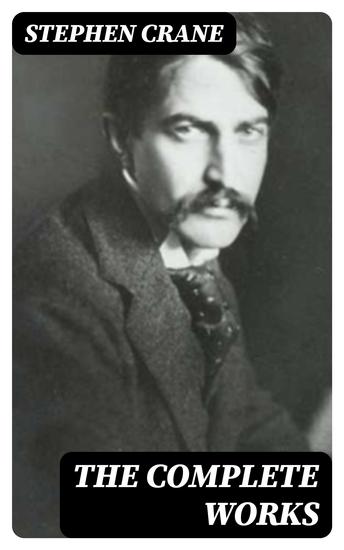
Stephen Crane

Verlag: DigiCat

  • 0
  • 0
  • 0

Beschreibung

Stephen Crane's "The Complete Works" presents a comprehensive collection of his literary contributions that span poetry, short stories, and the groundbreaking novel "The Red Badge of Courage." Known for his vivid realism and innovative use of imagery, Crane's works encapsulate the tumultuous nature of human experience and the often harsh realities of life during the late 19th century in America. His distinct voice strikes a balance between naturalism and impressionism, deftly capturing the psychological complexities of his characters amidst the backdrop of war and societal turmoil. Born in 1871, Crane's tumultuous upbringing and extensive exposure to the Civil War's aftermath profoundly influenced his art. His career was brief yet prolific, aligning with the literary movements of realism and modernism. In addition to his journalistic endeavors, Crane wrote from a personal lens, infusing his stories with a potent blend of empathy and existential contemplation, drawing from his experiences as a war correspondent and the profound societal shifts of his time. Readers interested in the evolution of American literature will find "The Complete Works" invaluable. Crane's exploration of themes such as courage, mortality, and the human condition resonates beyond his era, offering a timeless reflection on the struggles and triumphs of humanity. This collection is not merely a historical artifact; it invites contemporary readers to engage with foundational themes that remain relevant today.
Verfügbar seit: 17.05.2022.
Drucklänge: 1872 Seiten.
Weitere Bücher, die Sie mögen werden

  • Lazarus - cover

    Lazarus

    Leonid Andreyev

    • 0
    • 0
    • 0
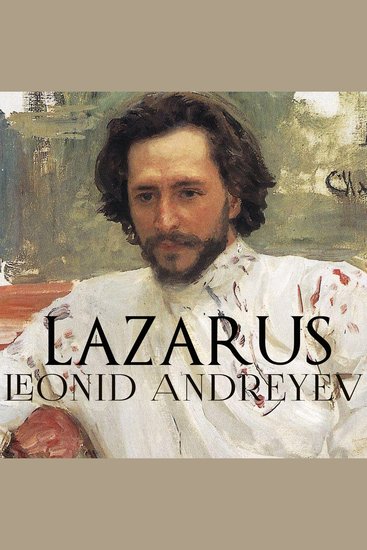
    What did Lazarus see beyond the veil of death?
    In this haunting masterpiece of psychological and philosophical fiction, Leonid Andreyev conjures a vision of resurrection unlike any ever imagined. Lazarus is not a tale of triumph over death—but of what death leaves behind.
    Strange, unsettling, and metaphysical, this is the story of a man raised from the grave only to cast a cold, unblinking gaze back upon the living. Wherever he walks, beauty withers, joy dissolves, and the veneer of meaning slips away. Those who look into his eyes do not die—they unravel.
    Written in a feverish prose that borders on the ecstatic and apocalyptic, Lazarus is a hypnotic meditation on the abyss that separates existence from extinction—and the unspeakable truth that might wait on the other side.
    Perfect for listeners drawn to existential horror, metaphysical fiction, or the eerie brilliance of Dostoevsky, Kafka, or Poe.
    Zum Buch
  • The House of Mapuhi - cover

    The House of Mapuhi

    Jack London

    • 0
    • 0
    • 0
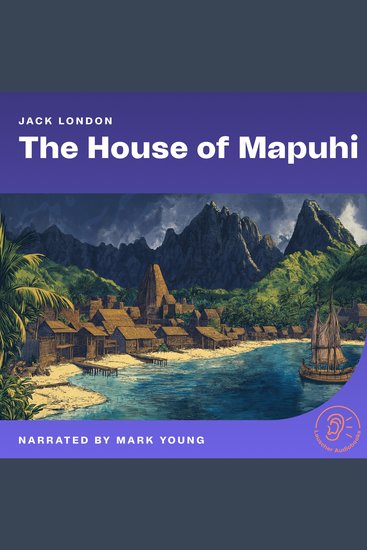
    Despite the heavy clumsiness of her lines, the Aorai handled easily in the light breeze, and her captain ran her well in before he hove to just outside the suck of the surf. The atoll of Hikueru lay low on the water, a circle of pounded coral sand a hundred yards wide, twenty miles in circumference, and from three to five feet above high-water mark. On the bottom of the huge and glassy lagoon was much pearl shell, and from the deck of the schooner, across the slender ring of the atoll, the divers could be seen at work. But the lagoon had no entrance for even a trading schooner. With a favoring breeze cutters could win in through the tortuous and shallow channel, but the schooners lay off and on outside and sent in their small boats.
    Zum Buch
  • Casting the Runes - From their pens to your ears genius in every story - cover

    Casting the Runes - From their...

    M R James

    • 0
    • 0
    • 0
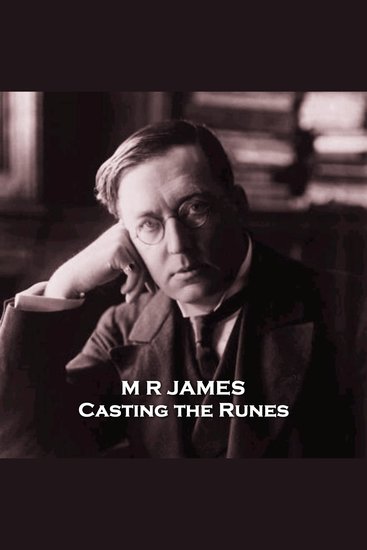
    Montague Rhodes James is cited as perhaps the greatest English writer of ghost stories, an opinion few would disagree with. 
    James was born on 1st August 1862 at Goodnestone Parsonage in Kent, where his father was Curate but at age 3 the family went to live at Livermere, near Bury St Edmunds in East Anglia.  
    From early childhood he had a passion for mediaeval books and antiques. He was educated initially as a boarder at Temple Grove School in East Sheen, west London, before gaining a scholarship to Eton and thence Cambridge where he gained a double first, becoming a distinguished linguist and mediaevalist.  
    Before the Great War vacations were usually spent touring Europe absorbing cultures and references for his later writing. 
    A man of enormous knowledge it was said he timed his breakfast egg whilst he completed the Times crossword.  
    Many of his elegant yet terrifying tales were created by discarding the prevailing gothic cliches and placing his characters and narrative in a realistic setting.  Thereby the stories gained atmosphere and menace on a grand scale and he was famed as the originator of the antiquarian ghost story. 
    Although story-telling and writing these 30 or so tales was a hobby, when published their effect transformed the genre and still chill the bones in our more modern times. 
    James was also a medievalist scholar and translator whose work remains highly respected. He was also Provost of Eton College between 1918 and 1936. 
    M R James died on 12th June 1936 at Eton in Buckinghamshire.  He was 73.
    Zum Buch
  • Candide - cover

    Candide

    Voltaire

    • 0
    • 0
    • 0
    Candide is characterised by its sarcastic tone, as well as by its erratic, fantastical and fast-moving plot. A picaresque novel with a story similar to that of a more serious bildungsroman, it parodies many adventure and romance clichés, the struggles of which are caricatured in a tone that is mordantly matter-of-fact. Still, the events discussed are often based on historical happenings, such as the Seven Years' War and the 1755 Lisbon earthquake. As philosophers of Voltaire's day contended with the problem of evil, so too does Candide in this short novel, albeit more directly and humorously.    Voltaire ridicules religion, theologians, governments, armies, philosophies, and philosophers through allegory; most conspicuously, he assaults Leibniz and his optimism. Voltaire's men and women point his case against optimism by starting high and falling low. A modern could not go about it after this fashion. He would not plunge his people into an unfamiliar misery. He would just keep them in the misery they were born to. But such an account of Voltaire's procedure is as misleading as the plaster cast of a dance.    Look at his procedure again. Mademoiselle Cunégonde, the illustrious Westphalian, sprung from a family that could prove seventy-one quarterings, descends and descends until we find her earning her keep by washing dishes in the Propontis. The aged faithful attendant, victim of a hundred acts of rape by negro pirates, remembers that she is the daughter of a pope, and that in honor of her approaching marriage with a Prince of Massa-Carrara all Italy wrote sonnets of which not one was passable. We do not need to know French literature before Voltaire in order to feel, although the lurking parody may escape us, that he is poking fun at us and at himself. His laughter at his own methods grows more unmistakable at the last, when he caricatures them by casually assembling six fallen monarchs in an inn at Venice.    A modern assailant of optimism would arm himself with social pity. There is no social pity in "Candide." Voltaire, whose light touch on familiar institutions opens them and reveals their absurdity, likes to remind us that the slaughter and pillage and murder which Candide witnessed among the Bulgarians was perfectly regular, having been conducted according to the laws and usages of war. Had Voltaire lived today he would have done to poverty what he did to war. Pitying the poor, he would have shown us poverty as a ridiculous anachronism, and both the ridicule and the pity would have expressed his indignation.
    Zum Buch
  • Emma - Full Cast Drama - cover

    Emma - Full Cast Drama

    Jane Austen

    • 0
    • 0
    • 0
    "Emma," one of Jane Austen's most beloved novels, published in 1815, introduces readers to the spirited and well-intentioned but often misguided heroine, Emma Woodhouse. Set in the early 19th century in the fictional village of Highbury, the novel revolves around Emma's penchant for matchmaking and her journey of self-discovery. 
     
    At the heart of "Emma" is the titular character's desire to arrange advantageous marriages for her friends and acquaintances. Emma's well-meant but misguided attempts at matchmaking lead to a series of comedic misunderstandings and romantic entanglements. Through Emma's adventures, Austen explores the complexities of human relationships, the consequences of meddling in others' lives, and the pitfalls of making snap judgments about people's characters. 
     
    The novel also delves into the theme of self-awareness and personal growth. As the story progresses, Emma undergoes a transformation from a self-assured but somewhat arrogant young woman to a more humble and self-aware individual. Her journey of self-discovery serves as a central narrative arc, highlighting Austen's skill in portraying the moral and emotional development of her characters. 
    Austen's signature wit and humor shine through in "Emma." The novel is replete with clever dialogue, satirical observations, and sharp social commentary. The characters, from the well-meaning but misguided Emma to the reserved but perceptive Mr. Knightley, come to life through Austen's masterful storytelling.
    Zum Buch
  • The Adventure of the Second Stain - cover

    The Adventure of the Second Stain

    Arthur Conan Doyle

    • 0
    • 0
    • 0
    The Adventure of the Second Stain, one of the 56 Sherlock Holmes short stories written by Sir Arthur Conan Doyle, is one of 13 stories in the cycle collected as The Return of Sherlock Holmes and the only unrecorded case mentioned passively by Watson to be written. Doyle ranked "The Adventure of the Second Stain" eighth in his list of his twelve favourite Holmes stories.Lord Bellinger, the Prime Minister, and the Right Honourable Trelawney Hope, the Secretary of State for European Affairs, come to Holmes in the matter of a document stolen from Hope's dispatch box, which he kept at home in Whitehall Terrace when not at work. If divulged, this document could bring about very dire consequences for all Europe, even war. They are loath to tell Holmes at first the exact nature of the document's contents, but when Holmes declines to take on their case, they tell him that it was a rather injudicious letter from a foreign potentate. It disappeared from the dispatch box one evening when Hope's wife was out at the theatre for four hours. No-one in the house knew about the document, not even the Secretary's wife. None of the servants could have guessed what was in the box...Famous works of the author Arthur Conan Doyle: A Study in Scarlet, The Sign of the Four, The Adventures of Sherlock Holmes, The Memoirs of Sherlock Holmes, The Hound of the Baskervilles, The Return of Sherlock Holmes, The Valley of Fear, His Last Bow, The Case-Book of Sherlock Holmes, Stories of Sherlock Holmes, The Lost World.
    Zum Buch