Rejoignez-nous pour un voyage dans le monde des livres!
Ajouter ce livre à l'électronique
Grey
Ecrivez un nouveau commentaire Default profile 50px
Grey
Abonnez-vous pour lire le livre complet ou lisez les premières pages gratuitement!
All characters reduced
The Blue Hotel - cover

The Blue Hotel

Stephen Crane

Maison d'édition: DigiCat

  • 0
  • 0
  • 0

Synopsis

In Stephen Crane's novella "The Blue Hotel," readers are thrust into the tense atmosphere of a Nebraska hotel where the interplay of fate, isolation, and psychological conflict takes center stage. Crane employs a stark naturalistic style, rich in symbolism and vivid imagery, to explore the complexities of human nature against the backdrop of a harsh and unforgiving environment. The hotel itself becomes a microcosm of society, revealing the underlying tensions between individuals caught in the web of social and existential uncertainty, leading to a shocking climax that emphasizes the fragility of the human condition. Stephen Crane, renowned for his innovative literary contributions, was deeply influenced by his experiences as a war correspondent and his fascination with the American frontier. Born in 1871, Crane's writing reflects a keen psychological insight and a deep understanding of existential themes, likely stemming from his own encounters with the uncertainties of life. "The Blue Hotel" was crafted during a period when Crane was significantly exploring themes of fate versus free will, drawing upon regional influences and a burgeoning interest in realism. This compelling novella is highly recommended for readers interested in the complexities of human behavior and the impact of setting on character development. Crane's masterful portrayal of psychological tension and vivid scenery makes "The Blue Hotel" an essential read for students of American literature and anyone fascinated by the darker aspects of human nature.
Disponible depuis: 19/11/2023.
Longueur d'impression: 48 pages.

D'autres livres qui pourraient vous intéresser

  • Antigone - Full Cast Drama - cover

    Antigone - Full Cast Drama

    Sophocles

    • 0
    • 0
    • 0
    "Antigone" is a Greek tragedy written by Sophocles in the 5th century BCE. The play is part of a trilogy, but only "Antigone," the third installment, has survived. The narrative revolves around Antigone, the daughter of Oedipus, who defies the king's decree and buries her brother Polynices, in defiance of the law. The king, Creon, orders that Polynices' body should remain unburied as punishment for his rebellion against the city. 
     
    Antigone's act of burial is not only an expression of familial loyalty but also an assertion of divine laws over human laws. She believes in the moral duty to honor her brother, even in death and is willing to face the consequences. Creon, however, sees her actions as an affront to his authority and issues a decree that anyone attempting to bury Polynices will be put to death. 
     
    As the plot unfolds, the clash between divine and human laws intensifies. Antigone is caught and brought before Creon, where she staunchly defends her actions. Creon remains resolute in his decision to punish her, regardless of her familial ties. The play explores themes of morality, duty, and the consequences of pride and authoritarian rule. 
     
    Tragedy unfolds as Antigone is sentenced to be entombed alive. The narrative weaves the fates of various characters, including Antigone, Haemon (Creon's son and Antigone's fiancé), and Eurydice (Creon's wife). The play culminates in a series of tragic events, leading to Creon's realization of his own tragic flaw and the devastating consequences of his decisions.
    Voir livre
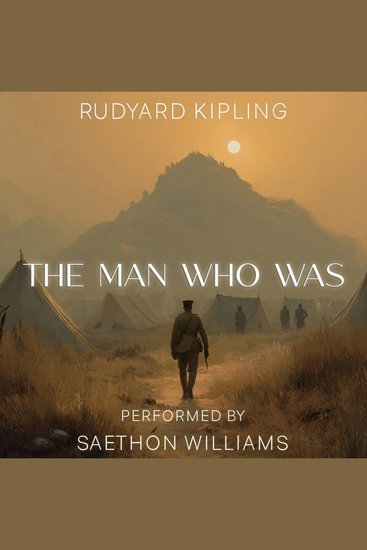
  • The Man Who Was - cover

    The Man Who Was

    Rudyard Kipling

    • 0
    • 0
    • 0
    The Man Who Was by Rudyard Kipling is a haunting short story of identity, honor, and the psychological scars of war. Set in British colonial India, the narrative follows a mysterious and disfigured man whose appearance at a military mess sparks curiosity and unease. As the truth of his identity slowly unravels, the story reveals a powerful meditation on the cost of duty and the resilience of the human spirit. With Kipling’s signature sharp prose and deep insight into imperial life, this tale blends suspense, tragedy, and moral reflection in unforgettable fashion.
    Voir livre
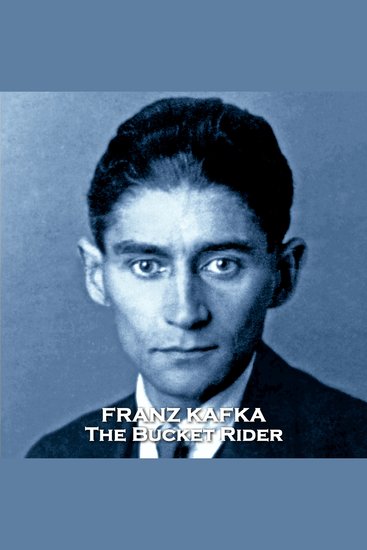
  • The Bucket Rider - A poor man seeks compassion but is found wanting - cover

    The Bucket Rider - A poor man...

    Franz Kafka

    • 0
    • 0
    • 0
    Franz Kafka was born on 3rd July 1883 in Prague, then in Bohemia, the eldest of 6, into a middle-class Jewish family. 
     
    Life for the young Kafka and his passion for literature was often made an ordeal by his over-bearing and domineering entrepreneur of a father.   
     
    In 1889 Kafka was sent to the Deutsche Knabenschule, an elementary school in Prague. His father would only allow him to be educated in German-speaking schools and even went so far as to limit visits to the synagogue to four a year. 
     
    In 1901 he graduated from the classics-oriented Altstädter Gymnasium. Kafka did well there and across a large range of subjects.  He now enrolled at the Charles Ferdinand University, to study chemistry, but quickly switched to law for which he obtained his degree in June 1906 and then performed the mandatory year of unpaid service as clerk at the civil and criminal courts. 
     
    A job at an Italian insurance company left him little time to write and after a year he took another job with the Worker's Accident Insurance Institute for the Kingdom of Bohemia where he stayed until ill health led to his resignation in 1922. 
     
    Although he saw work as a means to pay the bills and to allow him time to write, he received several promotions and was noted as a good employee. 
     
    By 1917 Kafka was suffering from tuberculosis, which required frequent periods of convalescence. Interspersed with this, were several intense affairs before he settled in Berlin with Dora Diamant, a 25-year-old kindergarten teacher who herself having left the ghetto now influenced Kafka's interest in the book of Jewish law, the Talmud. 
     
    Kafka’s on-going health was littered with problems. Apart from TB there were several other ailments, including migraines, insomnia, boils, depression, all usually brought on by excessive stresses and strains. He attempted to counteract all of this by naturopathic treatments, a vegetarian diet and consuming large quantities of unpasteurized milk. 
     
    His tuberculosis still worsened. He returned to Prague, where he died on 3rd June 1924. He was 40. 
     
    His literary works are few in number but towering in influence.  His masterpieces include ‘The Trial’, ‘The Metamorphosis’ as well as a number of short stories which reveal facets of humankind that truthfully could only be born from Kafka’s brain and pen.
    Voir livre
  • Creatures - Bierce -Doyle - Black - cover

    Creatures - Bierce -Doyle - Black

    Ambrose Bierce, Sir Aarthur...

    • 0
    • 0
    • 0
    Creatures - Short Stories 
     
    1) The Eyes of the Panther – Ambrose Bierce 
    2) The Horror of the Heights – Sir Arthur Conan Doyle 
    3) The Halloween Wraith – William Black 
     
    Additional Story 
    4) The Goblin of Adachigahara - Sadanami Sanjin
    Voir livre
  • About Love - cover

    About Love

    Anton Chekhov

    • 0
    • 0
    • 0
    "About Love" is an 1898 short story by Anton Chekhov. The third and final part of the Little Trilogy, started by "The Man in the Case" and continued by "Gooseberries".
    The story begins with the love affair between the cook of the house, Nikanor and servant (beautiful woman) Pelageya. Nikanor, who is a drunkard, often verbally abuses and even beats his lover Pelageya when he is drunk. So Pelageya only wants to live with him without getting married. On the other hand, Nikanor doesn't want to be with her without getting married.
    Voir livre
  • Diplomacy - From their pens to your ears genius in every story - cover

    Diplomacy - From their pens to...

    Lafcadio Hearn

    • 0
    • 0
    • 0
    Lafcadio Hearn was born on the 27th June 1850 on the Ionian isle of Levkás in Greece to a British Army officer and a Greek Mother. 
    His father, fearing for his career prospects at being married to a Greek Orthodox wife, sent them to Dublin whilst he continued to advance his career with further postings.  Life there was difficult for mother and son.  His father returned, wounded and traumatised, when Lafcadio was three.  He annulled the marriage and she remarried but had to give up care of Lafcadio to her sister-in law.   
    After brief periods for Catholic education in England and France he emigrated to Ohio in the United States when he was 19, taking on a series of casual jobs before embarking on a career as a journalist, publishing poems and essays in Cincinnati.  It was whilst here that he began a side-line in translating, starting with Gautier and Flaubert.  He married in 1874 to a 20 year old African-American woman in violation of Ohio's anti-miscegenation law.  The marriage soon failed. 
    In 1877 he relocated to New Orleans to write on a variety of themes before picking up a two year assignment from Harper’s to write in the West Indies, where he also wrote his first novel. 
    In 1890 Harper’s sent him to Japan.  Here he left journalism and took the remarkable decision to become a schoolteacher in the north of Japan.   Enraptured by the culture he was driven to explain it in various Western publications to those who had little, if any, knowledge of its culture.  Within the year he had fallen in love with, and married, a high-born Japanese lady, together they would have four children.   
    In 1895 he became a Japanese national and took the name Koizumi Yakumo, Koizumi being his wife’s family name. 
    The following few years, whilst a professor of Literature at the Imperial University of Japan, were his most creative and admired period.   
    Lafcadio Hearn died of heart failure on the 26th of September 1904, in Tokyo, Japan shortly before leaving to deliver a series of lectures at Cornell University in New York State.  He was 54.
    Voir livre