Begleiten Sie uns auf eine literarische Weltreise!
Buch zum Bücherregal hinzufügen
Grey
Einen neuen Kommentar schreiben Default profile 50px
Grey
Jetzt das ganze Buch im Abo oder die ersten Seiten gratis lesen!
All characters reduced
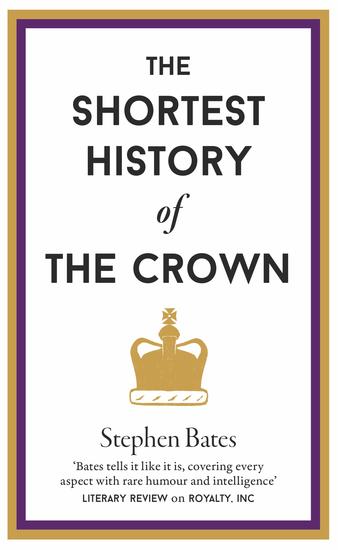
The Shortest History of The Crown - cover

The Shortest History of The Crown

Stephen Bates

Verlag: Old Street Publishing

  • 0
  • 0
  • 0

Beschreibung

'There have been scores of books about the monarchy but few, if any, as fearless and perceptive as this is... Bates tells it like it is, covering every aspect with rare humour and intelligence. I couldn't recommend it more highly.' LITERARY REVIEW on ROYALTY INCAmidst the turbulence and invasions, upheaval and dissent that characterise British history, one thing has remained remarkably stable. Although there are other monarchies, Britain's Crown stands out due to the continuity of its traditions, and its ability to adapt.There's a reason why schoolchildren still learn about the Kings and Queens: it's their power struggles and subtle compromises that have shaped the nation we inhabit today. When members of the Royal family go on 'walkabouts', they do so because monarchs stretching back to King Alfred understood the need to be seen by their subjects, and the dire consequences of remaining aloof (or abroad). When they give interviews, or accept taxes, they do so as part of a long series of engagements with other, almost-equally powerful operators: Church, Parliament, the nobility.In this sprightly commentary on the Crown's 1,800-year-long story, Stephen Bates provides a dazzling insight into Royal custom and ritual, whilst depicting the individuals behind the myth with compassion and wit. And as our ageing Queen prepares to pass the baton, he asks us all to consider: could we ever do without the Crown?
Verfügbar seit: 04.10.2022.
Drucklänge: 288 Seiten.

Weitere Bücher, die Sie mögen werden

  • Admiral Horatio Nelson’s Greatest Victories - cover

    Admiral Horatio Nelson’s...

    Editors Charles River

    • 0
    • 0
    • 0
    Over the course of its history, England has engaged in an uncountable number of battles, but none of her military heroes has had a greater military legacy than Admiral Lord Horatio Nelson, 1st Viscount Nelson, 1st Duke of Bronté. Whether traveling to Trafalgar Square or one of the hundreds of pubs named after him, seemingly it becomes easy to believe that no Briton has cast as long a shadow. Nelson is known across the world for his decisive victory at Trafalgar, made all the more legendary by the fact that he was mortally wounded at the height of his greatest feat. And it is understandable that any man who could thwart Napoleon’s ambitions as well as Nelson did would earn a place in the history books. But Nelson embodied every virtue of his homeland as a dashing, courageous military officer who was impeccably cultured, and the best at what he did. Indeed, as the personification of the supremacy of the Royal Navy, the man and his life had a powerful resonance well before his death. 
    Before Trafalgar, Nelson had already earned enduring fame for the British victory at the Battle of the Nile. In 1798, he was given command of a small squadron and sent ahead to Gibraltar, and eventually given instructions to hunt down and destroy Napoleon’s fleet. Indeed, the coming battle was the battle of annihilation Nelson had sought – of 13 French battleships engaged, 2 were destroyed and 9 were captured. British losses were negligible, with no ships lost and about 900 killed or wounded. French casualties were at least 2,000, with thousands more captured. The French Mediterranean fleet had been wiped out, and Napoleon’s expeditionary force was now stranded. 
    With Nelson’s decisive victory, the Royal Navy had once again asserted itself as the dominant power in the Mediterranean. At the same time, Nelson’s inability to intercept Napoleon at sea allowed the French transports and ground forces to survive unscathed, and they eventually made their way back to France.
    Zum Buch
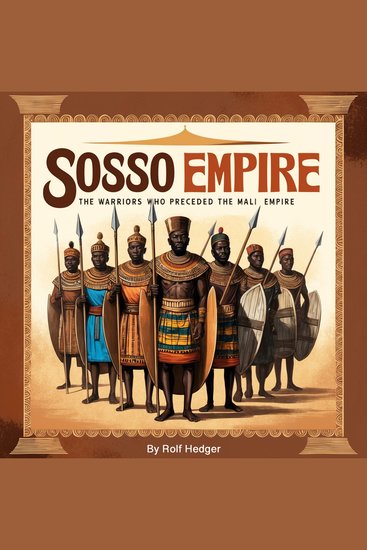
  • Sosso Empire - The Warriors Who Preceded the Mali Empire - cover

    Sosso Empire - The Warriors Who...

    Rolf Hedger

    • 0
    • 0
    • 0
    The Sosso Empire emerged during a period of great upheaval in West Africa, following the decline of the once-powerful Ghana Empire. The Sosso people, a group of warriors and rulers, capitalized on the weakening of Ghana to establish their dominance in the region. Their rise was marked by military aggression, strategic leadership, and a desire to control the lucrative trade routes that had long been the backbone of West African wealth. 
    The origins of the Sosso people remain somewhat obscure, but they were likely a subgroup within the greater Soninke-speaking population that had once formed the core of the Ghana Empire. As Ghana’s power waned due to external invasions and internal struggles, smaller states sought to assert their independence. The Sosso, led by a series of ambitious leaders, were among the most successful in carving out a new political and military identity for themselves. 
    One of the most defining moments in the rise of the Sosso Empire was the ascent of Sumanguru Kanté, a warrior-king whose leadership transformed Sosso into a dominant force. Sumanguru’s reputation as a ruthless and determined leader spread quickly. He capitalized on the disintegration of Ghana by taking control of its former capital, Koumbi Saleh, and imposing his rule over the surrounding regions. His conquest of Ghana marked a shift in power, with Sosso assuming the role of the dominant state in the region.
    Zum Buch
  • Mila At The Bar - Lesbian Short Story - cover

    Mila At The Bar - Lesbian Short...

    Monique Rose

    • 0
    • 0
    • 0
    A lesbian short story to get into the mood. 
    Mila can’t stop looking at the woman on the other side of the bar. She’s tall and pretty, with long red hair pulled back in a tight knot at the back of her head and a deep plunging blouse that more than shows off her assets. Busty, curvy, beautiful. 
    Mila takes another sip of her beer. She’s almost thirty-two, and she’s never been with anyone but men…
    Zum Buch
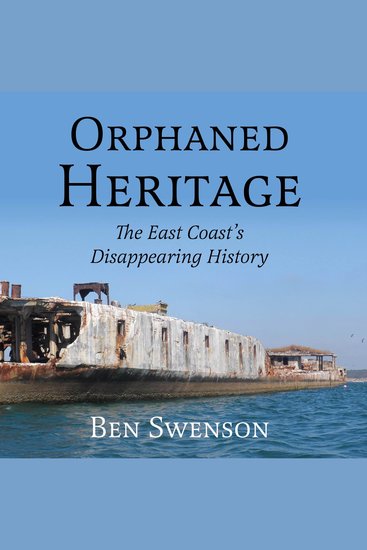
  • Orphaned Heritage - The East Coast’s Disappearing History - cover

    Orphaned Heritage - The East...

    Ben Swenson

    • 0
    • 0
    • 0
    The spot where the most famous manhunt in United States history came to a bloody end languishes in the litter-strewn median of a four-lane highway. There are no physical traces left of the Garrett farmhouse, where John Wilkes Booth died, and few historic footprints to be found at all in this unlikely place, a common right-of-way. The Garrett place is one of scores of sites on the East Coast that society cast aside, places of historic value left to the natural world as orphans of the American landscape. Orphaned Heritage: The East Coast's Disappearing History tells the story of the Atlantic seaboard's historic castaways and explores what we can learn from the ruin.
    Zum Buch
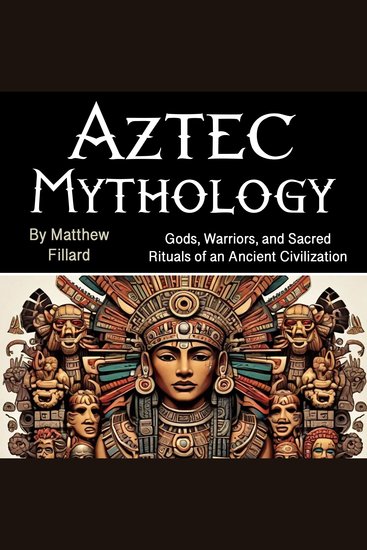
  • Aztec Mythology - Gods Warriors and Sacred Rituals of an Ancient Civilization - cover

    Aztec Mythology - Gods Warriors...

    Matthew Fillard

    • 0
    • 0
    • 0
    The Aztec Empire, one of the most powerful and complex civilizations of Mesoamerica, was not only remarkable for its military conquests and grand architecture but also for its deeply spiritual and mythological worldview. At the heart of Aztec society was a profound belief in the gods and the sacredness of ritual, which governed everything from daily life to the empire's grandest ceremonies. Aztec mythology, rich with gods, cosmic battles, and creation stories, shaped the culture and practices of this ancient civilization. Understanding Aztec mythology is essential to understanding the values, actions, and worldview of the Aztec people, as it provided the framework within which they interpreted their world and their place within it. 
    Aztec myths are not just stories of gods and heroes; they are a reflection of the Aztec's relationship with the cosmos, nature, and each other. These myths explained the origins of the world, the cycles of life, and the creation of humanity, often with gods battling forces of chaos and death to establish order and balance. The gods were not distant, abstract figures; they were seen as active forces in the world, deeply involved in the lives of the people. To the Aztecs, the gods gave life and demanded nourishment in return. This divine reciprocity was central to the practice of sacrifice, both human and material, which played a crucial role in maintaining the balance of the cosmos and ensuring the favor of the gods.
    Zum Buch
  • Why Smart People Don't Have Many Friends - The Social Challenges of High Intelligence - cover

    Why Smart People Don't Have Many...

    John Harpoon

    • 0
    • 0
    • 0
    The paradox of intelligence and friendship has puzzled both scholars and individuals for generations. While high intelligence is often associated with success and achievement, it can also come with a significant social challenge: the difficulty of forming and maintaining meaningful friendships. For highly intelligent people, the complex nature of their cognitive abilities can create barriers that make social interactions more challenging. Despite their many strengths, these individuals often find themselves isolated, misunderstood, and distanced from others who may not share the same intellectual capacity or way of thinking. 
      
    At the heart of this dilemma lies the disconnect between cognitive intelligence and social intelligence. While a high IQ may contribute to success in academic or professional settings, it doesn't necessarily translate into an ability to navigate the nuances of social interactions. Many highly intelligent people find themselves struggling with small talk, social expectations, and the emotional needs of others. In fact, the more an individual is absorbed in intellectual pursuits, the more likely they are to experience a sense of isolation and a lack of genuine connection with those around them. 
      
    Furthermore, emotional intelligence—the ability to recognize and manage one’s emotions and understand those of others—is often underdeveloped in highly intelligent individuals. This creates a gap in understanding social cues, empathy, and the emotional nuances of human interaction. As a result, even when these individuals desire connection, they may inadvertently alienate others or fail to form the deep, meaningful relationships they long for.
    Zum Buch