Rejoignez-nous pour un voyage dans le monde des livres!
Ajouter ce livre à l'électronique
Grey
Ecrivez un nouveau commentaire Default profile 50px
Grey
Abonnez-vous pour lire le livre complet ou lisez les premières pages gratuitement!
All characters reduced
I Pose - cover

I Pose

Stella Benson

Maison d'édition: Alien Ebooks

  • 0
  • 0
  • 0

Synopsis

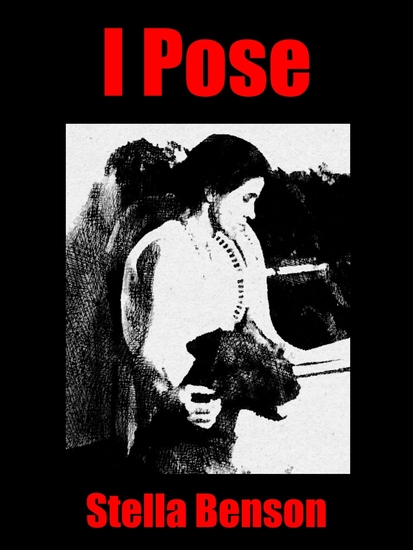
In this incredibly original satirical novel we are introduced to the two main characters as The Gardener and The Suffragette, and so they remain throughout. Inhabiting a huge first chapter of 302 pages and then only a tiny second one of 8 pages, these two are wildly comic and disturbingly real at one and the same time. Benson’s cheekiness in commenting directly to the reader on the progress of the story, the saltiness of her slightly cynical view of the world and its ways, and the strange newness of the tale she was telling meant that, on first publication in 1915, the literary world’s curiosity was most certainly piqued.
Disponible depuis: 24/06/2023.
Longueur d'impression: 307 pages.

D'autres livres qui pourraient vous intéresser

  • Categories - cover

    Categories

    Aristotle

    • 0
    • 0
    • 0
    Categories is the first of Aristotle's six texts on logic which are collectively known as the Organon. In Categories Aristotle enumerates all the possible kinds of things that can be the subject or the predicate of a proposition. Aristotle places every object of human apprehension under one of ten categories (known to medieval writers as the praedicamenta). Aristotle intended them to enumerate everything that can be expressed without composition or structure, thus anything that can be either the subject or the predicate of a proposition. The ten categories, or classes, are: Substance, Quantity, Quality, Relation, Place, Time, Position, State, Action and Affection. (Wikipedia)The Categories places every object of human apprehension under one of ten categories (known to medieval writers as the praedicamenta). Aristotle intended them to enumerate everything that can be expressed without composition or structure, thus anything that can be either the subject or the predicate of a proposition.
    Voir livre
  • The Wounded Soldier - cover

    The Wounded Soldier

    Mark Twain

    • 0
    • 0
    • 0
    In the course of a certain battle a soldier whose leg had been shot off appealed to another soldier who was hurrying by to carry him to the rear, informing him at the same time of the loss which he had sustained; whereupon the generous son of Mars, shouldering the unfortunate, proceeded to carry out his desire. The bullets and cannon-balls were flying in all directions, and presently one of the latter took the wounded man's head off without, however, his deliverer being aware of it. In no long time he was hailed by an officer, who said: “Where are you going with that carcass?”
    Voir livre
  • Vainity Faiyr - cover

    Vainity Faiyr

    William Makepeace Thackeray

    • 0
    • 0
    • 0
    "Vanity Fair" is a novel by English author William Makepeace Thackeray, first published as a serial from 1847 to 1848. The novel is a satirical and panoramic look at early 19th-century British society, particularly focusing on the lives of two women, Becky Sharp and Amelia Sedley, as they navigate the complexities of love, ambition, and social climbing. Thackeray's work is known for its wit, sharp social commentary, and memorable characters.
    Voir livre
  • Mold of the Earth - From their pens to your ears genius in every story - cover

    Mold of the Earth - From their...

    Boleslaw Prus

    • 0
    • 0
    • 0
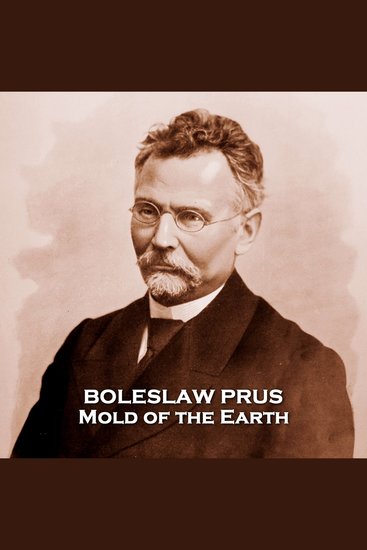
    Aleksander Głowacki who wrote under the nom de plume Boleslaw Prus was born on 20th August 1847 at Hrubieszów in the Kingdom of Poland, at that time, controlled by the Russian Empire. 
    At three his mother died and then at nine his father.  Female relatives helped raise him but at 15 he joined the Polish uprising against the might of Imperial Russia.  Wounded on the battlefield, arrested and imprisoned, he was later released into the care of a relative and resumed secondary school and then Warsaw University but poverty forced him to leave after two years.  At some point he developed agoraphobia which often caused problems. 
    In 1869, he enrolled in the Forestry Department at Puławy but was soon sacked and so he began a system of self-education that led to work as a newspaper columnist on a wide-ranging series of topics that eventually became the ‘Weekly Chronicles’ and spanned 40 years. 
    With his finances now stabilized he married and then adopted his late brother-in-law’s son.  
    It seems he had doubts as to the scale of his talents and early on adopted the name ‘Boleslaw Prus’ for both his journalistic and literary offerings. 
    His work as a short-story writer met with much acclaim. He wrote several dozen of them, originally published in newspapers and ranging in length from micro-story to novella. His keen observation of everyday life and sense of humor are evident in them.  
    During his career he also wrote novels. After ‘Pharoah’, in 1895, he embarked on a four-month journey taking in Berlin, Dresden, Nuremberg, Rapperswil in Switzerland, where he stayed for two months, and his final destination, Paris.  Here his agoraphobia was so bad he couldn’t cross the Seine.  
    However, his writing continued and in 1911 his novel ‘Changes’, though uncompleted, began to be serialised.  It was never finished. 
    Boleslaw Prus died on 19th May 1912, at his Warsaw apartment.  He was 64.  A National Hero, thousands attended both his funeral service and interment.
    Voir livre
  • How It Happened - From their pens to your ears genius in every story - cover

    How It Happened - From their...

    Arthur Conan Doyle

    • 0
    • 0
    • 0
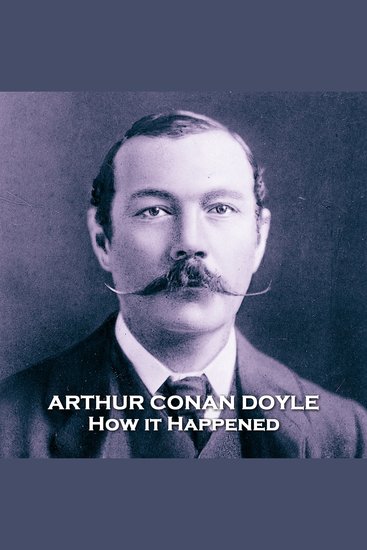
    Arthur Conan Doyle was born in Edinburgh, Scotland on 22nd May 1859.  His childhood was blighted by his father’s heavy drinking which for some years broke up the family. Fortunately, wealthy uncles were willing to support them by paying for education and clothing.  
    He was accepted at the University of Edinburgh to study medicine and also began to write short stories the first, ‘The Haunted Grange of Goresthorpe’, was published in Blackwood’s Magazine.  Despite several other stories and some articles in the British Medical Journal his medical studies took priority. 
    When these finished he was appointed as Doctor on the Greenland whaler ‘Hope of Peterhead’ in 1880 and then, after graduation, as ship’s surgeon on the SS Mayumba on its voyage to West Africa. 
    1882 saw a move to Plymouth and his own independent practice. With few patients he resumed writing and completed his first novel, ‘The Mystery of Cloomber’, although most of his output was short stories based on his experiences at sea.  
    He married Louisa Hawkins in 1885. However, two years later he met and fell in love with Jean Elizabeth Leckie, though they remained platonic out of respect for, and loyalty to, his wife. 
    His literary career suddenly burst into life in November 1886 with ‘A Study In Scarlet’, the first of the fabulously successful Sherlock Holmes stories.  
    With two children to support he now revisited his haphazard commercial arrangements and curtailed everything save for commissions from the Strand Magazine.  
    As a sportsman he was remarkably proficient. He was goalkeeper for Portsmouth Association Football Club and played ten first-class cricket matches for the Marylebone Cricket Club as well as captain of the Crowborough Beacon Golf Club in East Sussex.  
    In 1891 tired of writing Holmes stories, he began a series of historical novels and even went so far as to apparently kill off Holmes in a lethal brawl with his arch-nemesis Moriarty. 
    Despite heavy and sustained criticism he continued to write in support of the Boer War, a fact he thought contributed to his knighthood in 1902.  The following year to great relief and acclaim he brought Sherlock Holmes back from the dead in his first outing for a decade. 
    Sadly, his wife Louisa died from TB in 1906 and, a year later, he at last married Jean.  
    During the War and for several years after family deaths had left him depressed. In a search for solace and answers he alighted upon spiritualism and, such was his interest, that he wrote several books on the subject. 
    On 7th July 1930 Conan Doyle was discovered in the hall of Windlesham Manor, his house in East Sussex, clutching his chest dying of a heart attack.  He was 71.
    Voir livre
  • The Power of Darkness - From their pens to your ears genius in every story - cover

    The Power of Darkness - From...

    Edith Nesbit

    • 0
    • 0
    • 0
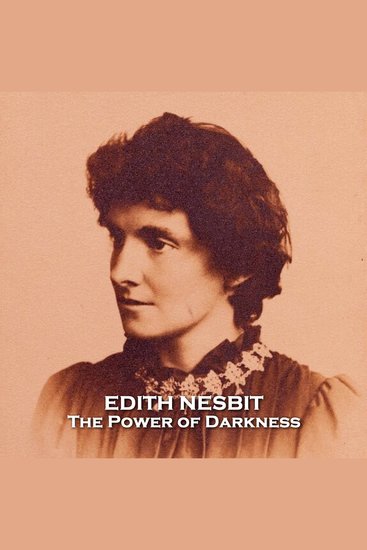
    Edith Nesbit was born on the 15th August 1858 in Kennington, then part of Surrey.   
    Due to the health issues and tuberculosis of her sister Mary, Nesbit’s early life was one of constant changes of house both in England and on the continent. 
    At age 17, Nesbit met Hubert Bland and they married three years later―whilst she was 7 months pregnant.  Bland also kept his affair with another woman going throughout their marriage and the two children of that relationship were raised by Nesbit as well as her own three with Bland. 
    Together they were founder members of the Fabian Society in 1884 naming their son Fabian in its honour.  They also edited the Society's journal; ‘Today’.  Nesbit was an active lecturer and prolific writer on socialism during those years but gradually her work for them dwindled as her career as a children’s writer grew.  Her most famous success was ‘The Railway Children’ but she was also very prolific and greatly accomplished in poetry, short stories―especially her macabre ghost and supernatural stories―and novels for adults.  
    In February 1917, some three years after the death of Bland she married Thomas ‘the Skipper’ Tucker in Woolwich, where he was a ship's engineer on the Woolwich Ferry. 
    Edith Nesbit died from lung cancer on the 4th May 1924 at her house ‘The Long Boat’ at Jesson, St Mary's Bay, New Romney in Kent.  She was 65.
    Voir livre